Laser reshaping of the gumline for a balanced, even smile
A quick reshaping of the gumline reveals more of your natural teeth for a more even, balanced smile.

 1000+ Google reviews

 Excellent on Trustpilot
Most people who dislike their smile look at their teeth. Often the teeth are fine, and what is actually wrong is the frame around them.
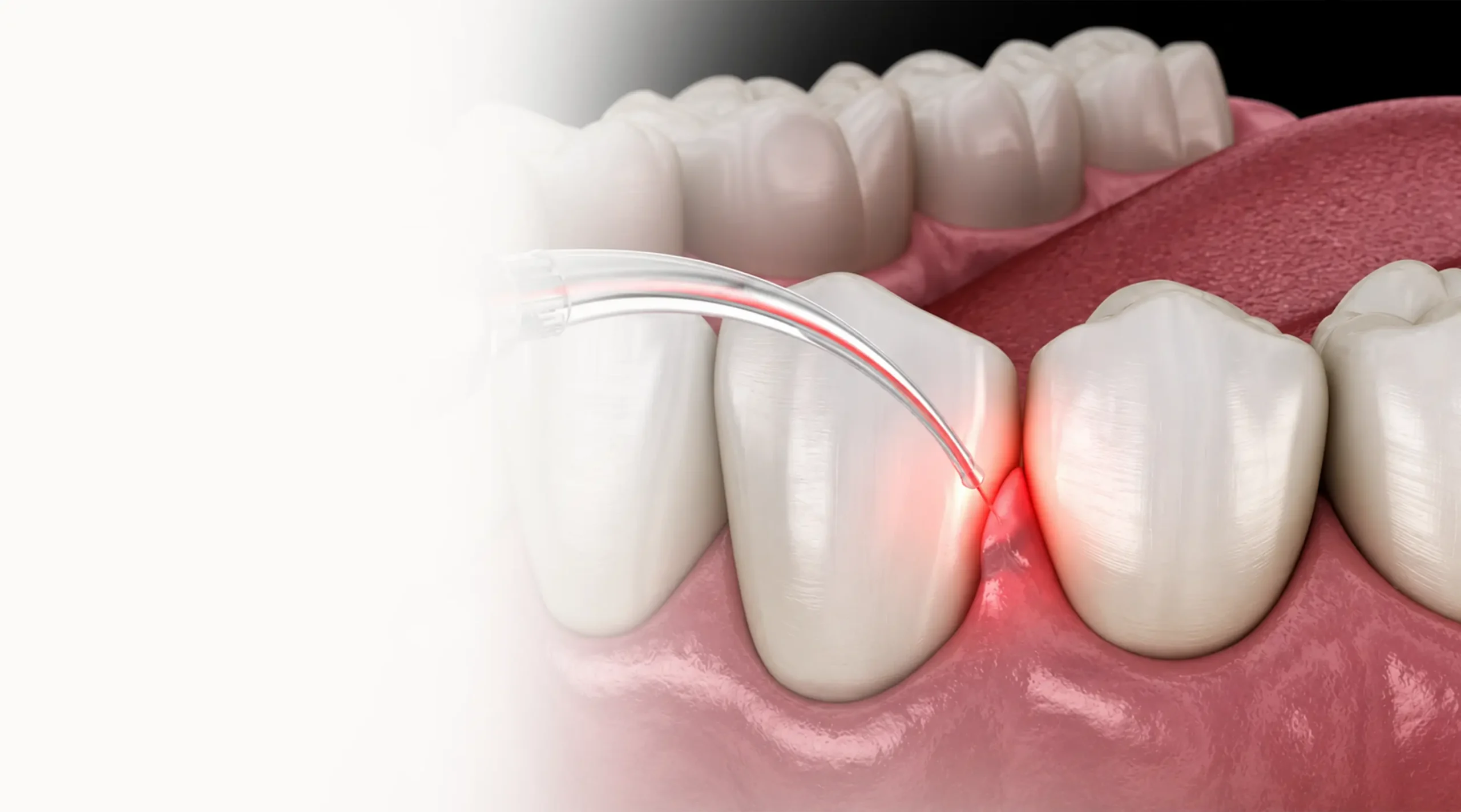
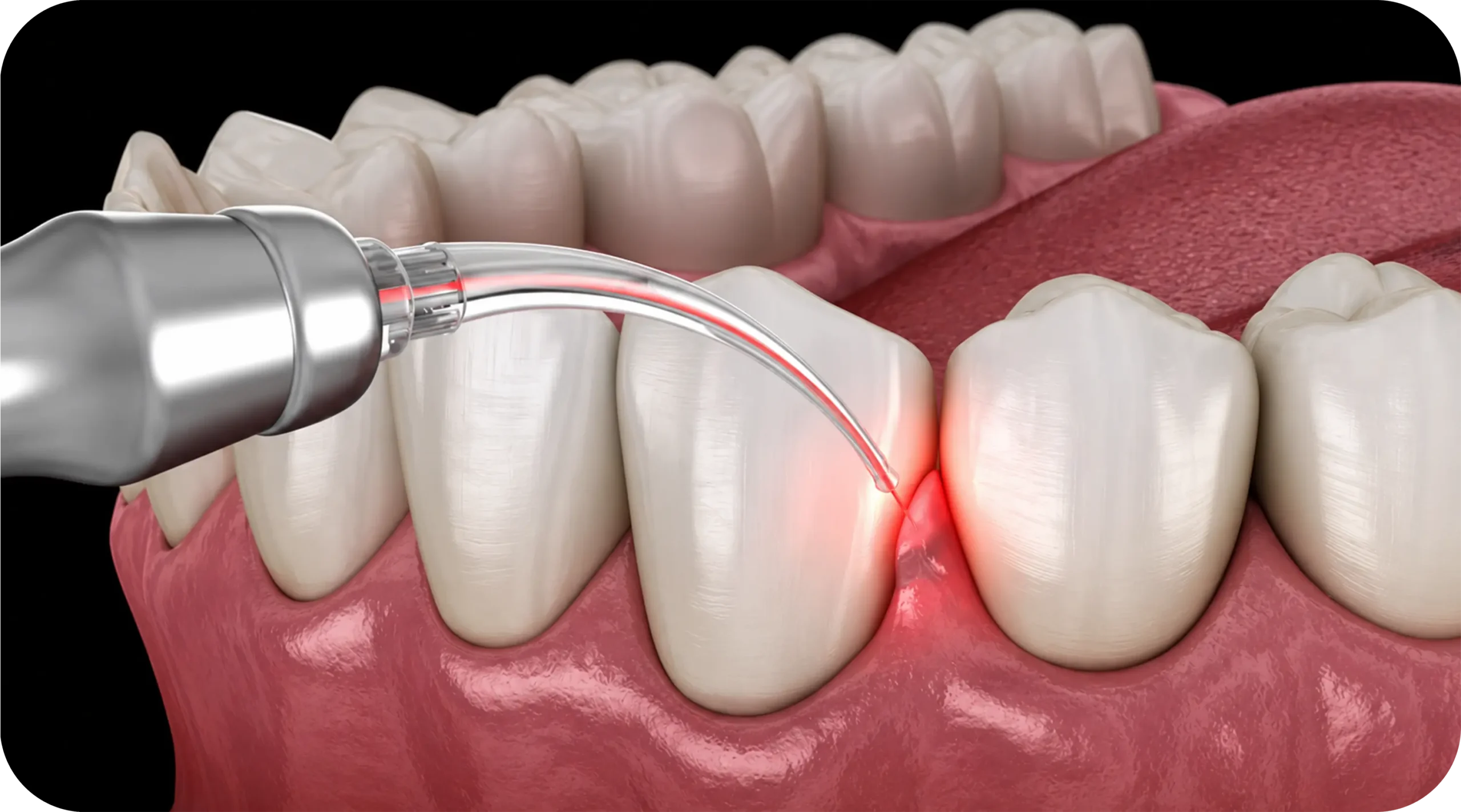
Gum contouring reshapes that frame. Using a laser, excess gum tissue is removed and the margin is redrawn so it follows an even, natural line across the smile — exposing more of the tooth where the gum sits too low, and evening out the places where it dips or peaks from one tooth to the next. One appointment, local anaesthetic, and a visible result before you leave the chair.
It is one of the smallest procedures in cosmetic dentistry and one of the most disproportionate in effect. The eye is remarkably sensitive to gumline symmetry — people notice when it is wrong without being able to say what is wrong — and a millimetre at the margin changes how long a tooth appears far more than most patients expect.
Three things, usually.
A gummy smile. Too much gum showing relative to tooth, so teeth read as short and square even when they are a perfectly normal size. This is a proportion problem, not a tooth problem, and reshaping the margin solves it directly.
An uneven gumline. One tooth sitting a millimetre lower than its opposite number. Barely describable, immediately visible, and the reason a smile looks lopsided in photographs when nothing is obviously wrong with the teeth themselves.
The frame for restorations. Veneers and crowns are made to meet the gum. Built to an uneven margin, they will always look slightly off however well made they are. Contour first, and the restorations are made to the line you are actually keeping.
More than in most treatments, because this is work measured in fractions of a millimetre on teeth people look at from a metre away.
A laser cuts and seals simultaneously. In practice that means almost no bleeding, usually no stitches, and — the part that matters clinically — a clear field throughout. The dentist can see precisely what is being shaped as it is shaped, rather than working through bleeding tissue and assessing the result afterwards.
For the patient it means a procedure that takes under an hour, no sutures to come out, and normal activity the same afternoon.
The procedure itself is short. Almost all of the skill sits in what happens before it starts.
A gumline is not a straight edge. It scallops around each tooth, sits slightly higher on the canines than the incisors, and mirrors itself across the midline of the face. Get that geometry right and the result reads as gum. Get it wrong and it reads as dentistry, no matter how cleanly it heals.
So we start by looking at proportion rather than at gums. How much tooth shows when your lips are at rest. How much gum appears when you smile naturally — which is rarely the same as when someone asks you to smile. Where your lip line falls. How the left side compares with the right.
The new margin is then marked and shown to you before anything is removed. You see where the line will sit and why. This is the point to change your mind, and it exists because gum tissue does not grow back on request.
The area is numbed with local anaesthetic. Gum tissue is sensitive and this stage is not rushed.
The laser then removes tissue along the agreed line, sealing as it works. Depending on how many teeth are involved this takes anywhere from fifteen minutes for a single tooth to around an hour for a full smile line. There is little to no bleeding, and usually no stitches.
You see the new shape immediately, in a mirror, before you leave.
There is a band of tissue attaching gum to tooth that has to remain intact. Working within it is what separates a result that stays healthy for decades from one that causes problems in a few years.
Most gummy smile and asymmetry cases sit comfortably inside that limit, and the visible change is substantial even when the amount of tissue removed is small. Where a case sits close to the boundary, we say so at the assessment rather than discovering it mid-procedure.
Gum contouring is frequently the first step rather than the last.
If you are having veneers, crowns or composite bonding, the gumline is the frame those restorations are built to meet. Reshaping first means the lab is working to the margin you will actually have. Doing it afterwards means either accepting a compromise or remaking work you have already paid for.
Whitening is more flexible and can go either side of contouring. If you are combining treatments, tell us at the assessment so the appointments are sequenced properly.
Often the Final Step in a Smile Makeover A balanced gumline is what makes veneers and crowns look like teeth rather than dentistry. Many patients have contouring done first, so the restorations are made to the new gumline rather than the old one — and the result is a smile that looks proportioned rather than simply whiter.
Both reshape the gumline. The difference is precision, bleeding and how quickly you heal:
A diode laser removes excess tissue and seals as it works, so there is little to no bleeding and usually no stitches. Precise to a fraction of a millimetre, which matters most on front teeth where symmetry is judged by e
Conventional surgical reshaping, still appropriate where a larger amount of tissue is being repositioned. Reliable and well established, but expect slightly more bleeding and a longer settling period.
Where the gumline and the teeth both need work, contouring is done first and the veneers or crowns are made to the healed margin — so the restorations fit the new frame rather than the old one.
Gum contouring is worth considering if you:
Gum contouring reshapes healthy tissue. If there is active inflammation or bleeding, we treat that first — it takes one short appointment and the result afterwards is far more stable.
Gum contouring is completed in a single appointment under local anaesthetic, and most patients are back to normal the same afternoon:
We look at your gumline against your lip line, tooth proportions and how much gum shows when you smile naturally. The new margin is marked and agreed with you before anything is touched.
The area is numbed thoroughly. Gum tissue is sensitive, so this is not rushed — you should feel pressure during the procedure and nothing else.
The laser removes excess tissue along the agreed line, sealing as it goes. Little to no bleeding, usually no stitches, and typically 30 to 60 minutes depending on how many teeth are involved.
The new shape is visible straight away. There is some initial puffiness at the margin, which settles over the following days as the tissue tightens to its final contour.
You leave with written aftercare instructions. Full healing takes one to two weeks, and we review the result before you travel home or at a follow-up appointment.
Your new gumline is marked out and agreed with you before anything is reshaped — we show you where the margin will sit and why, against your lip line and the proportions of your own teeth. Nothing is removed that cannot be justified, because gum tissue does not grow back on request.
Explore our full range of treatments
No. The area is numbed with local anaesthetic before anything starts, and during the procedure you feel pressure rather than pain. Gum tissue is sensitive, so we take time over the numbing rather than rushing it. Afterwards, most patients describe a mild tenderness similar to a scratched palate — noticeable when eating something hot or acidic, easily managed with ordinary painkillers, and gone within a few days. Because the laser seals tissue as it works, there is usually no bleeding and no stitches, which is the main reason recovery feels as minor as it does. If you are anxious about dental treatment generally, say so when you book. It is an extremely common thing to be nervous about and easier to plan around than to manage on the day.
The visible result is there immediately, and most patients go back to normal activity the same afternoon. There is no swelling of the face and nothing that would stop you going out to dinner that evening. What takes longer is the final settling. For the first few days the gum margin looks slightly puffy and paler than usual along the treated edge. Over one to two weeks the tissue tightens and the colour returns to normal, and that is when you are seeing the true final contour. This matters if you are timing the procedure around an event. If you want to look your best for a wedding or a photograph, allow two weeks rather than two days — not because anything looks wrong before then, but because the last few percent of refinement happens in that window.
Not to where it was. When excess gum tissue is removed properly, the new margin is stable and the result is considered permanent. This is why the planning stage matters as much as the procedure: gum tissue does not grow back on request, so the line has to be right before anything is removed. There is a small amount of natural rebound in the first days as the tissue settles, and we account for that when marking the new margin. What can change the gumline later is gum disease, which causes recession rather than regrowth, and that pulls tissue away from the teeth rather than back over them. Keeping your gums healthy with ordinary brushing, flossing and regular check-ups is what protects the result long term.
Enough to make a substantial difference to how your smile looks, and not so much that it compromises the tooth. There is a biological limit — a band of tissue and bone that attaches to each tooth and has to stay intact — and working within it is what separates a result that stays healthy from one that causes problems later. In practice, most gummy smile and asymmetry cases fall comfortably within that limit, and the change is dramatic even when the amount of tissue removed is small. A millimetre at the gumline changes the apparent length of a tooth far more than most people expect. This is assessed before treatment, not during it. We will tell you at the consultation what is achievable in your case rather than promising a result and discovering the constraint halfway through.
Yes, and it is one of the most common reasons people ask about it. A gummy smile is usually a proportion problem rather than a tooth problem — the teeth are a normal size, but too much gum tissue covers them, so they read as short and the smile reads as gum-heavy. Reshaping the margin exposes more of the natural tooth and rebalances that ratio. The effect is immediate and often more dramatic than patients expect from a procedure that takes under an hour, because the eye is extremely sensitive to gumline symmetry even when people cannot articulate what is bothering them. At the consultation we will look at how much gum shows when you smile naturally rather than when you are asked to smile, since those are rarely the same thing.
Yes, and this is how most of our patients do it. Gum contouring takes one appointment and adds no extra days to your trip. The sequence matters, though. Where you are having veneers or crowns, the contouring is done first so the restorations can be made to the new gumline rather than the old one. A veneer built to an uneven margin will always look slightly off, however good the veneer itself is — the gum is the frame, and the frame has to be right before the picture goes in. Whitening is more flexible and can be done either side. If you are planning a combination, tell us at the assessment stage so the appointments are sequenced properly rather than fitted in around each other.
Usually not. Contouring removes soft tissue rather than exposing root surface, so the sensitivity that people associate with gum recession does not generally apply. Some patients notice mild sensitivity to hot and cold for a few days at the treated teeth, particularly where a larger amount of tissue was reshaped. It settles as the margin heals. A sensitive-teeth toothpaste helps if it bothers you, though most people do not need one. If sensitivity is sharp rather than mild, or persists beyond a couple of weeks, contact us — it is uncommon and worth looking at rather than waiting out.
For cosmetic reshaping of the front teeth, the laser is better, and it is what we use. It cuts and seals simultaneously, so there is minimal bleeding, usually no stitches, and a cleaner field to work in — which matters because the dentist can see exactly what is being shaped as it happens rather than working through bleeding tissue. Precision is the real argument. Gumline symmetry is judged by eye at conversational distance, and a fraction of a millimetre on a front tooth is visible. The laser allows that level of control and a more predictable healing margin. Scalpel technique remains appropriate in some situations, particularly where a larger amount of tissue is being repositioned rather than removed. It is a well established approach and the results are good — the trade-off is more bleeding during and a slightly longer settling period after.
No. Gum tissue heals differently from skin and does not scar the way a cut on your arm does. The treated margin looks slightly paler for the first days and then returns to normal colour and texture as it heals. What determines whether the result looks natural is the shape of the line, not the healing. A gumline that follows the natural scalloped contour around each tooth looks like gum. One cut straight across does not, regardless of how well it heals — which is why the marking stage takes as long as it does. Within a couple of weeks there is generally nothing to indicate that anything was done, other than the proportions looking right.
Yes, and single-tooth cases are more common than full-arch ones. Often the issue is one lateral incisor sitting a millimetre lower than its twin on the other side — barely describable, but the eye picks it up immediately and the smile reads as asymmetric. Those cases are quick, sometimes fifteen or twenty minutes, and the change is disproportionate to the effort. Patients frequently say it is the thing they should have done years earlier. We would rather adjust one tooth well than reshape six for the sake of doing more. If one is what your smile needs, that is what we will recommend.
Nothing dramatic, and nothing for long. For the first day or two, avoid very hot food and drink, anything acidic like citrus or vinegar, spicy food, and alcohol — all of which sting a healing margin. Stick to lukewarm and mild and you will barely notice. Brush normally but gently around the treated area, and do not poke at it with your tongue, which is the instruction everyone finds hardest to follow. Avoid smoking if you can, since it slows healing of gum tissue specifically. You will leave with written aftercare instructions covering all of this, and a contact number if anything does not feel right. Normal brushing and flossing resume within a few days, and after two weeks there are no restrictions at all.
Send us a few details and our patient coordinators will come back within 24 hours with a treatment plan, timeline, and price. No obligation.