A proven, cost-effective crown with a metal core and porcelain surface, made in the lab to your measurements and matched to your teeth.
A strong, tooth-coloured crown with decades of clinical history behind it, and an honest explanation of when zirconia is the better choice.

 1000+ Google reviews

 Excellent on Trustpilot
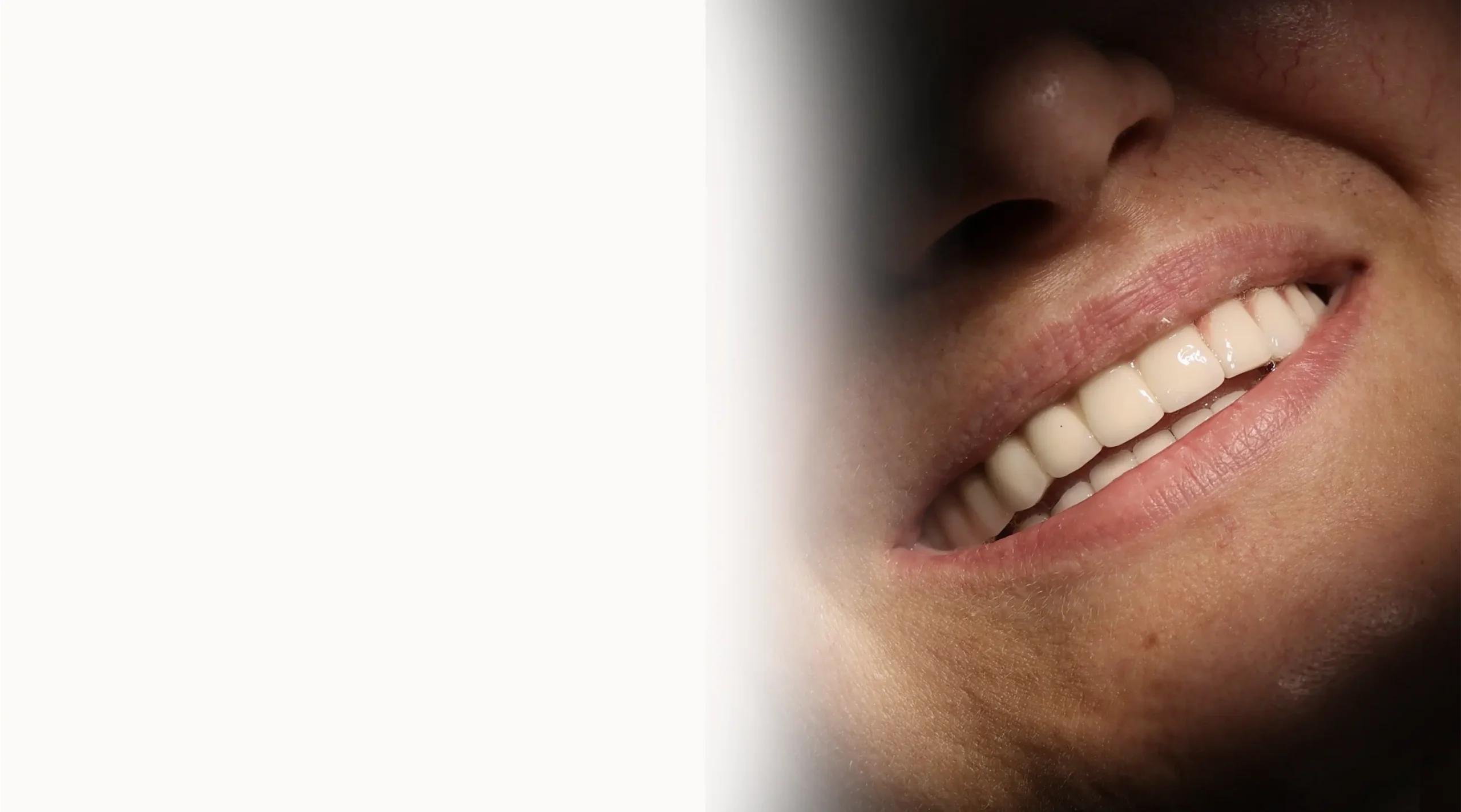
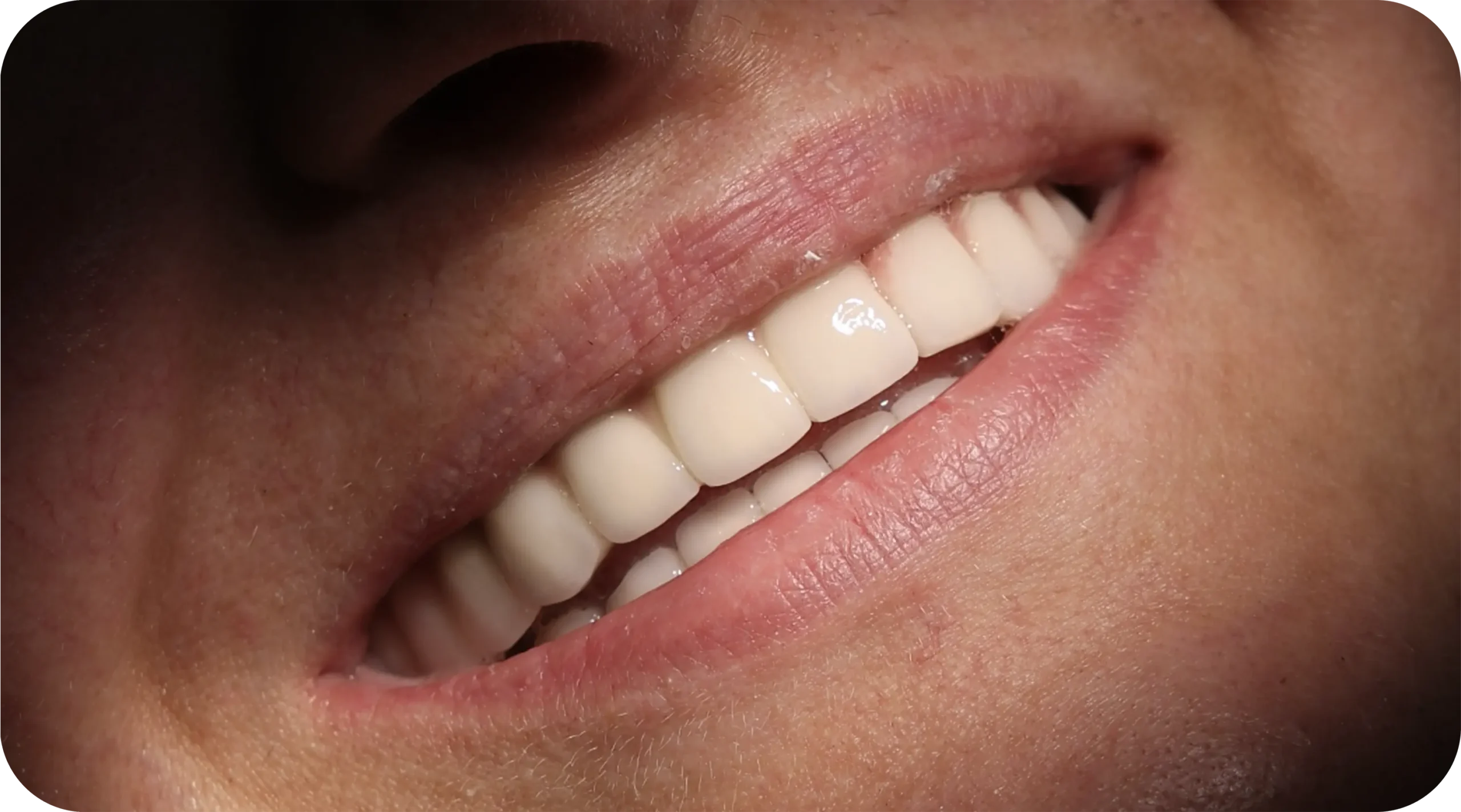
A porcelain-metal crown covers a damaged tooth with a strong metal core and a tooth-coloured porcelain surface.
Also known as a PFM crown, short for porcelain fused to metal, it has been used in dentistry for decades. The metal gives it strength; the porcelain layered over it gives it the colour and shape of a natural tooth. It remains one of the most widely used crown types in the world, and for good reason: it is dependable and more affordable than fully ceramic options.
A metal-ceramic crown is tough. The metal substructure supports the porcelain, so the crown handles chewing forces on back teeth well. It has a long clinical track record, which means its behaviour over many years is well understood. And because the materials cost less than high-end ceramics, it is often the most budget-friendly way to protect a tooth that needs full coverage.
The metal that gives the crown its strength also brings two known compromises.
First, light cannot pass through metal. A porcelain-metal crown is therefore more opaque than natural enamel or modern zirconia. On a back tooth this rarely matters. On a front tooth, next to natural teeth, it can look slightly flat.
Second, if your gums recede over the years, the metal edge of the crown can show as a thin dark line at the gumline. This is the grey margin many people notice on older crowns.
There is also a practical point: to make room for both the metal and the porcelain, a little more tooth structure is usually removed than for some all-ceramic crowns. And patients who react to certain metals are better served by a metal-free option.
We offer porcelain-metal crowns because they are the right choice for some patients, not because they are the right choice for everyone. At HMC, most crown cases are done in Zirkonzahn zirconia, which is metal-free, strong enough for molars and natural-looking at the front. For single front teeth where matching a neighbour is hardest, we often recommend Ivoclar IPS e.max.
When porcelain-metal does make sense, typically on back teeth, for patients working to a tighter budget, or to match existing porcelain-metal work, we make it properly: prepared carefully, made in the lab to your measurements and shade, and fitted with the bite checked precisely.
Your written, itemised quotation shows which material is planned for each tooth and why, so you can compare options side by side before deciding.
A porcelain-metal crown is made in the lab from measurements of your prepared tooth and fitted at a second appointment.
Your dentist examines the tooth, checks the gum around it and your bite, and takes any imaging needed to see the root and bone. If the tooth needs a root canal or other treatment first, that is planned before the crown. This is also where we discuss materials: whether porcelain-metal suits this tooth, or whether zirconia or E.max would be the better choice.
Under local anaesthetic, any decay and failing old fillings are removed and the tooth is shaped to make room for the crown. Because a porcelain-metal crown has two layers, metal and porcelain, the preparation needs enough space for both while keeping as much healthy tooth as possible.
Detailed measurements of the prepared tooth and the teeth around it are taken, and the shade is chosen with you in good light. The measurements and shade are sent to the dental laboratory, together with notes on the shape you want.
The lab makes the metal substructure to fit your tooth precisely. Porcelain is then built up over the metal in layers and fired, shaping the crown and matching its colour to your natural teeth. An opaque layer is applied first to hide the metal underneath.
At the second appointment the crown is tried in. Your dentist checks the fit at the edges, the contact with neighbouring teeth, the shape and the colour. Once you are happy, the crown is cemented in place.
Finally, your bite is checked carefully. A crown that is even slightly high changes how your teeth meet and can make the tooth sore, so any high spots are adjusted and the porcelain is polished smooth. Our team explains aftercare in English, Italian, Spanish, French or Greek.
We Will Tell You When Zirconia Is Better. Porcelain-metal is reliable and affordable, but it is not the best choice for every tooth. On front teeth, or where gums may recede, a metal-free Zirkonzahn zirconia crown usually looks better for longer. We explain the trade-off before you choose.
Three crown materials cover most cases. Here is how porcelain-metal compares:
A metal core with layered porcelain. Strong, proven and more affordable, best suited to back teeth where translucency matters less.
Metal-free Zirkonzahn zirconia. Strong enough for molars, more natural at the gumline and no dark margin over time.
Ivoclar lithium disilicate with excellent translucency, often the best match for a single visible front tooth.
A porcelain-metal crown can be a sensible choice if you have:
If the crown is on a visible front tooth, your gums are thin or receding, or you react to metals, we will usually recommend zirconia or E.max instead, and explain why before you decide.
A porcelain-metal crown needs two appointments, with the crown made in the lab in between to the measurements taken of your prepared tooth:
We examine the tooth, gum and bite, take any imaging needed, and agree the right crown material for each tooth before starting.
Under local anaesthetic, decay and old fillings are removed and the tooth is shaped to make room for the metal and porcelain layers.
Detailed measurements and your chosen shade are sent to the lab, where the metal core is made and the porcelain layered over it.
The crown is tried in to check fit, contacts, shape and colour. Once you are happy, it is cemented in place.
Your bite is checked and any high spots adjusted, then the porcelain is polished so the crown feels natural when you close.
We recommend the material that suits each tooth, not the one that costs most. If porcelain-metal is the right call, you get a well-made crown at a fair price. If zirconia or E.max would serve you better, we tell you. Every crown and material is on your written, itemised quotation.
Explore our full range of treatments
It is a crown with a metal core and a porcelain outer layer. The metal gives strength, and the porcelain gives the tooth-coloured appearance. It is also called a porcelain fused to metal (PFM) or metal-ceramic crown. It has been used for decades and remains one of the most common crown types because it is reliable and affordable.
For most patients, zirconia. It is metal-free, strong enough for back teeth, more natural-looking and does not develop a dark line at the gum. At HMC, most crowns are made in Zirkonzahn zirconia. Porcelain-metal is a sensible choice on back teeth where appearance matters less, for patients on a tighter budget, or to match existing porcelain-metal work. We explain the trade-offs for your specific tooth before you decide.
On back teeth, yes. The porcelain is shaded to match your teeth. On front teeth, it can look slightly more opaque than natural enamel, because light cannot pass through the metal core. If the gums recede over the years, a thin dark line can also appear at the gumline. For visible front teeth we usually recommend zirconia or E.max instead.
That dark line is usually the metal edge of a porcelain-metal crown showing as the gum recedes over time. It is not decay in itself, but it is a common reason people replace older crowns. Metal-free crowns in zirconia or E.max do not have this problem, which is why they are often chosen for replacements on visible teeth.
The tooth is prepared under local anaesthetic, so you feel pressure and vibration but not pain. Some sensitivity to cold or biting between preparation and fitting is normal, and usually settles once the final crown is cemented. If the tooth is very sensitive or painful, tell us.
Two. At the first, the tooth is prepared and measured. The crown is then made in the lab, and at the second appointment it is tried in, cemented and your bite is adjusted. If the tooth needs a root canal or other treatment first, that is scheduled before the crown. Your treatment plan gives you the exact schedule.
If you know you react to certain metals, tell us before treatment. In that case we recommend a metal-free crown in zirconia or E.max, which avoids the issue entirely.
It can, though it is not common. The risk is higher in people who grind or clench their teeth, or who bite on very hard things. Small chips can sometimes be smoothed or repaired. Larger chips usually mean replacing the crown. A night guard helps protect the porcelain if you grind.
Yes. If an old crown has a visible dark line, a chipped surface, a poor fit or decay underneath, we remove it, treat the tooth and fit a new crown. Many patients choose zirconia for the replacement, especially on front teeth, but a new porcelain-metal crown is also possible. We explain both before you decide.
Brush twice a day with fluoride toothpaste, clean between your teeth daily, and pay attention to the gumline around the crown, where decay usually starts. Have regular check-ups and professional cleans. Avoid chewing ice or very hard food on the crown, and wear a night guard if you grind your teeth.
Your written, itemised quotation lists each crown and its material, plus anything needed beforehand, such as imaging, a root canal or fillings, each on its own line. If we recommend a different material for some teeth, both options can be shown so you can compare. Nothing is added once treatment starts that was not discussed with you first.
Send us a few details and our patient coordinators will come back within 24 hours with a treatment plan, timeline, and price. No obligation.