Removes infection from inside the tooth, relieves pain and saves your natural tooth, usually in one or two visits under local anaesthesia.
Infection cleared from inside the tooth, pain relieved and your natural tooth kept, with a crown to protect it where needed.

 1000+ Google reviews

 Excellent on Trustpilot
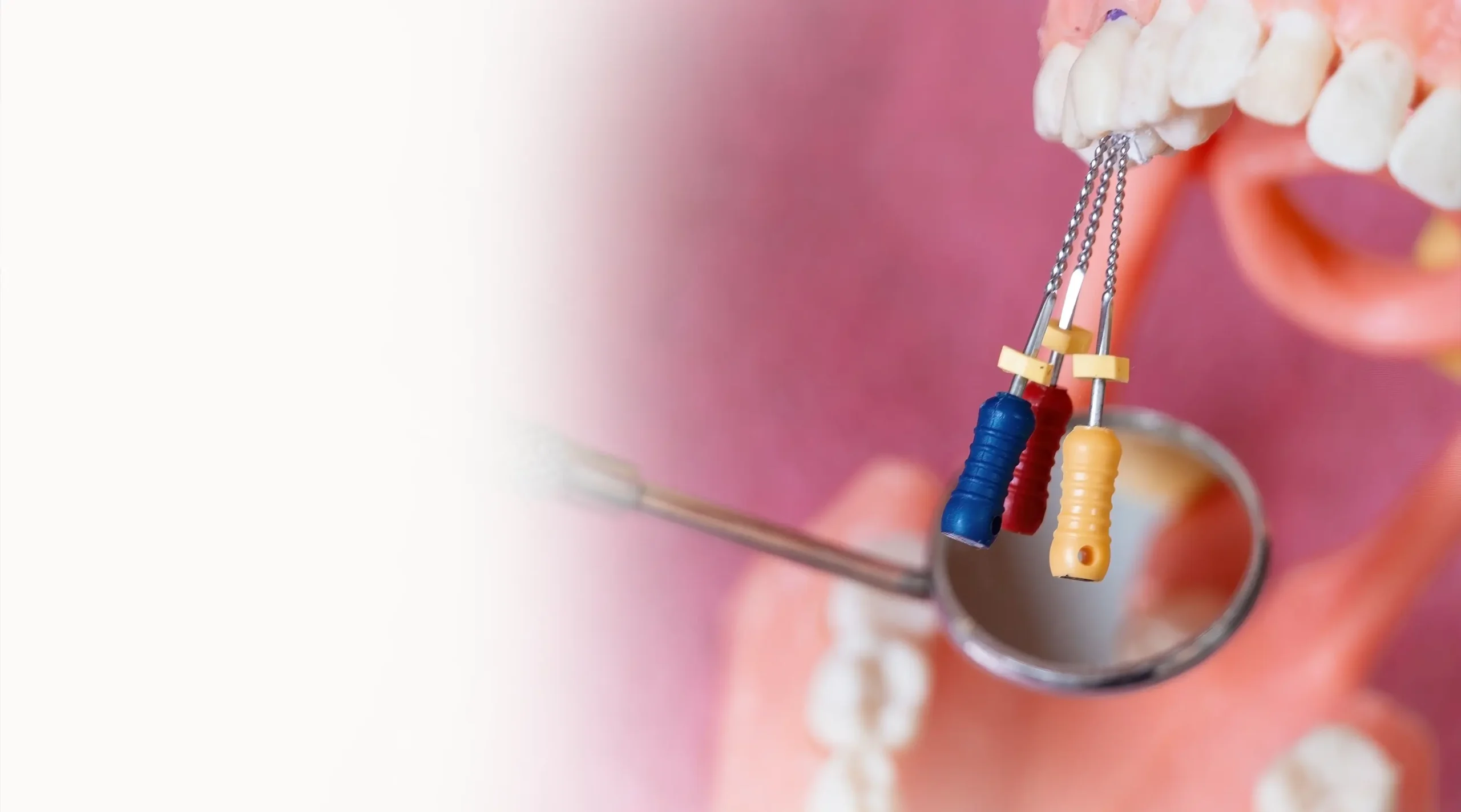
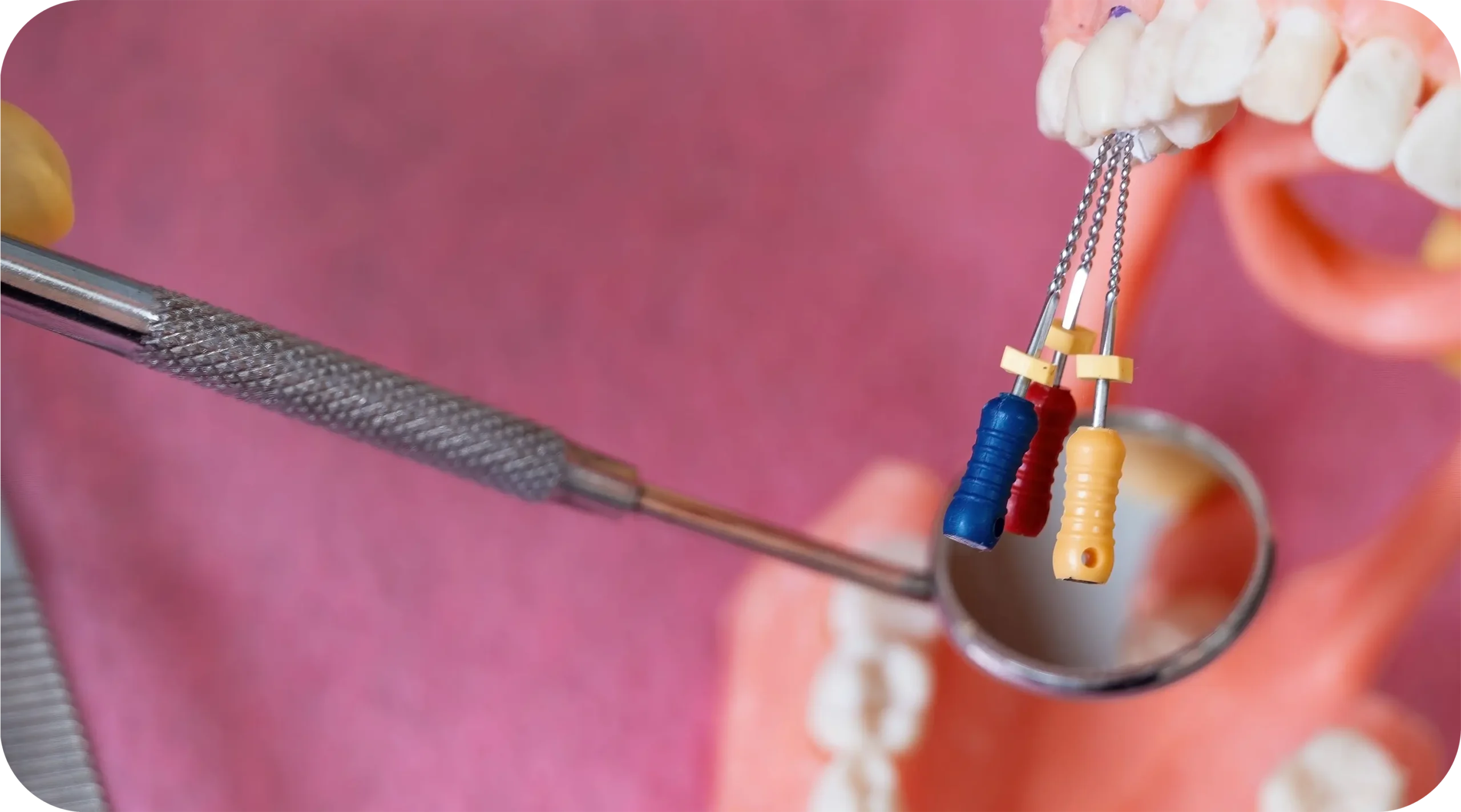
Root canal treatment removes infected or inflamed tissue from inside a tooth, relieving pain and saving the tooth itself.
Inside every tooth is the pulp: nerves and blood vessels running through narrow canals in the roots. When deep decay, a crack or repeated dental work lets bacteria reach the pulp, it becomes inflamed or infected. It cannot heal on its own, and the infection can spread to the bone around the root.
For an infected tooth, the alternative to a root canal is usually an extraction. Removing the tooth ends the pain, but it leaves a gap that then needs an implant, a bridge or a denture. Keeping your own tooth, with its own root in its own bone, is almost always the better long-term result when the tooth can be saved.
That is why we check first whether root canal treatment is realistic. If the tooth is split below the gum, has too little structure left to restore, or has lost its bone support, we tell you before starting and explain the alternatives honestly, including an implant with a MegaGen or Straumann system.
Root canal treatment has a reputation for being painful, but the pain people remember usually comes from the infection, not the treatment. With local anaesthetic, the procedure itself feels much like a large filling. Most patients find the throbbing ache they arrived with is gone once the infected tissue is removed.
Every root canal treatment in Albania at HMC starts with imaging. A standard X-ray shows the roots and any infection at their tips. For teeth with curved, extra or calcified canals, or for a previous root canal that has failed, a 3D CT scan shows the canal anatomy in detail before we begin, so nothing is missed. Imaging is quoted separately and only taken when your case needs it.
Once the inside of a tooth has been cleaned and sealed, the tooth is more brittle than before. Front teeth can often be restored with a filling. Molars and premolars, which take most of the chewing force, usually need a crown to stop them cracking. At HMC, crowns are made in Zirkonzahn zirconia or Ivoclar IPS e.max from measurements sent to the lab, and the crown is on your written, itemised quotation from the start, not added later.
Root canal treatment is carried out under local anaesthetic, usually in one or two sessions. The aim is simple: remove everything infected from inside the tooth, disinfect the canals thoroughly, and seal them so bacteria cannot get back in.
The area is numbed and we check it is fully numb before starting. The tooth is then kept isolated from saliva, because the canals need to stay as clean as possible throughout the treatment.
A small opening is made through the top of the tooth to reach the pulp chamber. Any decay or old filling material is removed at the same time.
Each canal is located, measured and cleaned along its full length with fine instruments, removing the infected pulp. The canals are shaped so they can be disinfected and filled properly. This is the most important part of the treatment: a canal that is missed or not cleaned to its end is the most common reason a root canal fails.
The canals are rinsed repeatedly with disinfecting solutions to kill bacteria in the areas instruments cannot reach. Where there is a lot of infection, a medicated dressing may be placed inside the tooth and the tooth sealed until the next session, giving the infection time to settle.
Once the canals are clean and dry, they are filled with a biocompatible material and a sealer that closes them off completely. The access opening is then sealed.
The final step is protecting the tooth. Front teeth are often restored with a composite filling. Back teeth usually need a crown in Zirkonzahn zirconia or IPS e.max, made in the lab from measurements we send, and fitted at a later appointment.
If a tooth that had a root canal elsewhere is painful or shows infection again, endodontic treatment can often be repeated. The old filling material is removed, the canals are cleaned again, and any missed canal is treated. A 3D CT scan is especially useful here. Our team explains every step in English, Italian, Spanish, French or Greek.
Most Back Teeth Need a Crown Afterwards. A tooth that has had a root canal is more brittle. On molars and premolars, a crown protects it from cracking. We plan it from the start, in Zirkonzahn zirconia or IPS e.max, so it is on your quotation before treatment begins.
Depending on the tooth, these are the realistic paths:
The canals are cleaned and sealed, and the tooth protected with a Zirkonzahn zirconia or IPS e.max crown. The standard path for back teeth.
A root canal done previously that has failed is reopened, cleaned again and resealed, often planned on a 3D scan to find any missed canal.
When the tooth cannot be saved, it is removed and replaced with a MegaGen or Straumann implant after 3 to 6 months of healing.
Root canal treatment is usually recommended if you have:
If the tooth is split, has too little structure left to restore, or has lost its bone support, a root canal will not save it. We tell you that before starting and explain the alternatives.
Root canal treatment is usually completed in one or two sessions, depending on the tooth and how much infection there is:
We examine the tooth and take an X-ray, or a 3D CT scan for complex canals. Imaging is quoted separately and explained first.
The area is numbed and checked before we start. The treatment itself feels much like having a large filling.
Infected pulp is removed, each canal is cleaned along its full length and rinsed repeatedly to kill remaining bacteria.
The clean canals are filled and sealed so bacteria cannot return. Heavily infected teeth may need a second session first.
Front teeth usually get a filling. Back teeth get a Zirkonzahn zirconia or IPS e.max crown, made in the lab.
We try to keep your natural tooth, and tell you honestly when a root canal will not work. Complex cases are planned on a 3D scan, the crown is part of the plan from day one, and every step is on your written, itemised quotation. The price you are quoted is the price you pay.
Explore our full range of treatments
The treatment itself should not hurt. The tooth is numbed with local anaesthetic, and most patients say it feels much like having a large filling. The pain people associate with root canals usually comes from the infection before treatment. Once the infected tissue is removed, that throbbing ache normally goes. Afterwards, the tooth can feel tender for a few days, especially when biting. This is normal and is usually well controlled with painkillers.
Usually one or two. Many teeth can be cleaned, disinfected and sealed in a single session. If there is a lot of infection, or the tooth has complex canals, we may place a medicated dressing and seal the tooth, then finish at a second session once the infection has settled. Back teeth then need a crown, which is made in the lab and fitted at a later appointment.
On back teeth, almost always. Molars and premolars take most of the chewing force, and a root-treated tooth is more brittle. Without a crown, it can crack or split, sometimes beyond repair. Front teeth, which take less force, can often be restored with a composite filling instead. At HMC, crowns are made in Zirkonzahn zirconia or Ivoclar IPS e.max. The crown is planned from the start and appears on your written quotation before treatment begins.
If the tooth can be saved, keeping it is usually the better choice. Your own tooth, in your own bone, with its own ligament, is hard to beat. An implant is an excellent replacement when a tooth cannot be saved, for example when it is split below the gum, has too little structure left, or has lost its bone support. We use MegaGen implants as our primary system and Straumann as the alternative, and implants need 3 to 6 months of healing before the final crown. We explain both options honestly, with the realistic outlook for your tooth.
With thorough treatment and a proper crown, many years, often a lifetime. The two things that matter most are how well the canals were cleaned and sealed, and whether the tooth is protected from cracking. After that, it needs the same care as any other tooth: brushing, cleaning between the teeth and regular check-ups.
Often, yes. If a tooth treated in the past becomes painful or infected again, retreatment can save it. The old filling material is removed, the canals are cleaned and disinfected again, and any canal that was missed the first time is treated. A 3D CT scan is especially useful here to see the full canal anatomy. If retreatment is unlikely to work, we tell you before starting and discuss the alternatives.
Not always. A standard X-ray is enough for many teeth. A 3D CT scan is useful for teeth with curved, extra or calcified canals, for failed root canals, and where infection is not clearly visible on a flat X-ray. It shows the canal anatomy and the bone around the root in detail. Imaging is quoted separately and only taken when your case needs it.
The tissue around the root was inflamed before treatment, and cleaning the canals disturbs it a little further. It needs a few days to settle. Tenderness when biting is the most common feeling. Avoid chewing hard food on that side and take painkillers as advised. Contact us if pain increases after a few days, if swelling appears, or if the tooth still feels very sore after a week.
Yes. Root canal treatment does not usually stop you from flying. What matters more is timing within your stay. We plan the treatment early so there is time for a second session if needed and for the crown to be made and fitted before you leave. Tell us your travel dates when you book, and we will plan around them.
A tooth that has lost its nerve can gradually darken over time, especially front teeth that have had an injury. On back teeth, the crown covers this completely. On front teeth, if darkening becomes noticeable, there are options to improve the colour, which your dentist can discuss with you.
Your written, itemised quotation lists the root canal treatment for each tooth, any imaging needed, and the filling or crown that will protect the tooth afterwards, each on its own line with the crown material named. If a second session is needed, that is explained in advance. Nothing is added once treatment starts that was not discussed with you first.
4.9
/ 1006 reviews
“I had a great experience at this dentist. Came across a few days to get various treatments including fillings and a root canal. Very efficient and gentle care from the lovely staff. The facilities were very pristine and clean. Highly recommend!”
“I had my appointment today with Klarisa and Ami, such lovely women. I had my teeth cleaned and a root canal - they worked super fast and asked if all was good constantly. Very very happy and will be seeing them again!”
Send us a few details and our patient coordinators will come back within 24 hours with a treatment plan, timeline, and price. No obligation.