Ultra-thin lithium disilicate porcelain veneers for a bright, natural smile. Minimal tooth reduction and colour-stable, long-lasting results.
Thin porcelain shells bonded over your own teeth — chips, gaps and discoloration covered in just a few visits.

 1000+ Google reviews

 Excellent on Trustpilot
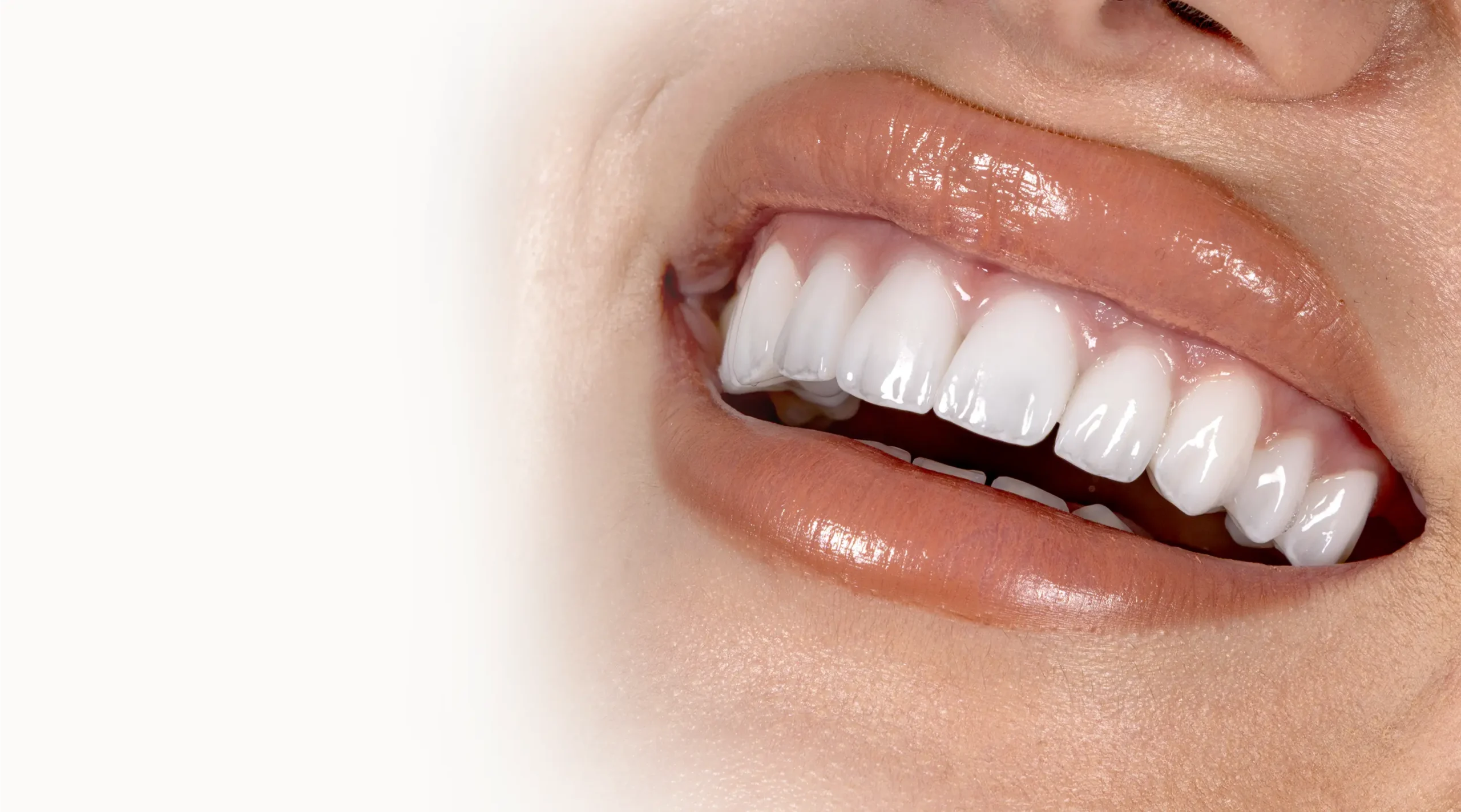
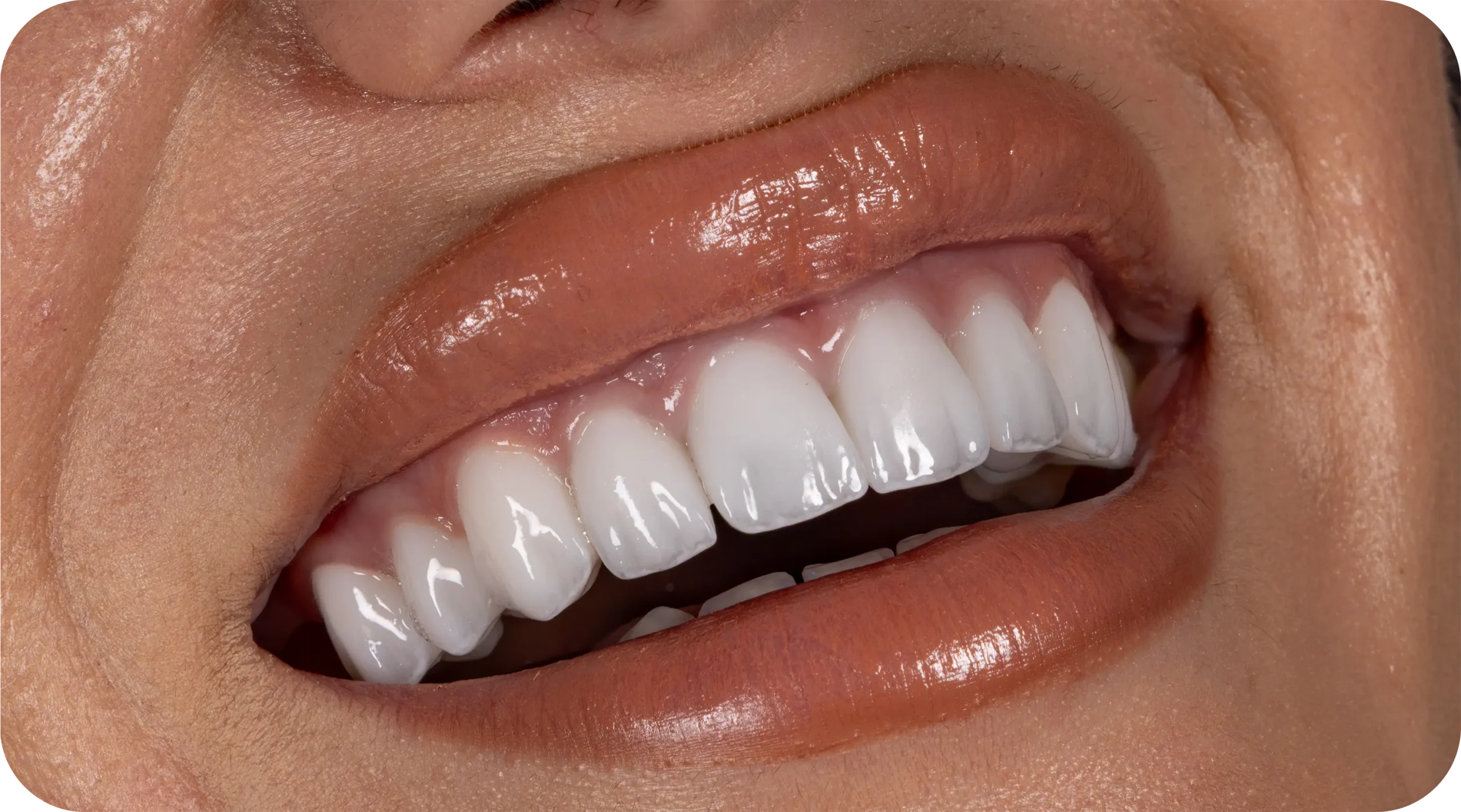
A veneer is the most conservative way to change how a tooth looks. Rather than covering the tooth entirely, it bonds to the front surface — which means the tooth underneath stays largely intact, and the result reads as enamel rather than as dentistry.
What makes that possible is the material. E.max is a lithium disilicate glass-ceramic from Ivoclar Vivadent, and it resolved a problem that held cosmetic dentistry back for decades: older porcelains that looked convincing were fragile, and materials strong enough to last were opaque. E.max is both strong and lifelike, which is why it can be made thin enough to bond over a lightly prepared tooth and still perform for years.
At Health Medical Center in Tirana, international patients complete veneer treatment in 4–7 days, using Ivoclar Vivadent ceramics, at a cost well below equivalent private treatment in Western Europe.
E.max veneers are thin shells of lithium disilicate ceramic bonded to the front of your natural teeth. The material is pressed or milled as a single block rather than layered over a core, which gives it a flexural strength in the region of 400–500 MPa — high enough that a veneer can be made at around 0.3–0.5 mm and still be reliable.
That thinness is the whole point. Less thickness means less preparation, and preserving healthy enamel is one of the most consequential long-term decisions in any cosmetic case. Enamel is also what veneers bond to best, so conserving it protects the strength of the restoration as well as the tooth.
Because there is no metal substructure and no opaque core, light passes through an e.max veneer much the way it passes through enamel. There is nothing to grey out the tooth and nothing to shadow the gum line as tissue changes over the years.
Veneers are usually described as cosmetic, though the concerns they resolve rarely feel cosmetic to the person living with them:
Healthy gums and sufficient enamel to bond to are the foundation. Where either needs attention first, we build that into your plan. Grinding is straightforward to accommodate with the right material choices and a protective night guard.
A veneer covers the front of the tooth and needs minimal preparation. Where a tooth is structurally sound with good enamel, it gives an excellent aesthetic result while keeping as much of your own tooth as possible. This is our preferred option wherever the clinical picture allows.
A crown covers the tooth entirely. It is the right choice when a tooth is root-treated, heavily filled, cracked, or short of the enamel a veneer needs to bond reliably — in those situations full coverage is genuinely the stronger long-term restoration.
Most full smile cases use both. Your written plan sets out, tooth by tooth, what is being placed and why — so you know exactly what you are getting before you travel.
If your case would be better served by something simpler — whitening, or bonding on two teeth rather than veneers across eight — we will tell you that at consultation. A recommendation you can trust is worth more than a larger treatment plan.
Remote assessment. Send photographs — smiling widely, at rest, and from each side — along with any recent panoramic X-ray. Our clinical team reviews your case and returns a preliminary plan indicating how many veneers are likely and an indicative cost. Free, and with no obligation.
Examination and planning. On arrival in Tirana you have a full clinical examination, a 3D scan, gum assessment, and bite evaluation. We confirm or adjust the remote plan against what we find, and agree the shape, length, and shade of your new smile with you before treatment begins.
Preparation. A minimal amount of enamel is prepared to create the space the veneers need. The exact amount depends on your case, and we keep it to the minimum the tooth allows.
Laboratory and materials. Measurements and your agreed shade go to the laboratory. Your veneers are made from Ivoclar Vivadent e.max ceramic, built to your case rather than to a standard template, and finished with the surface texture and subtle shade variation that make ceramic read as natural rather than uniform.
Try-in. Veneers are tried in before final cementation, so fit, shade, and contour can be checked against your face and refined while adjustments are still easy to make.
Fitting and final check. Once you're happy, the veneers are bonded, the bite is adjusted so everything closes comfortably, and every surface is polished before you leave.
Most cases finish within four to seven days in Tirana.
Proximity. Tirana International Airport takes direct flights from Milan, Rome, Bologna, Venice, London, Dublin, Madrid, Barcelona, Paris, Athens, and much of Central Europe — typically 1.5 to 2.5 hours. Short enough that a follow-up visit is never a major undertaking.
Ease of entry. EU, UK, and US citizens travel to Albania without a visa.
Cost. A full set of veneers in London, Dublin, or Milan runs into five figures. In Tirana the equivalent case costs considerably less, because local operating costs are lower — not because of what goes into your mouth.
A city worth the trip. Tirana is compact, safe, and affordable, with the coast under two hours away. The days between appointments are yours.
Conservative preparation. We keep enamel reduction to the minimum each tooth allows, because what is removed does not grow back and enamel is what veneers bond to best.
Ivoclar Vivadent ceramics. Our veneers use e.max from Ivoclar Vivadent, the Liechtenstein manufacturer whose materials are the reference standard in aesthetic dentistry across Europe. For zirconia crowns we use Zirkonzahn. These are the same materials used in clinics in Zurich, Munich, and Milan.
Written, unit-by-unit quotations. You know how many veneers, at what price, before you fly — and the quotation doesn't change once you're in the chair.
Your smile agreed in advance. Shape, length, and shade are settled with you before treatment begins.
Support in your language. Our team works in English, Italian, Spanish, French, and Greek.
Aftercare. You leave with written care instructions, and a direct contact number stays open to you afterwards — if anything comes up once you're home, you can reach us.
With good bonding, healthy gums, and consistent care, e.max veneers commonly last ten to fifteen years and often longer. What extends them is straightforward: daily brushing and interdental cleaning, regular hygiene appointments, a night guard if you grind, and avoiding point loads — ice, pens, packaging, fingernails.
E.max resists staining far better than composite bonding. Coffee, wine, and tobacco won't discolour the ceramic itself, though they affect the natural teeth around it, which is why hygiene visits matter to the appearance of the whole result.
E.max veneers are made from lithium disilicate, a glass-ceramic material prized for its strength and the way it transmits light like natural enamel. Each veneer is made to your tooth's measurements, then bonded to the front surface of your tooth after only a thin layer of enamel is removed - often less than with traditional porcelain.
Because the material is more durable than standard porcelain, e.max veneers can be made thinner while still resisting chipping, which is what allows for that minimal tooth reduction.
Veneers Are a Long-Term Commitment. Even with minimal preparation, veneers involve removing enamel that doesn't grow back. Before you commit, we agree the shape, length and shade with you, and can show you a trial composite mock-up on your own teeth.
Both are ceramic veneers - the difference is strength and how much natural tooth needs to be removed:
Stronger and more chip-resistant than traditional porcelain, allowing for a thinner veneer and less enamel removal.
A slightly more affordable option with excellent aesthetics, though it typically needs marginally more tooth preparation.
E.max veneers are worth considering if you:
E.max veneers still involve removing a thin layer of enamel that won't grow back. If you'd like to see the result first, we can start with a trial composite mock-up directly on your teeth.
E.max veneers typically take two visits - one for design and preparation, a second to bond your custom-made veneers.
Your dentist examines your teeth, gums and bite and discusses what you want to change. This is where we confirm whether e.max veneers are the right option for your case.
Your new smile is planned around your facial proportions, tooth shape and aesthetic preferences. We agree the shape, length and shade with you before any preparation begins.
A minimal amount of enamel is carefully prepared to create the space the veneers need. The exact amount depends on your case, and we keep it to the minimum the tooth allows.
Detailed measurements go to the laboratory with your agreed shade. Your veneers are made from Ivoclar Vivadent e.max ceramic, finished with the texture and shade variation that read as natural.
Once your veneers are ready, your dentist checks shape, colour and fit against the surrounding teeth. When you are happy with the result, they are permanently bonded.
Your bite and smile are checked carefully, with final adjustments and polishing completed where needed, so the veneers function comfortably as well as looking right.
We prepare conservatively, keeping as much enamel as possible, and agree the shape, length and shade with you before your teeth are touched. Your veneers are then custom-made in Ivoclar Vivadent ceramic.
Explore our full range of treatments
Only what the case requires — usually a fraction of a millimetre of enamel. E.max's strength at low thickness is precisely what allows preparation to stay conservative.
Preparation is carried out under local anaesthetic. Mild sensitivity between preparation and final fitting is normal and settles once the veneers are bonded.
Yes. Shade is agreed with you before treatment begins. We'll give you an honest opinion on what will look natural against your skin tone and features — most patients land a shade or two below the brightest option.
Well-made e.max veneers are very difficult to identify. The material's light transmission is what distinguishes it, along with surface texture and subtle shade variation built in during finishing.
It depends on each tooth. Where a tooth is sound with good enamel, a veneer preserves more of it. Where a tooth is root-treated or heavily restored, a crown is stronger. Your plan will say which applies to each tooth.
Four to seven days for most cases. We'll give you the exact schedule with your treatment plan so you can book flights with confidence.
Yes — once enamel has been prepared, veneers are replaced at the end of their life rather than simply removed. That's why we prepare conservatively, so the tooth underneath stays as strong as possible for the long term.
ou'll leave with written care instructions and a contact number that stays available to you. If anything comes up once you're home, call us and we'll advise you directly — including on what a local dentist can handle and what's worth a return visit.
Send us a few details and our patient coordinators will come back within 24 hours with a treatment plan, timeline, and price. No obligation.