A minimally invasive, affordable way to improve the shape, colour and symmetry of your teeth, sculpted directly in a single visit.
Chips, gaps and small flaws fixed in a single visit — no drilling, no lab work, just sculpted resin that matches your tooth.

 1000+ Google reviews

 Excellent on Trustpilot
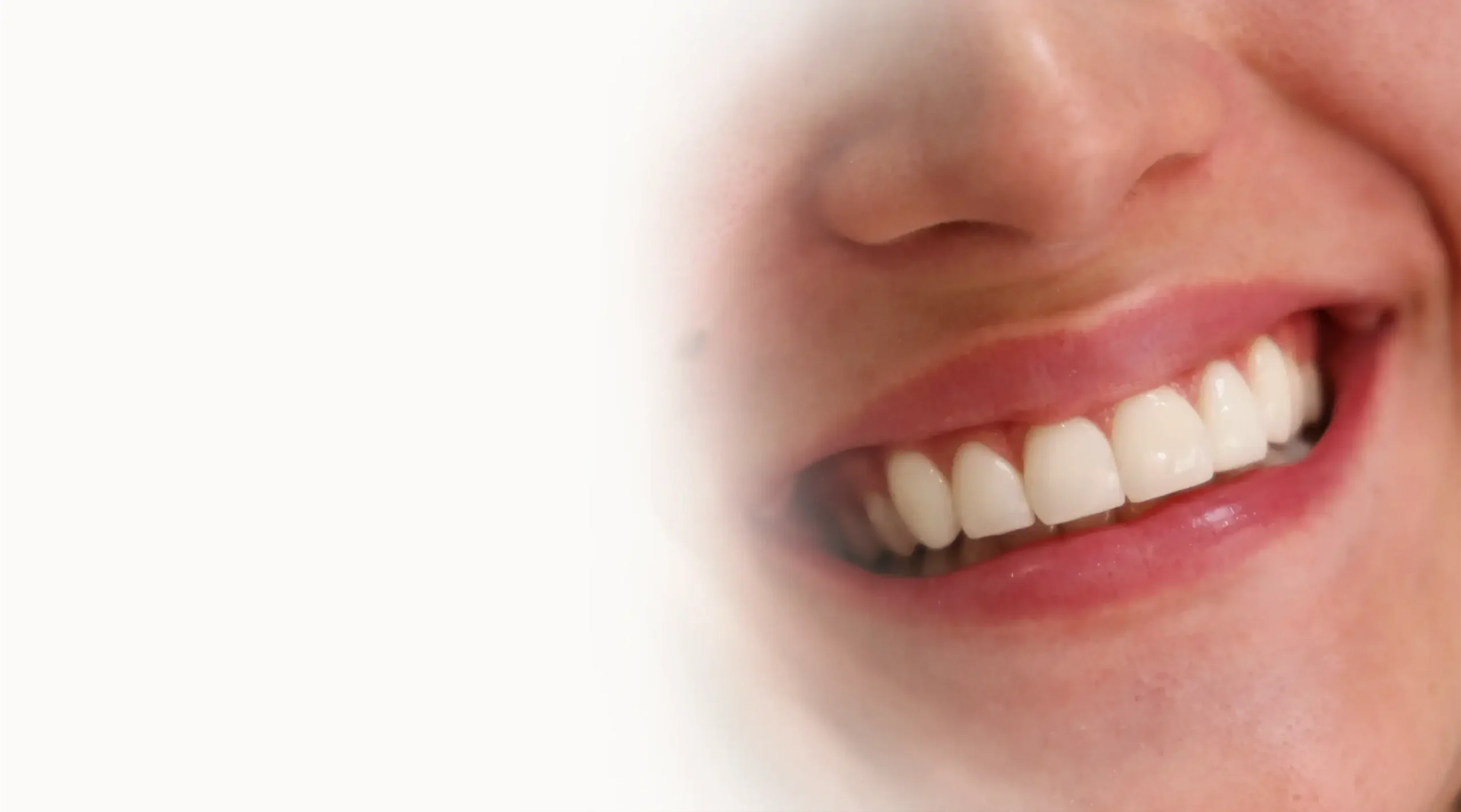
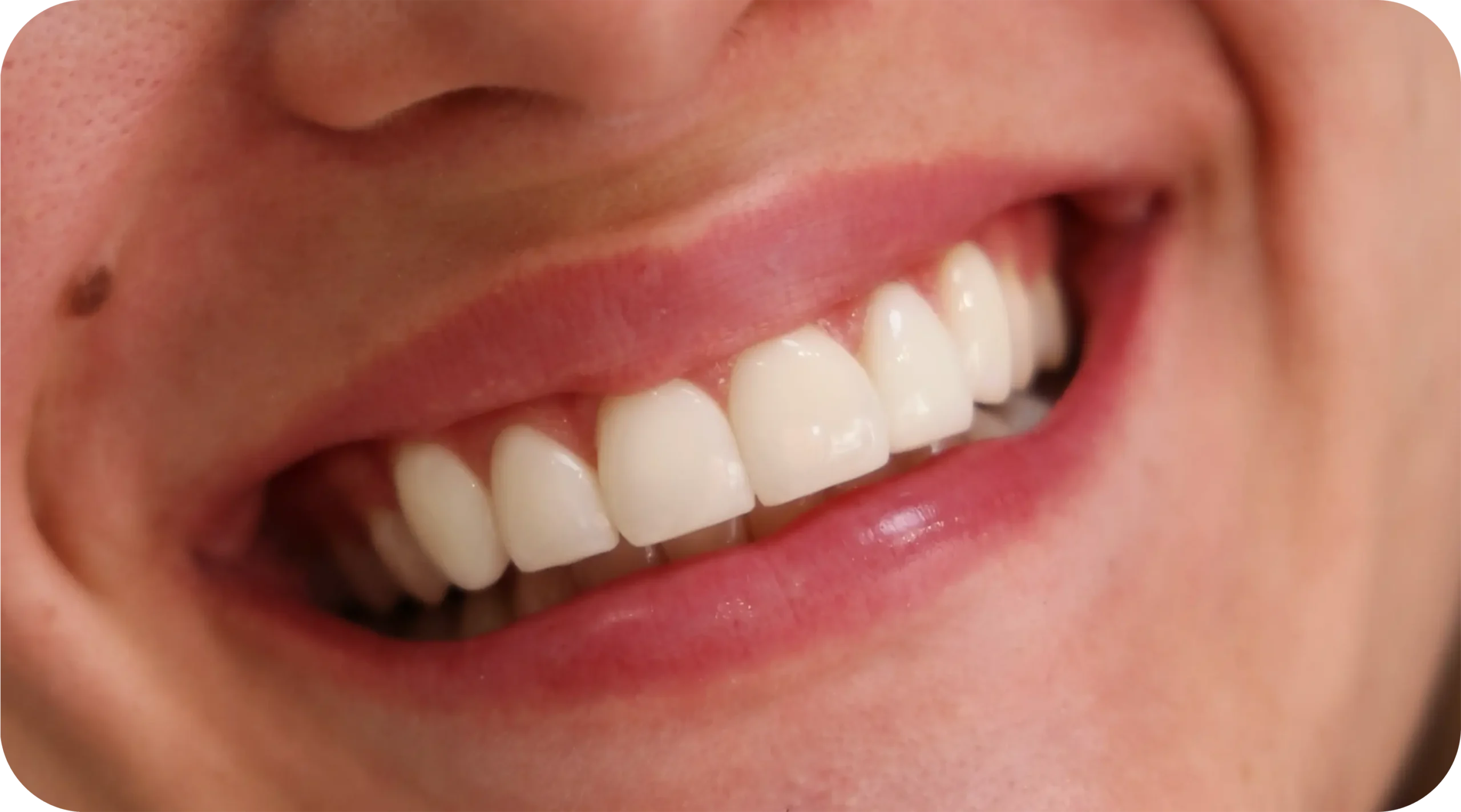
Composite veneers are shaped directly onto your teeth by hand, in the chair, in one visit. There is no laboratory stage and no waiting — you arrive with the teeth you have and leave with the ones you wanted.
That immediacy is the main reason people choose them, but it isn't the most important one. Because composite is added to the tooth rather than fitted over it, many cases need little or no enamel removed at all. Where nothing is removed, the treatment is reversible — a rare thing in cosmetic dentistry, and the reason composite is often the right first step for someone who isn't ready to commit to porcelain.
At Health Medical Center in Tirana, composite veneers are completed in a single appointment, at a cost well below equivalent private treatment in Western Europe.
Composite veneers are built from a tooth-coloured resin — a blend of fine glass particles in a resin matrix — applied to the front surface of the tooth in thin layers. Each layer is hardened with a curing light, and the material is sculpted, contoured, and polished directly on the tooth until the shape is right.
The whole process happens in the mouth rather than in a laboratory. That is the fundamental difference from porcelain veneers, and everything else — the speed, the lower cost, the reversibility, the shorter lifespan — follows from it.
The material is often called composite bonding, and the two terms describe the same treatment. "Bonding" tends to be used when one or two teeth are being repaired; "composite veneers" when several front teeth are reshaped together as a set.
Composite is less predictable over deep intrinsic discolouration — heavy tetracycline staining or a dark, root-treated tooth. Composite is translucent, so a strongly discoloured tooth can show through unless the layering is built to mask it. Porcelain handles those cases more reliably, and we'll tell you which category your teeth fall into at consultation.
Both are good treatments. They suit different people, different timelines, and different budgets.
Composite is the better choice when you want the result in one appointment, when you'd rather not commit irreversibly, when only a few teeth need attention, or when budget matters. It's also the more sensible starting point if you're young, or unsure how far you want to go — you can always move to porcelain later.
Porcelain — e.max — is the better choice when you want maximum longevity, when the teeth are heavily discoloured and need masking, when you want a result that won't stain, or when you're reshaping the whole smile and want the most durable outcome.
The practical differences:
Neither is a compromise version of the other. Composite is not "cheap porcelain" — it's a different treatment with a different set of trade-offs, and for a lot of cases it's the right answer.
Most people with healthy teeth and gums. What matters underneath is the same as for any cosmetic work: active decay, gum inflammation, or a failing older restoration is treated first, because composite bonded onto an unstable foundation won't last.
Two things worth knowing before you decide:
If you grind your teeth, composite chips more readily than ceramic. It's still workable — a night guard protects it, and repairs are quick — but you should go in knowing that.
If you smoke or drink a lot of coffee, tea, or red wine, composite will discolour faster. Regular hygiene appointments help considerably, and polishing restores much of the original finish.
Composite does not whiten. Neither do crowns, porcelain veneers, or fillings — the shade is fixed at the moment the material is placed.
So if whitening is something you're considering, do it first. Whiten, let the shade settle, then match the composite to your new brighter baseline. Do it the other way round and your natural teeth lighten while the composite stays exactly where it was, and the only fix is replacing the composite.
If you're travelling to us, mention it at the planning stage and we'll sequence the appointments correctly.
Consultation and smile assessment. Your dentist examines your teeth, gums, and bite and discusses what you want to change. This is where we confirm whether composite veneers are the right treatment for your case, or whether porcelain would serve you better.
Smile planning. The shape, proportions, and appearance of your teeth are planned around your facial features and natural smile, and the shade is agreed with you before any material is placed.
Shade selection and preparation. The shade is matched against your surrounding teeth and the tooth surface is cleaned and conditioned so the composite bonds reliably. In many cases no enamel is removed at all.
Composite application. Tooth-coloured resin is applied to the selected teeth in layers and shaped directly on the tooth, each layer hardened with a curing light before the next is built up.
Shaping and polishing. Once the shape is right, the composite is refined, contoured, and polished to a smooth, natural-looking finish. Polishing is what stops composite looking flat, so it isn't rushed.
Final check. Your bite and the overall appearance of your smile are checked together, with any final adjustments made before you leave.
Composite is a skill, not a shortcut. The result depends almost entirely on the hand shaping it — layering, contouring, and polishing are what separate composite work that reads as natural from work that reads as repair.
We'll tell you when porcelain is the better option. For some cases it is, and you should hear that before you commit rather than after.
One appointment. No laboratory stage and no return visit, which makes composite a practical option even on a short trip.
Correctly sequenced with whitening. If a brighter shade is part of your plan, whitening comes first.
Support in your language. Our team works in English, Italian, Spanish, French, and Greek.
Aftercare. We talk you through how to look after the result before you leave, and a direct contact number stays open to you afterwards.
Because composite veneers are completed in a single appointment, they fit easily into a short trip — a long weekend is enough, and they combine well with a hygiene appointment or whitening session in the same visit.
Tirana International Airport takes direct flights from Milan, Rome, Bologna, Venice, London, Dublin, Madrid, Barcelona, Paris, Athens, and much of Central Europe, typically 1.5 to 2.5 hours. EU, UK, and US citizens travel without a visa.
Typically four to eight years, depending on habits and care. They don't fail suddenly — they gradually lose polish and pick up colour at the edges, and are usually refreshed rather than replaced outright.
What extends them: daily brushing and interdental cleaning, regular hygiene appointments, a night guard if you grind, avoiding point loads like ice and packaging, and moderating the things that stain — coffee, tea, red wine, tobacco.
Polishing at your hygiene visits restores much of the original lustre and is the single most effective thing for keeping composite looking new.
Composite veneers are a thin layer of tooth-coloured resin, sculpted freehand directly onto the front surface of your teeth, chairside, in a single visit. Unlike porcelain veneers, there's no laboratory involved, and typically very little - if any - removal of your natural enamel.
The resin is built up in layers, each shaped and hardened with a curing light before the next is added, then polished to a natural sheen. Because everything happens in one appointment, you leave the same day with a finished result.
Composite Veneers Are a Repair, Not a Permanent Upgrade. They're an excellent lower-cost option for small corrections, but porcelain or e.max veneers hold their colour and polish for far longer if you're looking for a permanent result.
Composite veneers can cover a single tooth or your whole smile line:
Corrects one tooth's shape, colour, or symmetry in isolation.
Reshapes several teeth together for a complete, coordinated smile line.
Composite veneers are worth considering if you:
Composite veneers are a great lower-cost entry point, but they aren't as stain-resistant or long-lasting as porcelain or e.max veneers. If you want a more permanent result, we can talk through both options before you decide.
Composite veneers are usually completed in a single visit, start to finish - there's no lab work or second appointment needed.
Your dentist examines your teeth, gums and bite and discusses your aesthetic goals. This is where we confirm whether composite veneers are the right treatment for your case.
The desired shape, proportions and appearance of your teeth are discussed and planned according to your facial features and natural smile.
The shade is matched against your surrounding teeth and the tooth surface is cleaned and conditioned so the composite bonds reliably. In many cases no enamel is removed at all.
A tooth-coloured composite resin is applied to the selected teeth in layers and shaped directly on the tooth, each layer hardened with a curing light before the next is built up.
Once the desired shape is achieved, the composite is refined, contoured and polished to a smooth, natural-looking finish. Polishing is what stops composite looking flat, so it is not rushed.
Your bite and the overall appearance of your smile are checked together, with any final adjustments made before you leave.
Composite veneers are entirely freehand - the result depends on the skill of the dentist sculpting and polishing each layer chairside. Our cosmetic team shapes every veneer to your own facial proportions, not a generic mould.
Explore our full range of treatments
Often, yes. Where no enamel has been removed, the composite can be taken off and the tooth returns to its previous state. This is one of the main advantages over porcelain. Where a small amount of enamel has been prepared, it is not reversible — we'll tell you which applies in your case.
It depends on how many teeth are being treated. A single chipped tooth is quick; a set of front teeth takes considerably longer, as each is layered and shaped individually. We'll give you a realistic time when we plan the case.
Gradually, yes — composite is more porous than ceramic and picks up colour from coffee, tea, red wine, and tobacco over the years. Regular hygiene appointments and polishing keep this in check.
Usually it's repaired in the chair in a single short visit, without remaking the whole veneer. This is a real practical advantage over porcelain, which normally has to be replaced.
No. Composite keeps the shade it was placed in. If you want whiter teeth, whiten first and match the composite afterwards.
It depends on how long you want the result to last, how much the teeth need masking, and your budget and timeline. Both are good treatments. We'll give you an honest recommendation for your specific teeth rather than a default.
Usually there's nothing to anaesthetise, because in many cases no enamel is removed. Where a small amount of preparation is needed, local anaesthetic is used.
Yes. Many patients start with composite and move to e.max years later. Starting with composite keeps that option open, which is exactly why it suits people who aren't ready to commit.
4.9
/ 1006 reviews
“Flew in from London and the clinic was extremely clean and very modern inside! Klarissa and Ami did my composite bonding and kept making alterations until I was happy. 10/10 would strongly recommend!”
“I recently had composite bonding and edge bonding treatment at HMC, and I couldn't be happier with the results. My teeth look natural, symmetrical, and much more aesthetically pleasing.”
Send us a few details and our patient coordinators will come back within 24 hours with a treatment plan, timeline, and price. No obligation.