A full clinical examination and a written treatment plan you can take away
A full check of your teeth, gums and bite — the starting point for any treatment plan we recommend.

 1000+ Google reviews

 Excellent on Trustpilot

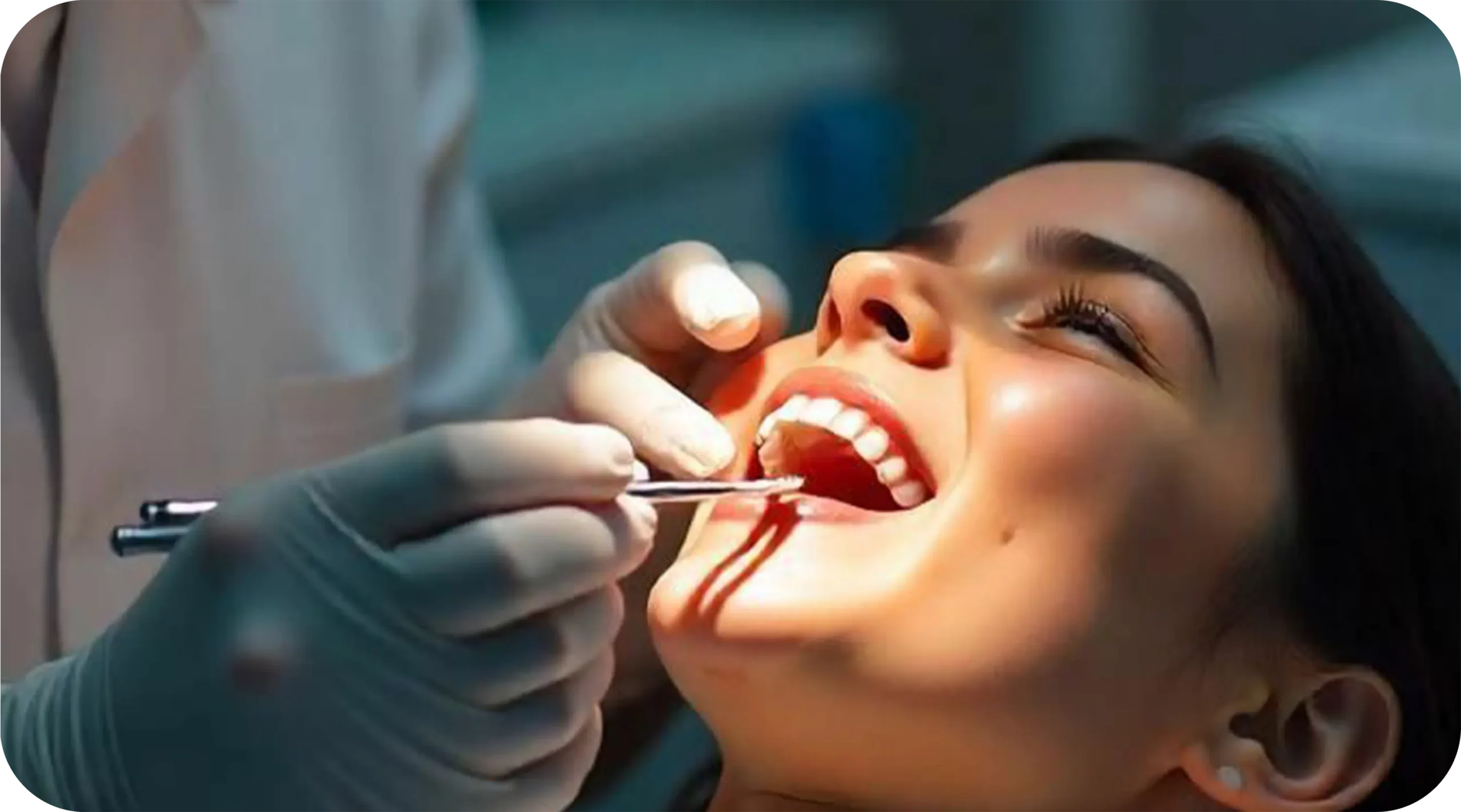
An examination is where every treatment plan starts, and where you find out what your mouth actually needs rather than what you have been assuming.
It takes under an hour. You leave with two things in writing: a plan and a price. Neither commits you to anything.
It is not a sales appointment.
That distinction matters more in dental tourism than almost anywhere, because the business model invites the opposite. A clinic that makes its money from large cases has every incentive to find large cases, and patients who have flown in are the least able to walk away and think about it.
So the examination here produces a written plan you take away, and a decision you make afterwards. Where a smaller treatment gets you what you want, that is what we recommend. Where we think what you are asking for is a bad idea for your teeth, we say so rather than taking the booking.
X-rays and 3D scans are not included in the examination fee, and this is deliberate.
Not every examination needs imaging. Building its cost into every appointment means charging people for scans they did not require. Where your case does need one — implant planning always does — we tell you what is needed and why before anything is taken, and it appears as its own line on your quotation.
If you already have recent X-rays or a CT scan, bring them or send them ahead. Where they are usable, we use them rather than repeating the exposure.
If you are travelling for treatment, the examination is not the first step.
Send us photographs and any recent scan, and our clinical team will review the case and come back with a preliminary plan and an indicative cost. Free, no obligation. It means you arrive knowing roughly what to expect and how many days you will need, rather than discovering it on arrival and rearranging flights.
The examination then confirms and refines that plan against what is really there.
The appointment has a shape, and the order matters. Most of it happens before anyone picks up an instrument.
We start with what is bothering you and what you want to change. Those are frequently different things, and both are worth knowing.
Then medical history: conditions, medications, previous surgery. This is not paperwork for its own sake. Uncontrolled diabetes affects healing. Certain bone medications change implant planning entirely. Blood thinners affect extractions. People routinely leave out medications they assume are irrelevant to teeth, and some of them are the most relevant of all.
Finally, what dental work you have had before, and how you got on with it.
Tooth by tooth: decay, cracks, wear, and the condition of existing fillings, crowns and bridges.
Old dentistry quietly failing is the most common finding that nobody knew about. A crown fitted fifteen years ago can be leaking underneath with no symptoms at all until the tooth beneath it is beyond saving. Catching that is worth considerably more than catching a new cavity.
Gum health is checked whether or not you have symptoms, because gum disease is painless until it is advanced. Pocket depths, bleeding, recession, and how stable the teeth are.
This is not an add-on to the examination. Gum disease is the leading cause of tooth loss in adults, and it determines whether implants are even viable later — an implant placed into an unstable mouth is an implant with a shortened life.
Then the bite: how your teeth meet, whether the load is distributed evenly, and whether there is evidence of grinding. That evidence changes material recommendations for crowns and veneers, so it is better known in advance than discovered by a fractured restoration.
Then we go through what was found, in plain terms, with the reasoning.
What needs doing. What can wait, and how long. Where more than one approach would work, what the options are and what each trades off. Where something can be left alone entirely, that too.
You leave with it in writing. Nothing is decided on the day unless you want it to be.
Imaging is quoted separately. X-rays and 3D scans are not part of the examination fee. If your case needs imaging we will tell you what is required and why before anything is taken, and it appears as its own line on your quotation. You are never charged for a scan you did not agree to.
Two things, both in writing, both yours to take away and think about:
What we found, what needs doing, what can wait, and in what order. Where more than one approach would work, you get the options with the trade-offs explained rather than a single instruction.
Every item priced separately, so you can see what each part costs and decide what to proceed with. That number is what you pay — it does not change once treatment has started.
An examination is the right starting point if you:
You are not committing to anything by booking one. The examination produces a plan and a price; what you do with them is entirely your decision, including nothing.
The appointment takes about 45 minutes to an hour, and you leave with something concrete rather than a vague recommendation:
We start by asking rather than looking. What is bothering you, what you want to change, any medical history and medications, and what previous dental work you have had.
A tooth by tooth check: decay, cracks, wear, existing fillings and crowns, and anything failing. Old dentistry that is quietly breaking down is the most common finding nobody knew about.
Gum health, pocket depths and bleeding, plus how your teeth meet when you bite. Gum disease is painless until it is advanced, which is why it is checked whether or not you have symptoms.
If imaging is needed we explain what and why before it is taken, and it is quoted separately from the examination itself. Bring any recent X-rays or scans and we will use those where we can.
We go through what we found with you, in plain terms, and you leave with a written plan and an itemised quotation. Nothing is decided on the day unless you want it to be.
You will be told what your mouth needs, not what is convenient to sell. Where a smaller treatment achieves what you want, we recommend the smaller treatment. Where we think a treatment is a bad idea for your teeth, we say so instead of taking the booking. The quotation you receive is the treatment you receive.
Explore our full range of treatments
No. Imaging is quoted separately from the examination fee. This is deliberate rather than a technicality. Not every examination needs a scan, and charging everyone for one builds the cost of imaging into appointments that did not require it. If your case does need an X-ray or a 3D scan — and implant planning always does — we will tell you what is needed and why before anything is taken, and it appears as its own line on your quotation. You will never find a charge for imaging you did not agree to. If you already have recent X-rays or a CT scan from another clinic, bring them or send them in advance. Where they are usable we will use them rather than repeating the exposure.
Around 45 minutes to an hour. That covers your history and concerns, a tooth by tooth clinical check, a gum assessment, a look at how your bite meets, and then a proper conversation about what was found and what the options are. The conversation is the part most often rushed elsewhere, and it is the part that determines whether you make a good decision. We would rather take the time than hand you a quotation and a car park ticket. If your case is complex — a full arch, a combination of treatments, or a second opinion on an existing plan — allow a little longer.
No, and you should not feel any pressure to. The examination produces a written plan and an itemised quotation. Both are yours. You can take them home, think about them, compare them with quotes from elsewhere, or do nothing at all. We would rather you booked treatment because the plan made sense than because someone sat across a desk from you and made it awkward to say no. Patients who feel pushed into treatment are not patients who come back, and international patients in particular deserve to make this decision away from the chair. Where you do want to proceed, and the timing works, treatment can often begin the same week.
Yes, and it costs nothing. Send us photographs of your teeth and any recent X-ray or scan. Our clinical team reviews the case and comes back with a preliminary plan — what appears to be needed, roughly what it would involve, and an indicative cost. Free, and with no obligation. This matters most if you are flying in. It means you arrive knowing roughly what to expect and how long you will need, rather than finding out on day one and rearranging your flights. The examination on arrival then confirms and refines that plan against what is actually in your mouth. Photographs are useful; they are not a substitute for an examination.
Often, yes, and most international patients are treated this way. Simple treatments — a cleaning, a filling, whitening — can frequently follow the examination on the same day. Larger work is usually scheduled across the following days of your trip, which we plan with you at the appointment. What cannot be rushed is anything requiring lab work or healing time. A crown needs measurements sent to the lab; implants need months of integration. We will be straightforward about which parts of your plan can happen this week and which cannot. If you are travelling specifically for treatment, the free remote assessment beforehand is what makes same-week scheduling realistic.
Then you are in extremely common company, and it is not something you will be lectured about. People avoid dentists for all sorts of reasons — cost, a bad experience, embarrassment that has compounded over time. None of that is unusual and none of it is interesting to us. What is interesting is what your mouth needs now. Expect the examination to find things. That is the point of it. Finding them is what gives you the choice of dealing with them in order, starting with whatever matters most, rather than discovering them one emergency at a time. If dental anxiety is part of why you have stayed away, say so when you book rather than on the day.
Yes, and second opinions are a good reason to book. Bring the plan and any imaging that came with it. We will look at what has been proposed, examine your mouth ourselves, and tell you where we agree and where we would do something different. Sometimes we confirm the original plan. Sometimes we find a smaller treatment achieves the same result. Occasionally we think what has been proposed is wrong for your teeth, and we will say so with reasons rather than simply undercutting it. This is particularly worth doing before major work. Full arch treatment, extensive veneers and bone grafting are all expensive, largely irreversible, and worth a second look.
Anything that helps us see where you have been. Recent X-rays or a CT scan, if you have them, along with any treatment plan or quotation from another clinic. A list of medications you take, including ones you assume are irrelevant — some bone medications in particular affect implant planning. If you have had implants before, any information about the system used is genuinely helpful. If you have photographs of your smile from before teeth were lost or changed, bring those too; they are a useful reference for cosmetic work. And a note of what has been bothering you. It is easy to forget the small thing you meant to mention.
Yes, and it happens more often than you might expect. People arrive convinced they need extensive work, sometimes after being told so elsewhere, and turn out to need a cleaning and a single filling. Others arrive expecting the worst after years away and find their teeth are in reasonable shape. We will tell you that. There is no version of this where inventing treatment serves us — the clinic runs on people returning and recommending us, and a patient who was sold work they did not need does neither. The same applies in reverse. If something genuinely needs attention we will tell you plainly, including when the answer is that a tooth cannot be saved.
That depends on the treatment, and we will tell you at the time rather than leaving it vague. Where a policy applies it is explained before you book, and any such arrangement appears on your written quotation so there is no ambiguity later. What we can commit to generally is that the quotation you receive at the examination is the price you pay. It does not grow once treatment is under way, and there are no items added afterwards that were not discussed with you first. If you have questions about cost or payment structure, ask at the examination. It is a reasonable thing to want clear before committing.
We will tell you immediately and treat it as a priority rather than slotting it into a plan. Acute infection, a tooth that cannot be saved, or anything causing real pain gets addressed first — often the same day. Everything else can then be sequenced sensibly around it. For international patients this occasionally changes the shape of a trip. If something urgent is found, we will explain what has to happen now, what can safely wait until a later visit, and what that means for your schedule. What we will not do is present an urgent finding as a reason to agree to a larger plan on the spot. Those are separate decisions and we keep them separate.
Send us a few details and our patient coordinators will come back within 24 hours with a treatment plan, timeline, and price. No obligation.