A tooth-coloured filling that repairs decay or small breaks in one visit, bonded to the tooth and shade-matched so it disappears.
Decay removed and the tooth rebuilt in one visit, with a tooth-coloured filling that bonds to the tooth and blends in.

 1000+ Google reviews

 Excellent on Trustpilot
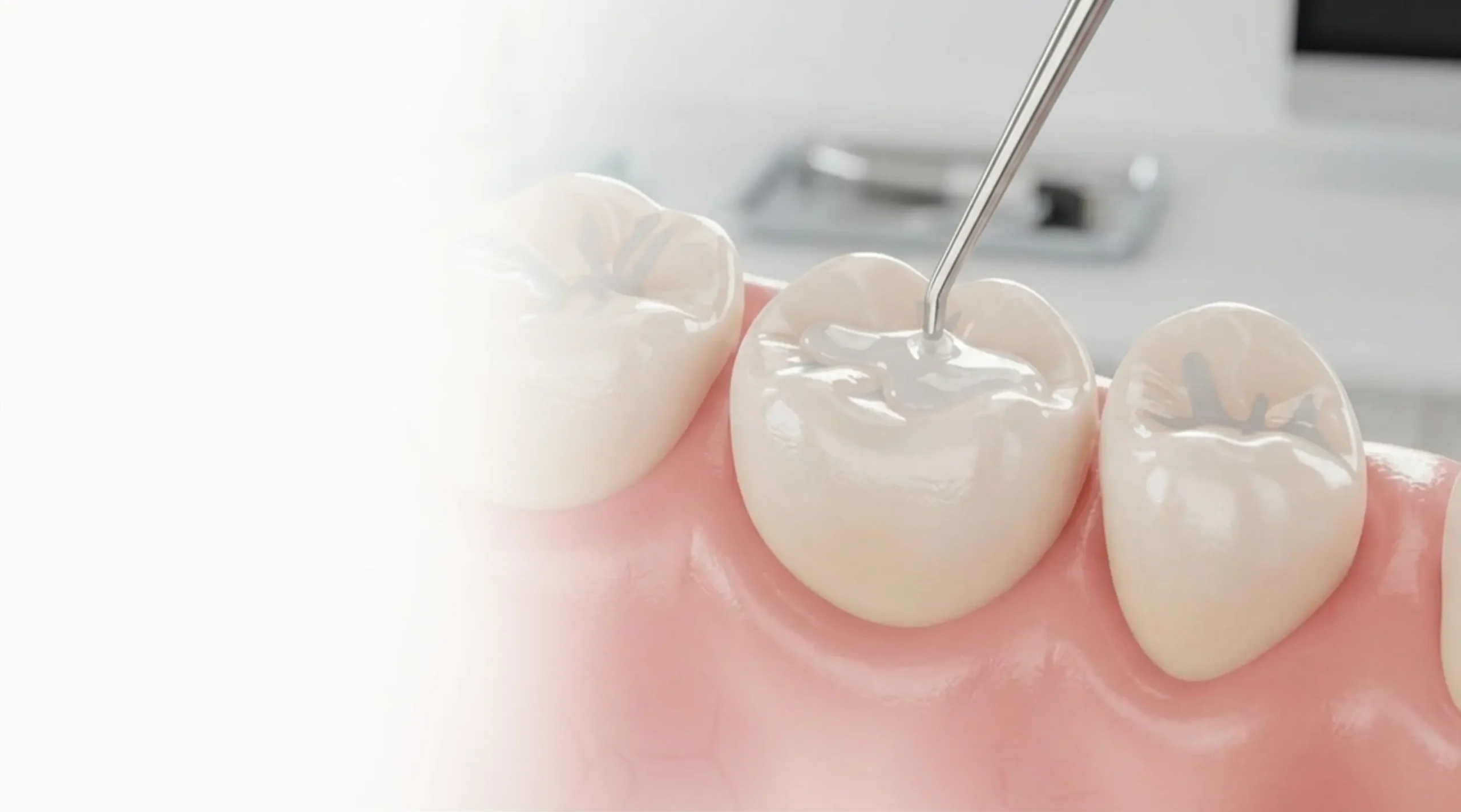
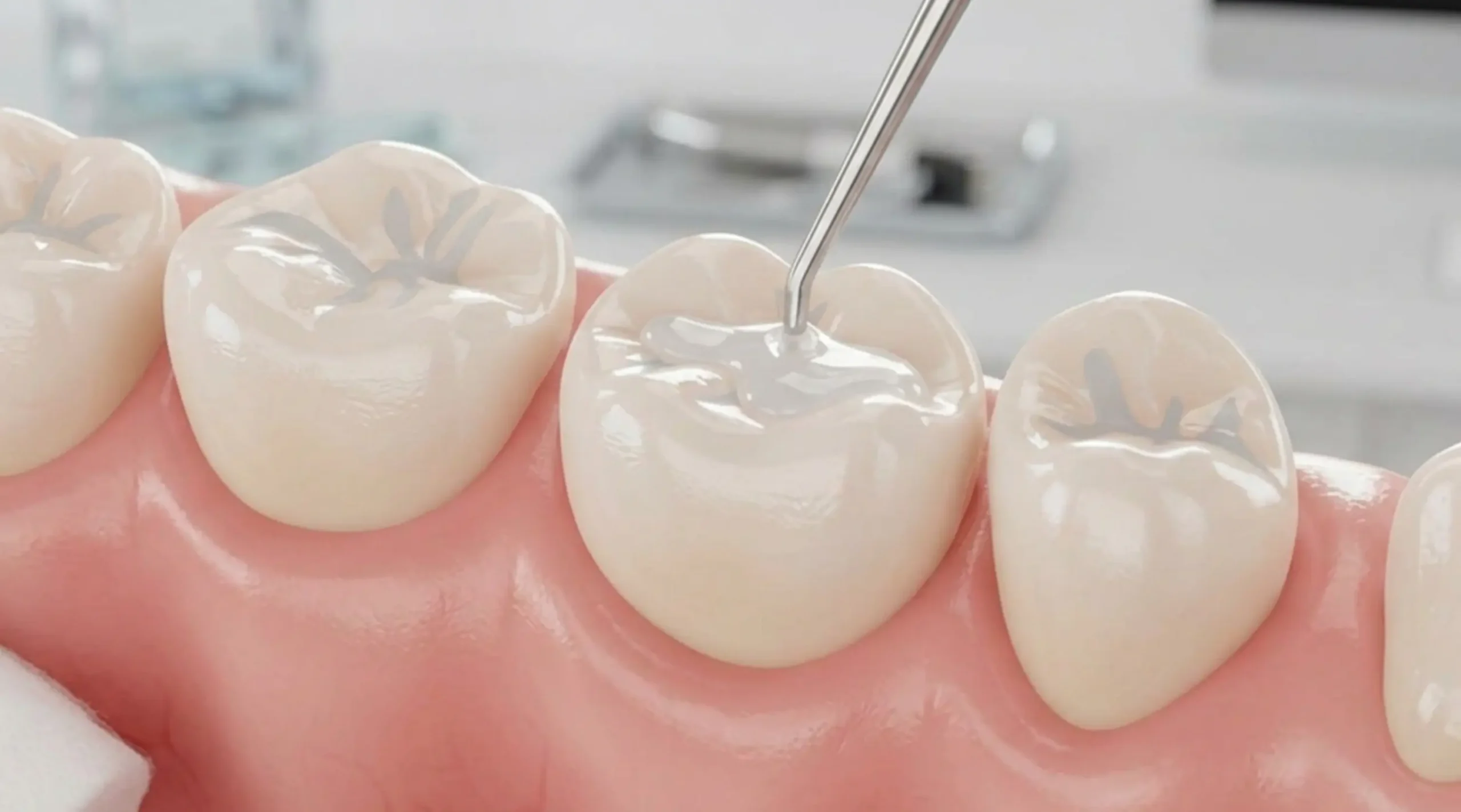
A composite filling repairs a tooth damaged by decay, using a tooth-coloured material that bonds directly to what remains.
It is the most common way to treat a cavity. The decay is removed, the tooth is rebuilt in layers, and the finished filling is shaped to match your bite and shaded to match the tooth around it, so it is hard to see.
Older silver amalgam fillings are held in place mainly by their shape, which usually means cutting away more healthy tooth to lock them in. A tooth-coloured filling bonds chemically to the enamel and dentine, so the preparation can be smaller and more of your natural tooth is kept.
It also looks natural. A white filling is matched to the shade of your tooth, so a repair on a front tooth or a visible molar does not stand out when you smile or talk. Most people forget which tooth was filled within a few weeks.
A composite filling is a treatment for decay, a small fracture or a failing old filling. It is not the same as composite bonding, where material is added to healthy teeth to change their shape or colour, and it is not a veneer. The goal here is simple: remove the problem and restore the tooth so it works properly again.
Decay does not usually hurt until it is deep. By the time a tooth aches, a small cavity may have grown into one that needs a much larger filling, a root canal or a crown. Treating decay early keeps the filling small, the tooth strong and the treatment straightforward.
Some decay is hidden between the teeth or under old fillings. Where that is suspected, an X-ray shows what the eye cannot. Imaging is quoted separately and only taken when your case needs it.
A composite filling works best for small to medium repairs. When most of the tooth is missing or badly cracked, a large filling is likely to break. In that case we recommend a crown, made in Zirkonzahn zirconia or Ivoclar IPS e.max from measurements sent to the lab, and explain why before anything is done. Every composite filling in Albania at HMC starts with that honest assessment.
A composite filling is placed in a single appointment, usually under local anaesthetic.
Your dentist examines the tooth, checks how deep the decay goes and, where needed, takes an X-ray to see between the teeth or under existing fillings. You are told which teeth need work and what each will involve before anything starts.
The area is numbed so you feel pressure and vibration but not pain. The decay is then removed carefully, taking away only the soft, damaged tooth and keeping as much healthy structure as possible. If an old filling is failing, it is removed at this stage too.
Composite bonds best to a clean, dry surface, so the tooth is isolated from saliva while the filling is placed. This step matters: moisture during bonding is one of the most common reasons fillings fail early.
The tooth surface is prepared with a bonding agent, and the composite is placed in thin layers. Each layer is hardened with a curing light in seconds. Building the filling up gradually gives a stronger result and lets your dentist shape it closely to the original tooth.
Before placing the material, the shade is chosen to match your tooth. On front teeth, different shades can be combined so the filling blends with the natural translucency of the enamel.
Once the filling is set, it is shaped to follow the natural grooves of the tooth. Your bite is checked with a thin marking paper, and any high spots are adjusted so the tooth does not feel "tall" when you close. Finally the filling is polished so it feels smooth and resists staining.
A composite filling is fully hardened when you leave the chair, so there is no waiting period for the material itself. The only reason to wait before eating is the anaesthetic: avoid chewing on that side until the numbness has gone, so you do not bite your cheek or tongue. Our team explains aftercare in English, Italian, Spanish, French or Greek.
A Filling Repairs Decay. It Is Not Cosmetic Bonding. A composite filling rebuilds part of a tooth damaged by decay or a small fracture. It is a repair, not a cosmetic treatment to reshape or cover healthy teeth. If you want to change the look of your smile, that is a different conversation.
The right repair depends on how much healthy tooth is left:
For small to medium cavities and minor breaks. The decay is removed and the tooth rebuilt in bonded, shade-matched layers in one visit.
Cracked or leaking fillings, including old amalgam, are removed and replaced, with any decay underneath treated at the same time.
When too little tooth remains for a filling to last, a crown in Zirkonzahn zirconia or IPS e.max protects the tooth. We explain why first.
A composite filling is usually the right treatment if you have:
If the damage is too large for a filling to last, or the decay has reached the nerve, we tell you before starting and explain whether a crown or root canal treatment is the better option.
Most composite fillings are completed in a single visit, and the tooth can be used normally once the numbness wears off:
We examine the tooth and, if needed, take an X-ray. You are told which teeth need work, and each appears on your written quotation.
The area is numbed so you feel pressure and vibration, not pain. We check it is fully numb before starting.
Only the soft, damaged tooth is removed, keeping as much healthy structure as possible. Failing old fillings come out too.
The tooth is kept dry, a bonding agent applied, and shade-matched composite placed in thin layers, each hardened with a curing light.
The filling is shaped to the tooth, your bite is checked and adjusted, and the surface is polished smooth.
We remove only the decay, keep as much healthy tooth as possible, and tell you honestly when a filling will not last. Every tooth that needs work appears on your written, itemised quotation before we start. The price you are quoted is the price you pay.
Explore our full range of treatments
No. They use similar materials but do different jobs. A composite filling repairs a tooth damaged by decay, a small fracture or a failing old filling. The damaged part is removed and the tooth is rebuilt so it works properly again. Composite bonding is a cosmetic treatment that adds material to healthy teeth to change their shape, length or colour. Veneers are different again. This page is about fillings: treating a problem in the tooth, not changing how your smile looks.
It should not. The tooth is numbed with local anaesthetic first, and we check it before starting. You will feel pressure and vibration while the decay is removed, but not pain. Very small, shallow fillings sometimes need no anaesthetic at all, but that is your choice. If you would rather be numbed, tell us. Afterwards, the tooth can feel a little sensitive to cold or pressure for a few days, especially after a deeper filling. This usually settles on its own.
Yes, as far as the filling is concerned. Composite is hardened with a curing light during the appointment, so it is fully set when you leave. The only reason to wait is the anaesthetic. Until the numbness has worn off, avoid chewing on that side and avoid very hot drinks, so you do not bite your cheek or burn yourself without noticing.
With good care, many years. Small and medium fillings last longest. Large fillings, fillings on heavily loaded back teeth, and fillings in people who grind their teeth tend to need attention sooner. The most common reason a filling needs replacing is new decay at its edges, so brushing with fluoride toothpaste, cleaning between the teeth and regular check-ups make the biggest difference.
Yes, when they need replacing. If an amalgam filling is cracked, leaking, has decay around it or the tooth next to it is breaking, we remove it and restore the tooth with a tooth-coloured filling or, if the tooth is weakened, a crown. We do not recommend replacing sound amalgam fillings purely for appearance without discussing the trade-offs, because each replacement removes a little more tooth. Your dentist will tell you honestly which fillings need attention.
Then a filling is not the right repair, and we tell you before starting. A large filling in a tooth with little structure left is likely to crack or break the tooth. In that case, a crown gives better protection. At HMC, crowns are made in Zirkonzahn zirconia or Ivoclar IPS e.max from measurements sent to the lab. If the decay has reached the nerve, root canal treatment may be needed first. Everything is explained and listed on your written quotation before any work begins.
Not always. Decay on the biting surface or the front of a tooth can often be seen directly. Decay between the teeth, under old fillings or close to the nerve is often invisible without an X-ray. In those cases, an X-ray shows how deep the problem goes and whether a filling is the right treatment. X-rays are quoted separately and only taken when your case needs them.
Yes. The shade is chosen to match your tooth before the material is placed, and on front teeth different shades can be layered to blend with the natural enamel. If you are planning teeth whitening, do it before any visible fillings. Whitening lightens natural teeth but does not change the colour of existing fillings, so matching the filling to your whitened shade gives the best result.
Often several, depending on where they are and how deep they go. Fillings on the same side of the mouth can usually be done together under one anaesthetic. If you need a lot of work, we may split it across more than one appointment so you are comfortable and your bite can be checked properly. Your dentist plans the order with you.
Some sensitivity to cold, sweet or biting is common for a few days after a filling, especially a deeper one. It usually fades on its own. Contact us if the sensitivity gets worse instead of better, if it lasts more than a couple of weeks, if the tooth aches on its own, or if your bite feels uneven. A high spot on the filling is easy to adjust.
Your written, itemised quotation lists each tooth that needs a filling, along with anything else your case requires, such as an X-ray or, where a filling will not last, a crown or root canal treatment. Nothing is added once treatment starts that was not discussed with you first.
Send us a few details and our patient coordinators will come back within 24 hours with a treatment plan, timeline, and price. No obligation.