Gentle removal of damaged, infected or wisdom teeth under local anaesthesia, planned on a 3D scan where needed, with clear aftercare.
Safe, carefully planned tooth removal under local anaesthesia, with a clear plan for what replaces the tooth afterwards.

 1000+ Google reviews

 Excellent on Trustpilot
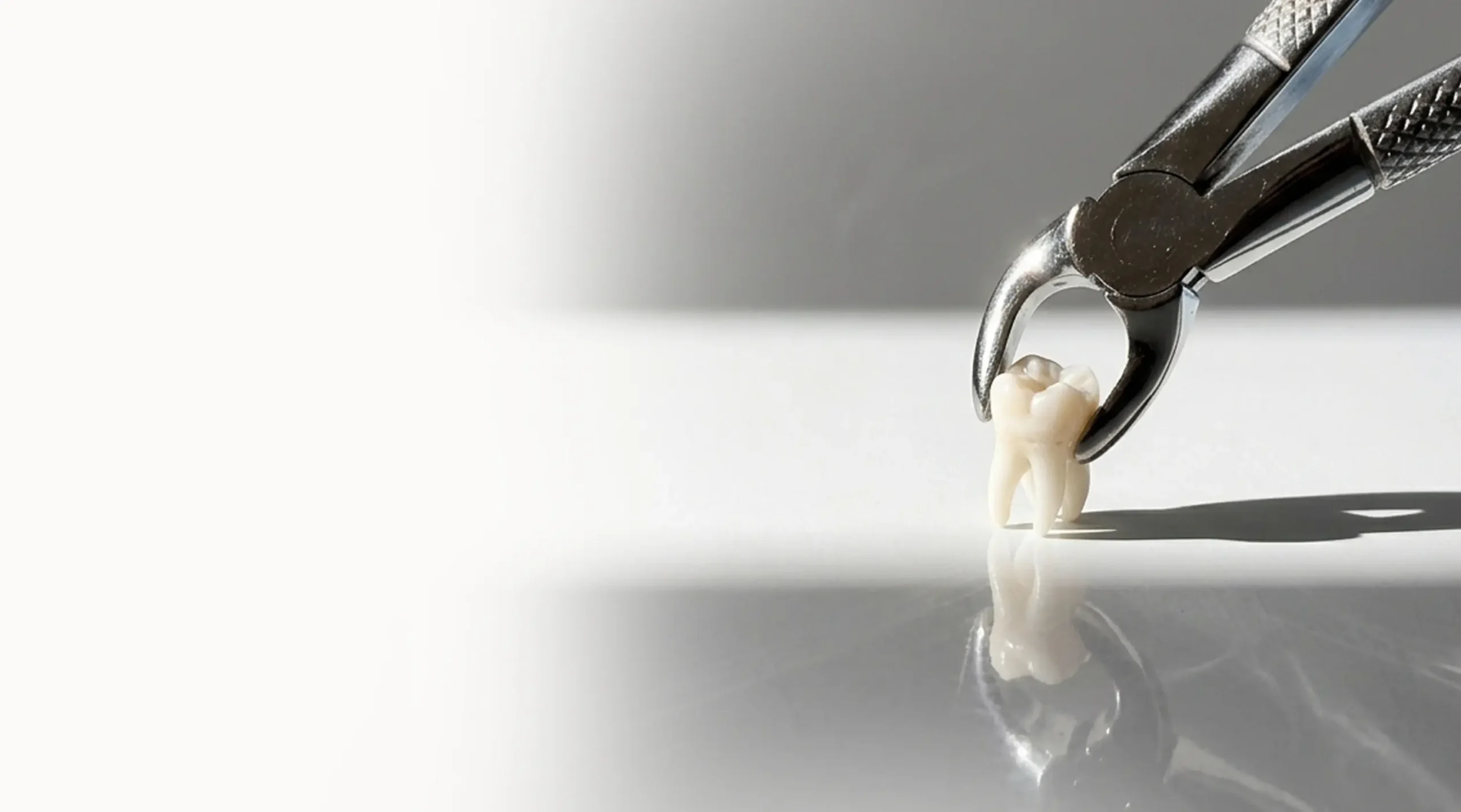
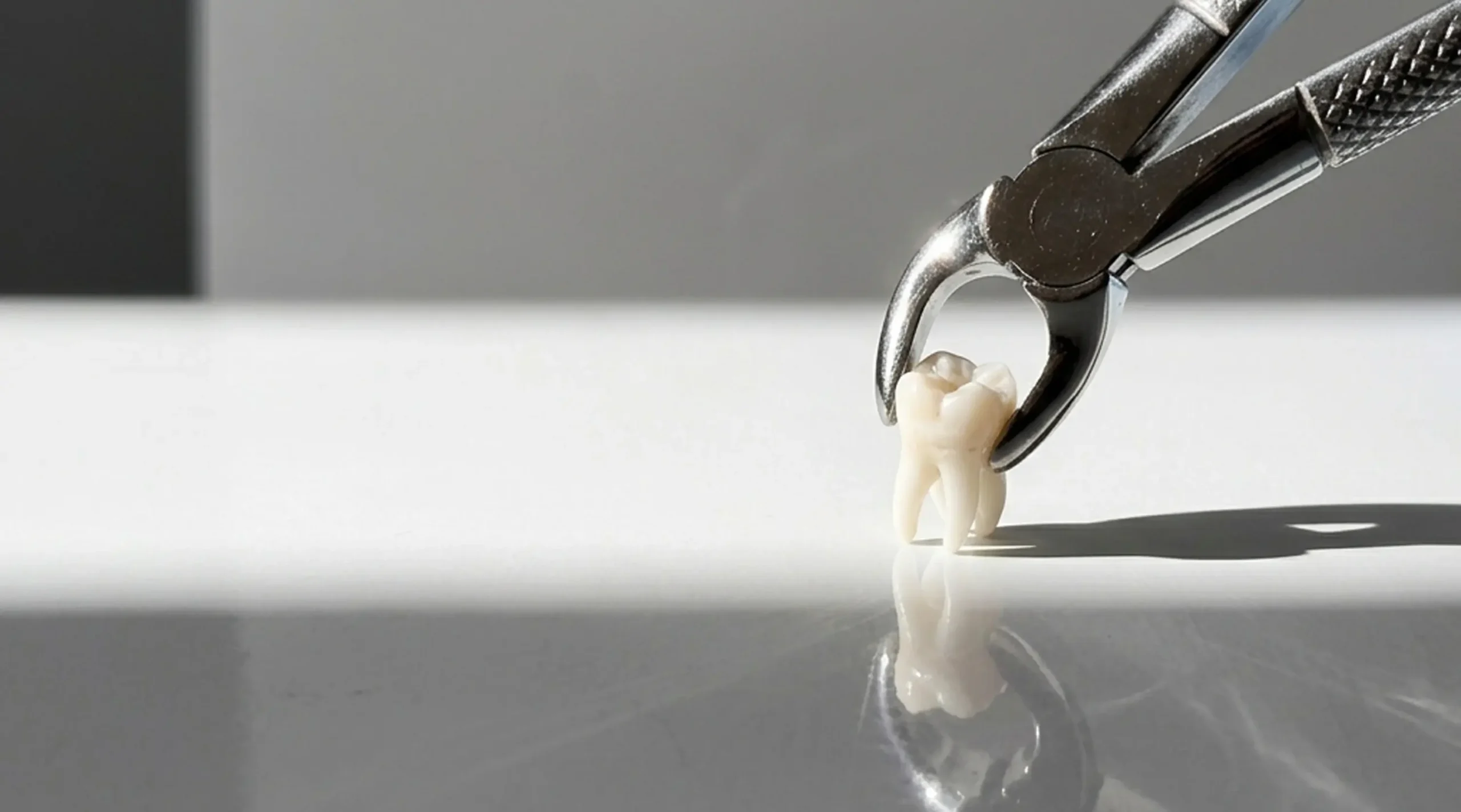
A tooth extraction removes a tooth that can no longer be saved, so pain and infection stop spreading to the rest of your mouth.
It is one of the most common procedures in dentistry, but it is never routine for us. A removed tooth leaves a gap, and what happens to that gap affects your bite, your neighbouring teeth and the bone underneath for years.
Before recommending an extraction, we look at whether the tooth can be kept. Many teeth that look beyond repair can be saved with root canal treatment, a crown or gum treatment. If that is realistic, we tell you, and explain the trade-offs honestly. A second opinion is always welcome if you have been told elsewhere that a tooth has to go.
When a tooth really cannot be saved, because it is split, too decayed to restore, badly infected or has lost its bone support, removing it is the healthier choice. Leaving it in place usually means more pain and an infection that keeps spreading.
Most extractions are straightforward. Some are not: wisdom teeth lying on their side, teeth with curved roots, or lower teeth close to the nerve. For those, a 3D CT scan shows exactly where the roots sit before anything is done, so the extraction is planned around the nerve and sinus rather than discovered during surgery. The scan is quoted separately and only taken when your case needs it.
Every tooth extraction in Albania at HMC comes with a conversation about what replaces the tooth. The options are an implant, a bridge, a denture or, for some back teeth, leaving the space. If an implant is likely, the tooth is removed in a way that protects the bone, and a bone graft can be discussed where the bone would otherwise shrink.
We place MegaGen implants as our primary system and Straumann as the alternative, with crowns in Zirkonzahn zirconia. Implants need 3 to 6 months of healing before the final crown, so an extraction is often the first step of treatment carried out over two trips. Your written, itemised quotation shows every step from the start.
Most extractions take place in a single visit under local anaesthesia. What happens depends on whether the extraction is simple or surgical.
Local anaesthetic is placed around the tooth and given time to work. We test the area before starting and add more if anything still feels sharp. During the extraction you feel pressure and movement, but not pain. If you are anxious, tell us when you book: we explain each step before we do it, work at your pace and can discuss sedation options.
When the tooth is fully visible, it is gently loosened from the ligament that holds it in the socket and then lifted out. Taking time over this step protects the thin bone around the tooth, which matters if an implant will go in later. Stitches are rarely needed, and it is the approach used for most teeth.
A surgical extraction is used when a tooth has broken at the gumline, is impacted, or has roots that are curved or fused to the bone. A small opening is made in the gum, a little bone may be removed, and the tooth may be divided into sections so each piece comes out with minimal force. The gum is then closed with stitches, which are checked at your follow-up.
Lower wisdom teeth often sit close to the nerve that supplies feeling to the lip and chin. A 3D CT scan shows that distance precisely, so the approach can be planned to keep well clear of it. Upper wisdom teeth can sit close to the sinus, and the scan shows that too. A wisdom tooth extraction planned this way is more predictable and usually heals more comfortably.
You bite on gauze for a while to let a clot form in the socket. That clot is the start of healing, and protecting it is the main goal of the first 24 hours. Before you leave, we go through aftercare: what to eat, how to manage discomfort and which signs mean you should contact us. Our team speaks English, Italian, Spanish, French and Greek, so nothing gets lost in translation.
What Replaces the Tooth Is Planned First. Before a tooth is removed, we discuss what comes next: an implant, a bridge, a denture or leaving the gap. If an implant is likely, the extraction is planned to protect the bone it will need.
How a tooth is removed depends on its position, its roots and the bone around it:
For a tooth that is fully visible above the gum. It is loosened and removed under local anaesthesia, usually without stitches.
For broken, impacted or complex teeth. A small opening in the gum gives access, the tooth may be sectioned, and the area is closed with stitches.
Impacted wisdom teeth are planned on a 3D CT scan that shows how close the roots sit to the nerve, before any surgery is done.
We only recommend removing a tooth when saving it is not a realistic option. That is usually the case if you have:
If a root canal, crown or gum treatment can keep the tooth, we tell you that first. Removing a tooth is permanent, so it is always the last option, not the quickest one.
Most extractions are completed in a single visit, and you leave knowing exactly how to look after the area:
We examine the tooth and take the imaging it needs. For impacted wisdom teeth or teeth near the nerve, that means a 3D CT scan, quoted separately.
We explain why the tooth needs to go, how it will be removed and what can replace it, with everything itemised on your written quotation.
The area is numbed thoroughly and we check it is fully numb before starting. You feel pressure, not pain.
The tooth is loosened and removed gently, protecting the surrounding bone and gum. Surgical cases are closed with stitches.
You bite on gauze to control bleeding, and we explain how to look after the socket over the next days and when to contact us.
We try to save the tooth first and only remove it when that is the right call. When an extraction is needed, it is planned properly, carried out gently, and linked to a clear plan for what replaces the tooth. The price you are quoted is the price you pay.
Explore our full range of treatments
The extraction itself should not hurt. The area is numbed with local anaesthetic, and we test it before starting. You will feel pressure and movement, which can feel strange, but not sharp pain. If you feel anything sharp, tell us and we add more anaesthetic. Once the anaesthetic wears off, some soreness is normal for a few days. It is usually well controlled with the painkillers we recommend. Surgical and wisdom tooth extractions tend to be more tender than simple ones.
A simple extraction is usually quick once the area is numb. Most of the appointment is spent on the assessment, the anaesthetic and explaining aftercare. Surgical extractions and impacted wisdom teeth take longer, depending on the position of the tooth and its roots. We give you a realistic idea of timing when we plan your case.
Often it can, and we always check first. Root canal treatment, a crown or gum treatment can keep many teeth that look beyond repair. We recommend extraction when the tooth is split below the gum, too decayed to restore, has an infection that cannot be treated, or has lost too much bone support. In those cases, keeping it usually means more pain and a spreading infection. If you have been told elsewhere that a tooth must come out, we are happy to give a second opinion.
Every extraction needs imaging so we can see the roots and the surrounding bone. For most teeth, a standard X-ray is enough. For impacted wisdom teeth, teeth close to the nerve or sinus, and extractions planned before implants, we use a 3D CT scan. It shows exactly where the roots are and how close they sit to important structures. Imaging is quoted separately from the examination and the extraction, and only taken when your case needs it.
Soft, lukewarm food for the first day or two: yogurt, soups that have cooled, mashed potatoes, eggs, pasta. Chew on the opposite side. Avoid very hot drinks, alcohol, spicy food and anything hard, crunchy or with small grains that could get into the socket. Do not drink through a straw for the first days, because the suction can dislodge the clot. Most people return to a normal diet within a few days, bringing in firmer food as the area feels comfortable.
A dry socket happens when the blood clot in the socket is lost or does not form properly, leaving the bone exposed. It usually shows up two to four days after the extraction as pain that gets worse instead of better, sometimes with a bad taste. Smoking, rinsing too hard and drinking through a straw all increase the risk, which is why we ask you to avoid them. If you think you have a dry socket, contact us. It is treated by cleaning the socket and placing a soothing dressing, and the pain usually eases soon after.
After most simple extractions, flying a day or two later is fine. After surgical extractions, or upper back teeth close to the sinus, we may recommend waiting longer. We plan extractions early in your stay so we can check the socket before you leave. Tell us your travel dates when you book, and we will advise you based on your own case.
It depends on the tooth, the bone and whether there was infection. Your dentist decides the timing based on your scan and how the area heals, and explains it before the extraction. Once the implant is placed, it needs 3 to 6 months of healing before the final crown is fitted. Because of that, implant treatment is usually carried out over two trips, and we plan both from the start. Where the bone would otherwise shrink too much, a bone graft may be recommended at the time of extraction to preserve the site.
No. Wisdom teeth that have come through fully, are healthy and can be cleaned properly can stay. We recommend removal when they cause repeated infection, pain or swelling, when they push against or damage the tooth in front, when they are decaying and hard to clean, or when they are impacted in a way likely to cause problems. A 3D CT scan helps decide, and it shows how close a lower wisdom tooth sits to the nerve before any surgery is planned.
That is very common. Tell us when you book, so we can plan extra time. We explain each step before doing it, check that the area is fully numb, and agree a signal you can use to pause at any point. Many nervous patients find that knowing exactly what will happen makes a big difference. If your anxiety is severe, we can discuss sedation options during your assessment.
Your written, itemised quotation lists the extraction itself and anything else your case needs, such as imaging, a surgical approach or a bone graft, each on its own line. If the extraction is part of implant or prosthetic treatment, the full plan is shown from the start, including the implant brand and the crown material. Nothing is added later that was not discussed with you first.
4.9
/ 1006 reviews
Send us a few details and our patient coordinators will come back within 24 hours with a treatment plan, timeline, and price. No obligation.