




Dental implants have a reputation for being complicated, mostly because the marketing around them tends to skip the actual steps. Here is a straightforward walkthrough of what happens, from the first assessment to the finished tooth.
What Is a Dental Implant?
A dental implant is an artificial tooth root that is placed into the jawbone to support a replacement tooth.
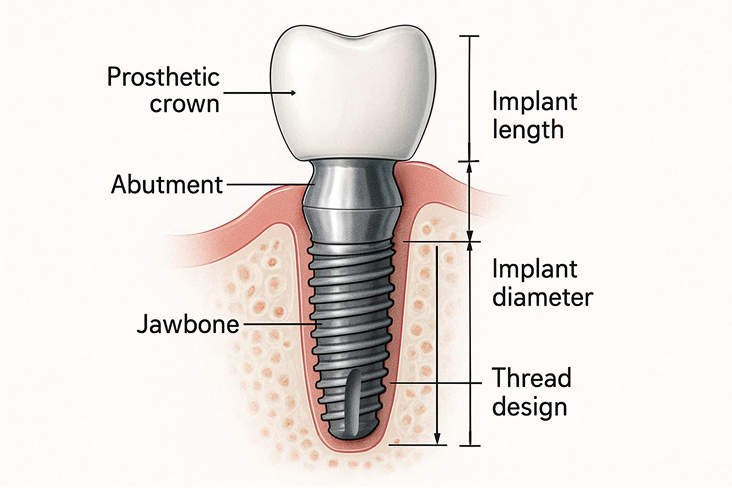
A complete implant restoration generally consists of three main parts:
- Titanium implant post — a small screw, typically 3.5–5mm in diameter, that is inserted into the jawbone. Over 3–6 months, the bone fuses around it in a process called osseointegration.
- Abutment — The connector between the implant and the replacement tooth.
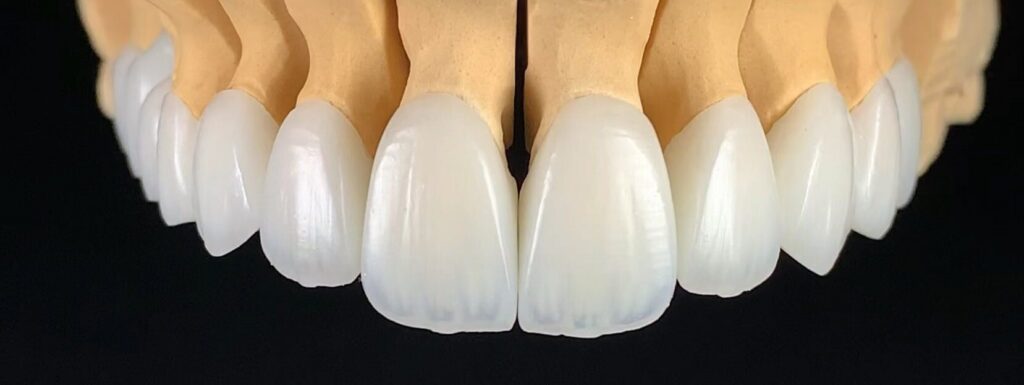
- Crown — the visible tooth. At HMC we use zirconia crowns as standard: ceramic, metal-free, and colour-matched to your surrounding teeth.
Dental Implants: What Actually Happens Step by Step
Step 1: Consultation and Examination
The process begins with a consultation and a detailed examination.
Your dentist evaluates your teeth, gums, bite and available bone. A panoramic X-ray and/or 3D CBCT scan may be used to assess the bone and determine the ideal implant position.
Your dentist will also discuss:
- The number of missing teeth
- The condition of the remaining teeth
- Bone volume and quality
- Gum health
- Your bite
- The type of implant restoration required
- Your expected treatment timeline
This information is used to create an individualized treatment plan.
Step 2: Treatment Planning
After the examination, your dentist determines which implant solution is appropriate for you.
Depending on your situation, treatment may involve:
- A single dental implant
- Multiple individual implants
- An implant-supported bridge
- All-on-4
- All-on-6
- Bone grafting or other additional procedures
The position and number of implants are planned according to both function and the final appearance of the teeth.
Step 3: Tooth Extraction, If Required
If a tooth is severely damaged or cannot be saved, it may need to be extracted before implant placement.
In selected cases, an implant can be placed immediately after extraction. In other situations, the extraction site may need time to heal before the implant is placed.
The appropriate approach depends on the condition of the bone and surrounding tissues.
Step 4: Implant Placement
Once the treatment plan is confirmed, the implant is placed into the jawbone.
The procedure is performed under local anaesthesia. The dentist prepares the implant site and carefully inserts the titanium implant into the planned position.
Depending on the case, stitches may be required.
The procedure itself is generally performed as an outpatient treatment, meaning you can return home or to your accommodation afterwards.
Step 5: Healing and Osseointegration
After placement, the implant needs time to integrate with the surrounding bone.
This process is known as osseointegration.
During this period, the bone gradually forms around the implant and provides the stability required to support the final restoration.
Healing time varies depending on:
- Bone quality
- Implant location
- Number of implants
- Whether bone grafting was required
- Individual healing response
- General oral health
Step 6: Temporary Teeth, When Required
Depending on the treatment plan, a temporary restoration may be provided while the implants heal.
For full-arch treatments such as All-on-4 or All-on-6, a fixed temporary prosthesis may be used before the final restoration is completed.
This allows the patient to maintain function and aesthetics during the treatment period.
Step 7: Final Scan and Restoration Design
Once the implants are ready for the final restoration, a digital scan or dental impression is taken.
The dental laboratory uses this information to design the final crown, bridge or full-arch restoration.
The restoration is customized according to:
- Tooth shape
- SizeColour
- Bite
- Gum position
- Facial proportions
- Overall smile aesthetics
Step 8: Final Crown or Bridge Placement
The final restoration is then placed on the implant or implants.
Your dentist checks the fit, bite, shape, colour and contacts with the neighbouring teeth.
Any necessary adjustments are made before the restoration is finalized.
The result is a fixed tooth replacement designed to function and look as naturally as possible.
Does Getting a Dental Implant Hurt?
Dental implant placement is performed under local anaesthesia, so sharp pain should not be felt during the procedure.
After the anaesthetic wears off, some patients may experience:
- Mild discomfort
- Swelling
- Tenderness
- Bruising
The level of discomfort depends on the complexity of the treatment and the individual patient.
Your dentist will provide specific post-operative instructions to support a smooth recovery.
How Long Does Dental Implant Treatment Take?
The total treatment time varies from patient to patient.
A simple implant case may take several months from implant placement to the final crown because the implant needs time to integrate with the jawbone.
However, the time required can be different for each patient.
Additional procedures such as:
- Tooth extraction
- Bone grafting
- Sinus lift
- Treatment of gum disease
- Multiple implant placement
may extend the treatment timeline.
For international patients, the treatment can often be divided into planned visits, depending on the clinical situation and the type of restoration required.
Dental Implant Costs Across Europe
The price of dental implants varies significantly across Europe. The final cost depends on the country, clinic, implant system, restoration material and complexity of the treatment.
The table below provides indicative market ranges for common dental implant treatments.
| Country | Single Implant | All-on-4 (per arch) | All-on-6 (per arch) |
|---|---|---|---|
| United Kingdom | £2,000 – £3,500 | £10,000 – £18,000 | £14,000 – £22,000 |
| Ireland | €3,000 – €3,500 | €11,000 – €16,000 | €18,000 – €25,000 |
| Germany | €1,800 – €3,200 | €9,000 – €14,000 | €12,000 – €26,000 |
| Spain | €1,500 – €2,800 | €6,500 – €10,000 | €10,000 – €18,000 |
| Albania (HMC) | from €400 | from €3,040 | from €3,840 |
For a full breakdown of NHS and private prices in Britain, read Dental Implant Cost UK 2026.
Why Are Dental Implants More Affordable in Albania?
One of the reasons Albania has become an attractive destination for dental tourism is the difference in operating costs compared with many Western European markets.
Lower clinic overheads and labour costs can allow clinics in Albania to offer more competitive treatment prices while using internationally available implant systems and modern dental technology.
However, price alone should not be the only consideration when choosing an implant provider. Patients should also consider the dentist’s qualifications, implant system, treatment planning, materials, laboratory work and aftercare.
All-on-4 and All-on-6 Costs at HMC
For patients who have lost most or all of their teeth in one arch, All-on-4 and All-on-6 are full-arch treatment concepts that use multiple implants to support a fixed prosthetic restoration.
At HMC, indicative starting prices are:
| Treatment | Price (per arch) | Implants | Typical Duration | Visits Required |
|---|---|---|---|---|
| All-on-4 | from €3,040 | 4 per arch | 4–5 days per visit; 4–5 months healing | 2 visits |
| All-on-6 | from €3,840 | 6 per arch | 4–5 days per visit; 4–5 months healing | 2 visits |
| Single implant | from €400 | 1 | 3–6 months total | 2 visits |
| Implant bridge (3 units) | from €800 | 2 | 4–5 months | 2 visits |
What’s Included in Dental Implant Treatment?
The exact inclusions depend on the treatment plan and the type of restoration selected.
For the starting price of a single dental implant, the treatment may include:
- Initial consultation
- Dental examination
- Digital X-rays or CBCT scan
- Implant placement
- Implant component
How Long Do Dental Implants Last?
Dental implants are designed as a long-term solution for missing teeth.
Their longevity depends on several factors, including:
- Oral hygiene
- Gum health
- Smoking
- Bite forces
- Regular dental check-ups
- Maintenance of the implant and restoration
- For this reason, proper diagnosis and treatment planning are essential before implant placement.
Payment and Treatment Planning at HMC
Dental implant treatment is planned individually for each patient.
After the consultation and diagnostic assessment, the patient receives a treatment plan outlining the recommended procedures and estimated costs.
For international patients, the treatment coordinator can also help organize appointments according to the planned treatment stages.
Want to know exactly what your treatment would cost? Book a free online consultation or message us on WhatsApp — we’ll review your photos and send a personalised, itemised quote within 24 hours. No commitment required.
Read next: Dental Implants vs Dentures: What Changes in Daily Life – how fixed implant teeth and removable dentures compare for eating, speaking, cleaning and your jawbone.
Frequently asked questions
Can I get a dental implant immediately after extraction?
In selected cases, yes. Immediate implant placement may be possible when the bone and surrounding tissues meet the necessary clinical conditions.
How many implants do I need?
It depends on the number of missing teeth and the type of restoration. A single missing tooth may require one implant, while multiple missing teeth may be replaced using an implant-supported bridge. Full-arch treatments may use four or six implants.
Can I replace all my teeth with dental implants?
Yes. Depending on the patient’s clinical condition, full-arch implant solutions such as All-on-4 or All-on-6 may be considered.
What happens if I don’t have enough bone?
Bone grafting or another bone augmentation procedure may be recommended in certain cases. Your dentist will determine whether additional treatment is required after evaluating your CBCT scan.
How soon can I eat after implant surgery?
Your dentist will provide specific dietary instructions based on your procedure. Softer foods are commonly recommended during the initial healing period.
Can I travel after getting dental implants?
Travel recommendations depend on the procedure performed and the individual patient. International patients should discuss their travel schedule with the treating dentist before booking flights.
Final Thoughts
Dental implant treatment is a process rather than a single procedure. It involves consultation, diagnosis, planning, implant placement, healing and final restoration.
Understanding each stage can help patients know what to expect and make more informed decisions about replacing missing teeth.
If you are considering dental implants, the first step is a professional consultation and diagnostic assessment. Your dentist can then determine which implant solution is appropriate for your individual needs.
Sources
- Health Medical Center — 2024 International Patient Report (internal)
- Moraschini V, et al. — Evaluation of survival and success rates of dental implants reported in longitudinal studies with a follow-up period of at least 10 years: a systematic review.PubMed
- Jokstad A, et al. — Quality of dental implants.Wiley Online Library
- Pjetursson BE, et al. — A systematic review of the survival and complication rates of implant-supported fixed dental prostheses after a mean observation period of at least 5 years.Wiley Online Library
- Buser D, et al. — 10-Year Survival and Success Rates of 511 Titanium Implants with a Sandblasted and Acid-Etched Surface: A Retrospective Study in 303 Partially Edentulous Patients.Wiley Online Library
- Sanz M, et al. — Clinical research on peri-implant diseases: consensus report of Working Group 4.Wiley Online Library