



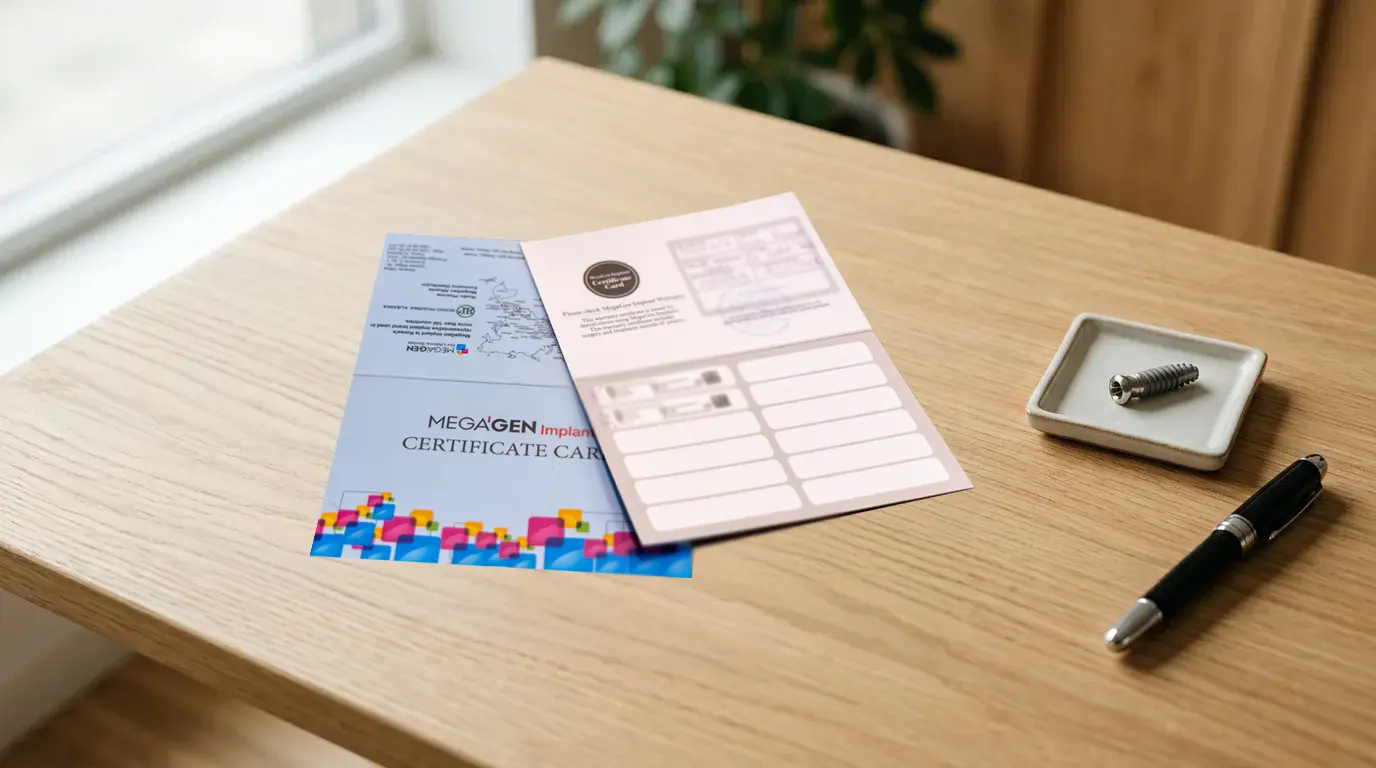
If you have dental implants – or are about to – there is one document worth more than the invoice: the implant passport. It records exactly which implants are in your jaw, where they are and when they were placed. Most patients never think about it until, years later, a dentist at home needs to repair a crown and has no idea what is underneath. This guide explains what an implant passport is, what should be on it, why it matters and what to do if a clinic cannot give you one.
What Is an Implant Passport?
An implant passport – also called an implant card or implant certificate – is a personal record of the implants placed in your mouth. It lists the manufacturer and product line, the size of each implant, its batch and serial numbers and the tooth position it replaces, together with the clinic, the dentist and the treatment dates.
In the European Union, the Medical Device Regulation requires manufacturers of implantable devices to supply an implant card for the patient, and the clinic to fill it in and hand it over. Some dental items are exempt – fillings, braces, crowns and screws – but dental implants are not on that list.
What’s on HMC’s Implant Passport
Every patient who receives MegaGen implants at HMC gets the MegaGen Implant Certificate Card, stamped by the clinic. It includes:
- Your details and your clinic: patient name, clinic name and the dentist who treated you.
- The key dates: when the implants were placed, when the prosthetic teeth were fitted and when treatment was completed.
- One manufacturer label per implant: product line (for example, ST Internal Fixture), model and reference code, diameter and length, lot and serial number, and a UDI barcode that identifies the exact device.
- The tooth position written next to each label, using the international two-digit tooth numbering system – for example, 46 is the lower right first molar.
- MegaGen’s guarantee that you have been treated with genuine products, plus the clinic’s stamp.
Why It Matters – Even Years Later
- Repairs and new crowns: the crown, abutment and screw on top of an implant have to match the implant’s system and connection. With the passport, any dentist can order the right parts. Without it, they have to work out the system from X-rays, which takes time, is not always possible and can mean replacing more than necessary.
- Treatment at home: if you need a check-up, a repair or a new crown in your own country, the passport tells your local dentist everything they need on day one.
- Traceability and safety: lot and serial numbers let the exact device be traced if a manufacturer ever issues a safety notice for a production batch.
- Proof of genuine products: manufacturer labels show that your implants are original, branded components – not unlabelled or copied parts.
- Warranty: implants placed at HMC carry a 5-year warranty, and the passport is the record that shows what was placed and when.
Red Flags: When a Clinic Cannot Give You One
Before you agree to implant treatment anywhere, ask which implant system will be used and whether you will receive the implant labels. Be cautious if a clinic:
- cannot or will not tell you the implant brand before treatment;
- describes the implant only as “premium” or “German quality” without naming a manufacturer;
- does not give you labels or a card after surgery;
- refuses to give you copies of your records or X-rays.
At HMC the implant brand is written on your quotation before you travel – MegaGen as our primary system, Straumann where the case calls for it – and the labels go on your passport on the day of surgery.
How to Keep Your Implant Passport Safe
- Take clear photos of every page as soon as you receive it, and keep them in your phone and email.
- Store the original with your other medical documents.
- Show it to any new dentist, and bring it to check-ups.
- If you are having treatment in stages, bring it to every visit so new implants can be added.
Costs
These are HMC’s starting prices for implant treatment. Your exact price is confirmed in writing before you travel.
| Treatment | Starting price at HMC |
|---|---|
| Implant + abutment (MegaGen ST) | from €400 |
| Crown on an implant | from €120 |
| All-on-4 (per arch) | from €3,040 |
| All-on-6 (per arch) | from €3,840 |
What’s Included
- Named implant system — the implant brand and line written on your quotation before you travel.
- Implant passport — the MegaGen Implant Certificate Card with a label for every implant and its tooth position.
- Implant warranty — implants placed at HMC carry a 5-year warranty.
- Aftercare — written instructions and a direct contact at the clinic once you are home.
Frequently asked questions
Does every clinic give an implant passport?
They should. In the EU, manufacturers must supply an implant card with implantable devices, and dental implants are not exempt. Albania is not in the EU, but at HMC every patient who receives MegaGen implants gets the MegaGen Implant Certificate Card.
What if I have implants but no passport?
Contact the clinic that placed them and ask for the implant brand, line, size and lot numbers from your records. If that is not possible, a dentist can try to identify the system from X-rays, but it is not always conclusive.
Can my dentist at home work on MegaGen implants?
MegaGen is a widely used system across Europe. With the passport, your dentist knows exactly which components to order for checks, repairs or new crowns.
Is the implant passport the same as the warranty?
They work together. The passport records which implants were placed and confirms they are genuine MegaGen products; HMC’s 5-year implant warranty covers the implants placed at the clinic.
Do crowns and dentures get a passport too?
EU rules exempt crowns from the implant card requirement. Your quotation and treatment records still state the material used, for example zirconia or E.max.
Sources
- European Union — Regulation (EU) 2017/745 on medical devices (MDR)
- Medical Device HQ — MDR Article 18: implant card and information to be supplied to the patient