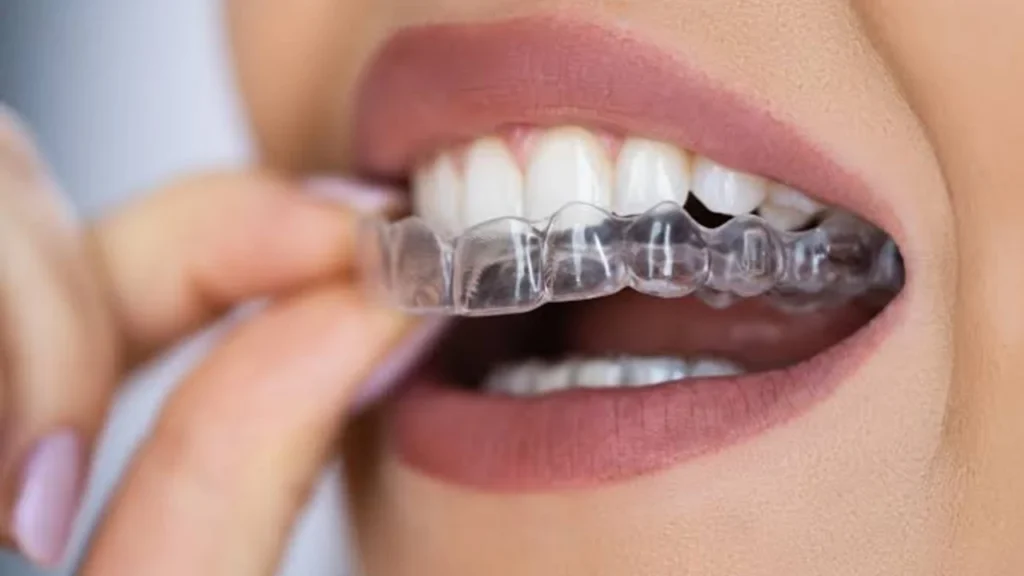





If you have lost most or all of your teeth, the choice usually comes down to two routes: removable dentures or fixed teeth on dental implants. Both restore a full smile. Where they differ is in everyday life – what you can eat, how you speak, what you do at night, and what happens to your jaw over the years. This guide compares dental implants vs dentures on exactly those points, so you can decide which trade-offs suit you.
The Short Version
| Dentures | Implant-supported teeth (All-on-4 / All-on-6) | |
|---|---|---|
| Fixed or removable | Removable – taken out daily | Fixed – removed only by your dentist |
| Surgery | None | Yes, implant placement under local anaesthetic |
| Time to final teeth | One stay, a few appointments | Two stays, 3–6 months of healing in between |
| Chewing | Noticeably weaker than natural teeth | Close to natural for most patients |
| Upper palate | Covered by the denture | Left uncovered |
| Jawbone | Keeps shrinking over time | Loaded by implants, which slows bone loss |
| Upfront cost | Lower | Higher |
Eating: The Biggest Day-to-Day Difference
A full denture rests on your gums and is held by suction and the shape of the jaw. Gum tissue was never designed to take chewing forces, so denture wearers generate significantly less bite force than people with natural teeth. In practice that means a quiet list of foods you start avoiding – steak, raw apples, crusty bread, nuts – and meals cut into small pieces.
Implant-supported teeth are screwed onto implants that have fused with the jawbone, so the force of each bite goes into bone, the way it does with natural roots. Most patients get most of their chewing ability back, and there is nothing to slip when you bite into something hard.
Speaking, Confidence and Comfort
New dentures take a few weeks to get used to, and speech can sound slightly different at first. Lower dentures in particular have less surface to grip and tend to move, which is why many wearers rely on adhesive. Upper dentures hold better, but they do so by covering the roof of your mouth – which also dulls your sense of taste and temperature.
Fixed implant teeth do not move when you talk or laugh, need no adhesive, and leave the palate uncovered. For many long-term denture wearers, that alone is the reason they switch.
Daily Care and Your Night-Time Routine
Dentures come out every night. The NHS advises removing them before bed, keeping them in water or a cleaning solution, and cleaning them with soft soap rather than toothpaste – plus brushing your gums and any remaining teeth separately.
Implant-supported teeth stay in. You brush them like natural teeth, clean around the implants with interdental brushes or a water flosser, and come in for professional hygiene checks. The bridge is removed only by your dentist, for maintenance.
What Happens to Your Jawbone Over Time
This is the difference people rarely hear about until it affects them. Tooth roots keep the jawbone dense by loading it every time you bite. Once the roots are gone, the bone starts to shrink – and a denture pressing on the gums does nothing to stop it. Research on long-term denture wearers shows the lower jaw losing height around four times faster than the upper jaw.
That is why a denture that fitted well a few years ago starts to rock and rub: the denture has not changed, the jaw underneath it has. It usually needs relining or replacing as the gums and bone change. Implants load the bone the way roots do, which substantially slows this process, although they cannot rebuild bone that has already gone.
How Long Each Option Lasts
- Dentures: last for years with good care, but need regular checks, relining as the jaw changes, and eventually replacement.
- Implants: designed to stay in place long term. A 2019 systematic review found around 96% of implants still in place after ten years.
- The bridge on top: an acrylic (PMMA) hybrid bridge typically needs relining or replacing every 5 to 7 years; a zirconia bridge typically lasts 10 to 15 years or more before refurbishment.
Which Option Suits You?
Dentures are usually the better fit if you want to avoid surgery, need a lower-cost solution, have health conditions that make implant surgery a poor idea right now, or want a quicker result in a single stay.
Implant-supported teeth are usually the better fit if you already struggle with a loose lower denture, want teeth that never come out, want to eat without thinking about it, or want to slow further bone loss.
There is also a middle ground: an implant-retained overdenture, where a removable denture clips onto two or more implants for much better stability. For the lower jaw, an international consensus statement has recommended a two-implant overdenture as the minimum standard of care for people without teeth. Ask your dentist whether it suits your case.
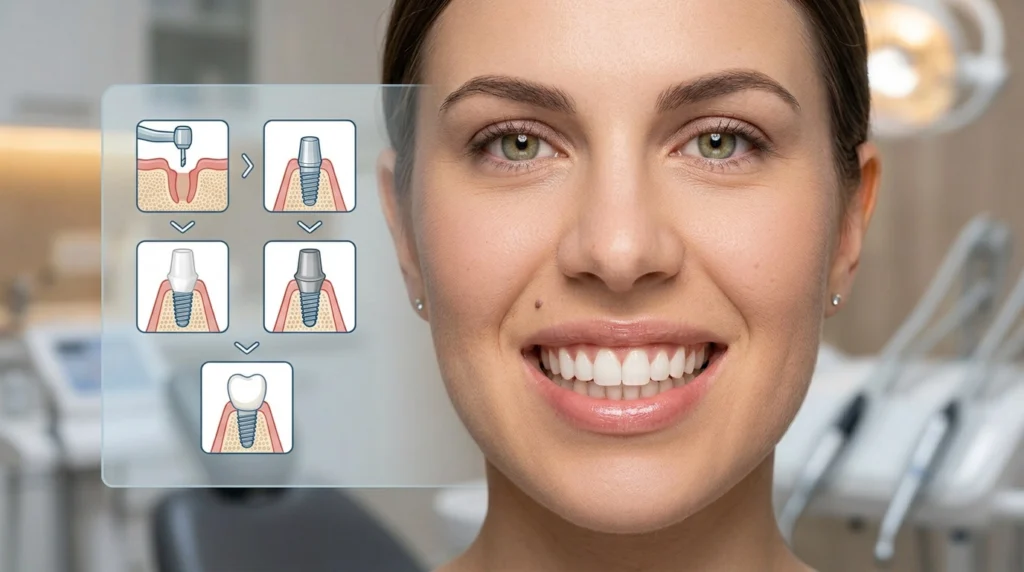
Health matters too. Uncontrolled diabetes, active gum infection, heavy smoking and some bone medications affect how well implants heal, so we review your medical history before recommending either route. If you are unsure which applies to you, Dental Implants 101 explains the implant process step by step.
Costs
Dentures cost less upfront. Implant-supported teeth cost more, but replace the cycle of relining and replacing a denture with a fixed solution. These are HMC’s starting prices in Tirana:
| Treatment | Starting price at HMC | Fixed or removable | Trips to Tirana |
|---|---|---|---|
| Full acrylic denture (per arch) | from €200 | Removable | 1 stay (3–5 days) |
| Flexible (Valplast) partial denture | from €30 per tooth | Removable | 1 stay (3–5 days) |
| All-on-4 (per arch) | from €3,040 | Fixed | 2 visits |
| All-on-6 (per arch) | from €3,840 | Fixed | 2 visits |
What’s Included
- Dentures — examination and planning, measurements, bite and tooth selection, a try-in so you approve the look before it is finished, and the final fitting with adjustments.
- All-on-4 / All-on-6 — clinical examination and 3D scan, implant planning, extractions where needed, implant placement, a fixed provisional bridge before you fly home, and the final bridge on your second visit.
- Implant warranty — implants placed at HMC carry a 5-year warranty.
Frequently asked questions
Are dental implants better than dentures?
Not for everyone. Implants give fixed teeth, stronger chewing and help slow bone loss, but they need surgery, healing time and a higher budget. Dentures are non-surgical, quicker and cheaper. The right choice depends on your bone, your health and how much a removable solution bothers you.
Can I switch from dentures to implants later?
Yes, many patients do. The main limit is bone: the longer you wait, the more the jaw shrinks, which can mean bone grafting before implants. A 3D scan shows what your jaw can currently support.
Do I need two trips to Tirana for implants?
Yes. Implants need 3 to 6 months to fuse with the bone before the final bridge is fitted. You go home with fixed provisional teeth in between. Dentures are made within a single stay.
Can I sleep with my teeth in?
With implant-supported teeth, yes – they are fixed. Dentures should come out at night so your gums can rest and the denture can be cleaned.
Will people be able to tell?
Both are made to suit your face. Implant teeth look and behave more like natural teeth because they do not move, need no adhesive and leave the palate uncovered.
Sources
- NHS — Dentures (false teeth)
- Howe M-S, Keys W, Richards D. Journal of Dentistry, 2019 — Long-term (10-year) dental implant survival: a systematic review and sensitivity meta-analysis
- Kuć J, Sierpińska T, Gołębiewska M. Clinical Interventions in Aging, 2017 — Alveolar ridge atrophy related to facial morphology in edentulous patients
- Feine JS, et al. Gerodontology, 2002 — The McGill consensus statement on overdentures
- UT Health San Antonio, Critically Appraised Topic — Denture wearers are not able to generate bite forces similar to individuals with natural dentition