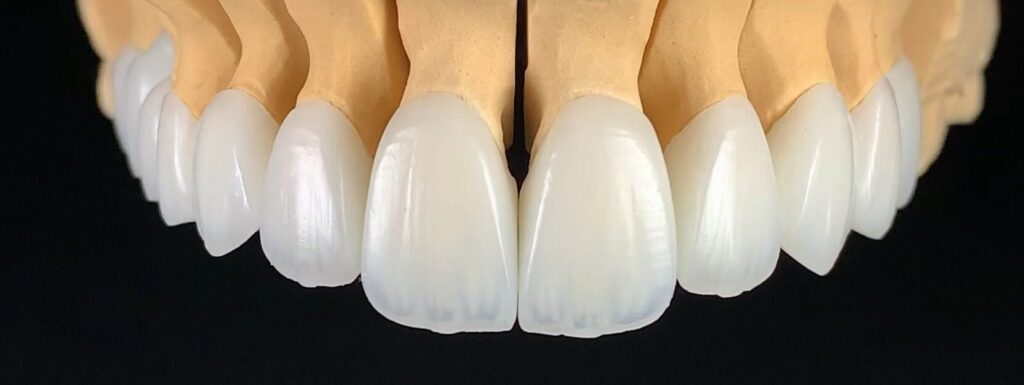




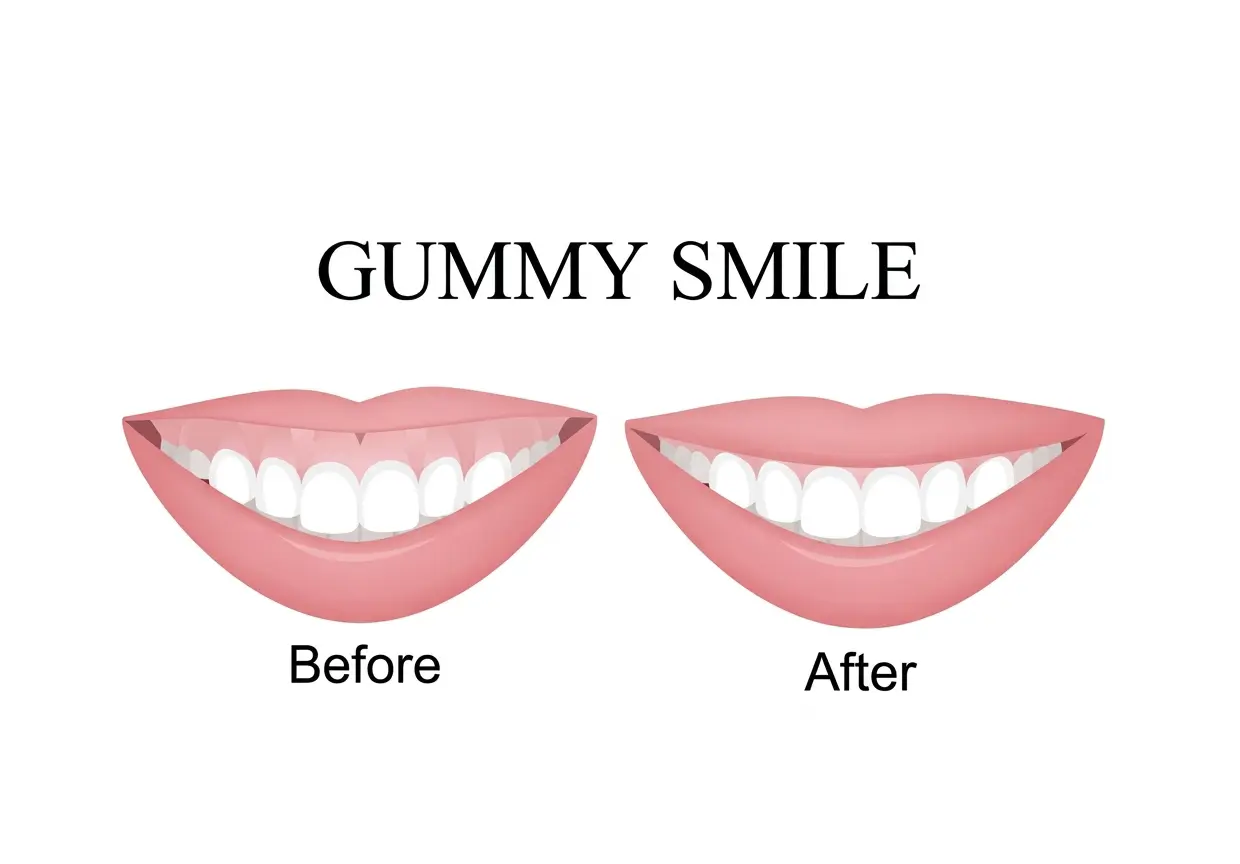
Gum contouring is a cosmetic dental treatment designed to reshape excess gum tissue and create a more balanced, symmetrical smile. Using precise gum reshaping techniques, our dental specialists can improve the proportions between the teeth and gums, helping achieve a more natural and harmonious smile.
Gum contouring is a cosmetic dental procedure designed to reshape excess or uneven gum tissue and create a more balanced relationship between the gums and teeth. In this guide, we explain what gum contouring involves, who it is suitable for, how the procedure works, what recovery looks like, and how much it can cost.
What Is Gum Contouring?
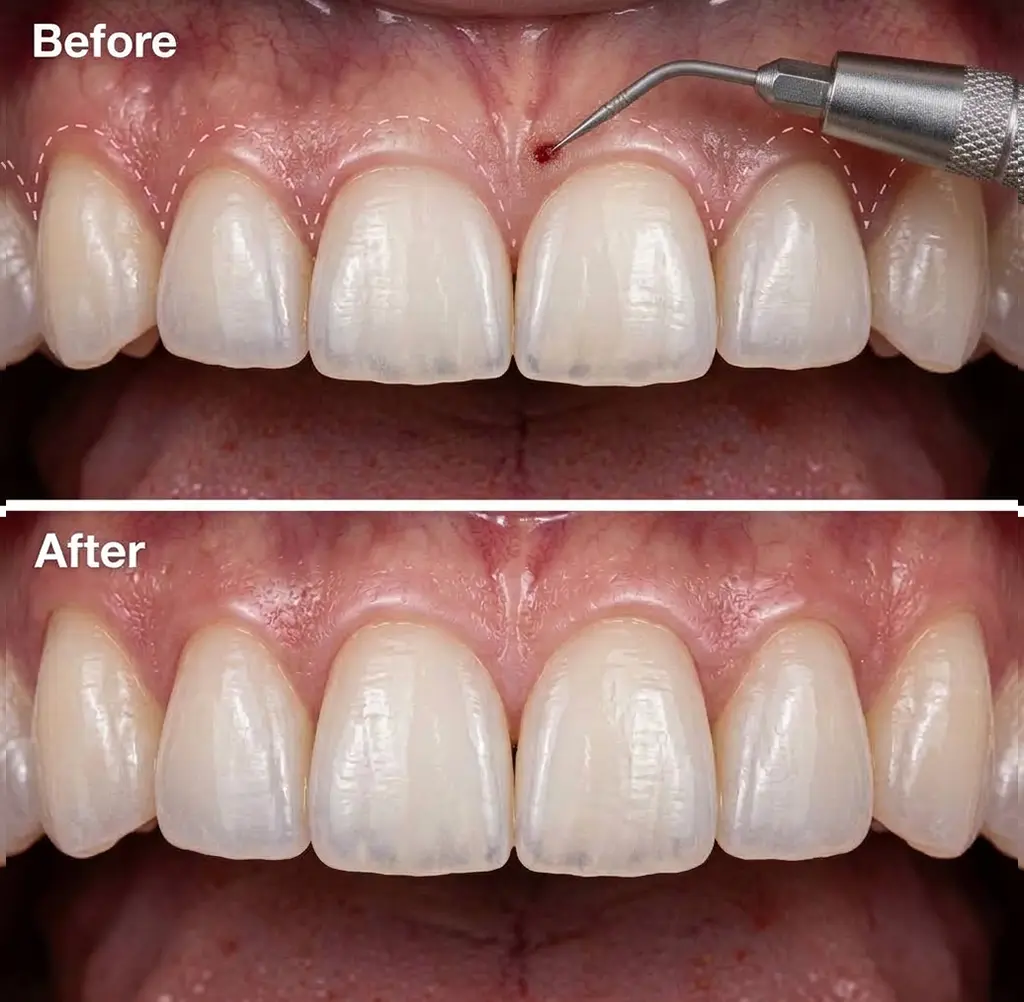
Gum contouring, also known as gum reshaping, gingival contouring, or gingivectomy, is a procedure used to improve the shape and symmetry of the gum line.
For some patients, excess gum tissue can make the teeth appear shorter or create what is commonly called a “gummy smile.” Carefully reshaping the gum tissue can expose more of the visible tooth structure and create a more balanced smile.
The procedure can be performed on one tooth, several teeth, or across the visible gum line, depending on the patient’s anatomy and treatment goals.
However, not every gummy smile is caused by excess gum tissue. Excessive gingival display can also be related to tooth position, upper-lip movement, altered passive eruption, or skeletal factors. This is why a clinical assessment is important before treatment.
Who Is Gum Contouring For?
Gum contouring may be suitable for patients who have:
Excess gum tissue — gums covering more of the tooth surface than expected.
An uneven gum line — differences in gum levels that make teeth appear asymmetrical.
Short-looking teeth — teeth that appear shorter because part of the crown is covered by gum tissue.
Excessive gingival display — a gummy smile where the position of the gums is a significant contributing factor.
Cosmetic concerns — a desire to improve the proportions and symmetry of the smile.
The procedure is most effective when excess or uneven gum tissue is the main factor affecting the appearance of the smile.
If the gummy smile is primarily caused by jaw position, tooth position, or upper-lip movement, another treatment or a combination of treatments may be more appropriate.
Gum Contouring vs. Crown Lengthening
Gum contouring and crown lengthening are related procedures, but they are not always the same.
Gum contouring or gingivectomy generally involves reshaping or removing excess gum tissue.
Crown lengthening may involve reshaping the gum tissue and, when necessary, modifying the underlying bone to expose additional tooth structure.
The correct procedure depends on the relationship between the teeth, gums, and supporting bone. Proper diagnosis is important because the position of the underlying bone and periodontal tissues can influence both treatment planning and long-term stability.
How Does Gum Contouring Work?
Before treatment, your dentist evaluates your teeth, gums, and smile to determine whether gum contouring is appropriate.
The procedure generally involves:
1. Clinical examination — The dentist assesses the gum line, tooth proportions, periodontal health, and amount of visible tooth structure.
2. Treatment planning — The desired gum contour is planned according to your individual anatomy and aesthetic goals.
3. Local anaesthesia — Local anaesthesia is used to keep the treatment area comfortable.
- 4. Gum reshaping — Excess gum tissue is carefully removed or reshaped to create the planned contour.
5. Final assessment — The dentist checks the gum line for symmetry and appropriate proportions.
Depending on the individual case, laser technology may also be used for gingival procedures.
Does Gum Contouring Hurt?
Gum contouring is generally performed under local anaesthesia, so the procedure itself should be comfortable.
After treatment, some patients may experience temporary:
- Gum tenderness
- Mild swelling
- Sensitivity
- Minor bleeding
- Discomfort while eating
The level of postoperative discomfort depends on the extent of treatment, the technique used, and individual healing.
Research into laser-assisted gingivectomy has also investigated postoperative pain, bleeding, and wound healing, although recovery can vary from patient to patient.
How Long Does Gum Contouring Take?
The treatment time depends on the number of teeth being treated and the complexity of the procedure.
A small area of gum reshaping may be completed relatively quickly, while a more extensive treatment involving multiple teeth may require additional time.
Your dentist can provide a more accurate estimate after examining your gum line and determining which procedure is appropriate.
Recovery After Gum Contouring
After gum contouring, the treated tissue needs time to heal and stabilize.
During the initial healing period, you may experience some tenderness, redness, swelling, or sensitivity.
Your dentist may recommend:
Soft foods — Choose softer foods temporarily while the gums are healing.
Avoiding irritation — Avoid very hot, spicy, hard, or crunchy foods if recommended.
Gentle oral hygiene — Keep the area clean according to your dentist’s instructions.
Protecting the treated area — Avoid unnecessary pressure or trauma to the gums.
Follow-up care — Attend any recommended review appointments.
Initial healing and complete tissue stabilization are not the same thing. The gum margin can continue to change as the tissues heal and mature, particularly following more extensive periodontal procedures.
Costs
The cost of gum contouring varies depending on the number of teeth treated, the amount of gum tissue that needs to be reshaped, and whether additional periodontal treatment is required.
| Treatment | What it involves | Price |
|---|---|---|
| Gum Contouring – 1 Arch | Gum reshaping for the upper or lower arch | €100 |
| Gum Contouring – 2 Arches | Gum reshaping for both the upper and lower arches | €200 |
What’s Included
- Clinical examination — Assessment of your teeth, gums, gum line, and overall smile proportions.
- Treatment planning — A personalized treatment plan based on your individual anatomy.
Gum contouring procedure — Careful reshaping of the gum tissue where clinically appropriate. - Post-operative guidance — Instructions to support proper healing and oral hygiene.
- Follow-up assessment — Review of the healing process and gum contour when required.
Frequently asked questions
Is gum contouring safe?
Gum contouring can be safely performed in appropriately selected patients when the gums, teeth, and underlying anatomy are properly evaluated and the procedure is performed by a qualified dental professional.
Does gum contouring hurt?
The procedure is normally performed under local anaesthesia. Some tenderness, swelling, or sensitivity may occur during the healing period.
Can gum contouring fix a gummy smile?
It can help when excess gum tissue is a significant cause of excessive gum display. However, gummy smiles can have several different causes, so a clinical examination is necessary before treatment.
Do gums grow back after gum contouring?
The treated tissue does not simply return to its original position in every case, but the gum margin can change during healing and maturation. Long-term stability depends on the individual anatomy and treatment.
How long does it take for gums to heal?
Initial healing occurs during the first days and weeks, while complete tissue maturation and stabilization can take longer. The timeline depends on the extent of treatment and individual healing.
Can gum contouring be done with a laser?
Yes. Laser-assisted gingivectomy can be used in selected cases. Your dentist will determine whether laser or another technique is appropriate for your individual treatment.
Can I have gum contouring before veneers?
In some cases, yes. If the gum line affects the proportions of the planned smile, gum reshaping may be incorporated into the treatment plan before veneers or crowns.
Is gum contouring permanent?
The changes can be long-lasting, but the gum tissue can remodel during healing. Maintaining good oral hygiene and periodontal health is important for protecting the result.
Sources
Gum Contouring Cost Comparison in Europe
| Country | Indicative Gum Contouring Price | Pricing Basis |
|---|---|---|
| Albania – HMC | €200 | Full treatment |
| Italy | €340 | Full treatment |
| Spain | €560 | Full treatment |
| France | €640 | Full treatment |
| UK | €1,350 | Full treatment |
- Bezerra Silva DF, et al. — Gingivectomy with High-Power Laser for Correction of the Gummy Smile Resulting from Altered Passive Eruption — A Case Series — Lasers in Medical Science, 2022. PubMed
- Maboudi A, et al. — Gingivectomy with Diode Laser Versus the Conventional Scalpel Surgery and Nonsurgical Periodontal Therapy in Treatment of Orthodontic Treatment-Induced Gingival Enlargement: A Systematic Review — 2023. PubMed
- Abesi F, Derikvand N. — Efficacy of Low-Level Laser Therapy in Wound Healing and Pain Reduction After Gingivectomy: A Systematic Review and Meta-analysis — Journal of Lasers in Medical Sciences, 2023. PubMed
- Inchingolo AD, et al. — Effectiveness and Personalized Approaches in the Correction of Gummy Smile: A Systematic Review of Orthodontic and Surgical Treatments — Journal of Clinical Medicine, 2024. PubMed
- Aroni MA, et al. — Esthetic Crown Lengthening in the Treatment of Gummy Smile — International Journal of Esthetic Dentistry, 2019. PubMed
- Capodiferro S, Kazakova R. — Laser-Assisted Gingivectomy to Treat Gummy Smile — Dental Clinics of North America, 2022. PubMed