



Composite veneers vs composite bonding is one of the most confusing comparisons in cosmetic dentistry, because the two names are very often used for exactly the same treatment. In the UK, a full smile of composite veneers is usually sold as “composite bonding”. In the US and most of Europe, the same work goes by the name veneers. And some clinics use “bonding” for a quick fix on a single chipped tooth.
At HMC we keep it simple. Composite veneers cover the whole visible front of each tooth to redesign your smile. Edge bonding is the small fix: a chip, a short edge or a small gap on one or a few teeth. This guide explains both treatments, so you know exactly what you are comparing when you read a quote.
Quick answer: both names usually describe the same treatment: tooth-coloured resin sculpted over the front of your teeth to change their shape, colour and symmetry. Edge bonding is the smaller version, used to fix one detail on one or a few teeth.
What are composite veneers?
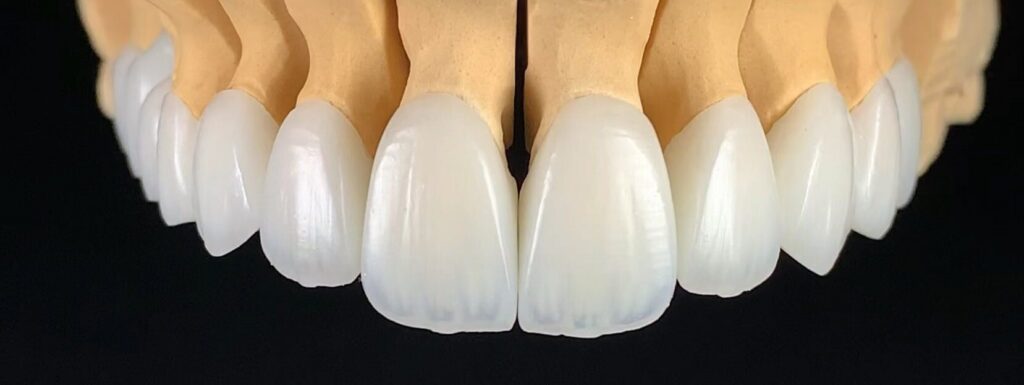
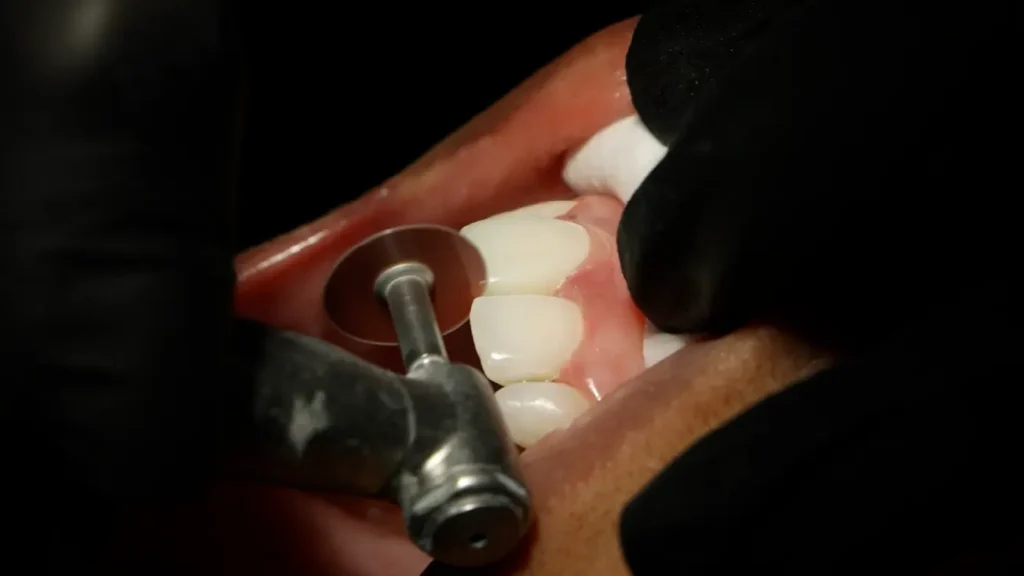
They are thin layers of tooth-coloured resin that cover the entire visible front surface of each tooth. The dentist builds them directly on your teeth, layer by layer, and shapes the length, width, colour and proportions of every tooth so the whole smile works together.
There is no laboratory stage. Everything is sculpted in the chair, so you are not waiting weeks for anything to be made. Treatment usually covers all the teeth that show when you smile, up to 20 teeth.
This treatment is a good fit if:
- several teeth are different shapes or sizes
- you want a brighter, more uniform smile
- the edges of many teeth are worn or uneven
- you want a visible smile makeover without the cost of porcelain
Composite veneers vs composite bonding: two names, one treatment
There is no single standard name, and each market has settled on its own habit:
- UK and Ireland: “composite bonding” has become the everyday name for veneers made of resin, even on a full set of 20 teeth. A clinic offering bonding on 20 teeth is describing full-coverage veneers.
- USA: “dental bonding” usually means a small repair, while full coverage is called veneers.
- Italy and Spain: patients mostly search for faccette in composito and carillas de composite, which translate directly as resin veneers.
- Dental tourism clinics: packages are often labelled “composite veneers / bonding” so that both searches land on the same page.
Neither name is wrong. What matters is what is actually done to your teeth. When you compare quotes, ask two questions: how many teeth are treated, and how much of each tooth is covered?
Composite veneers vs edge bonding
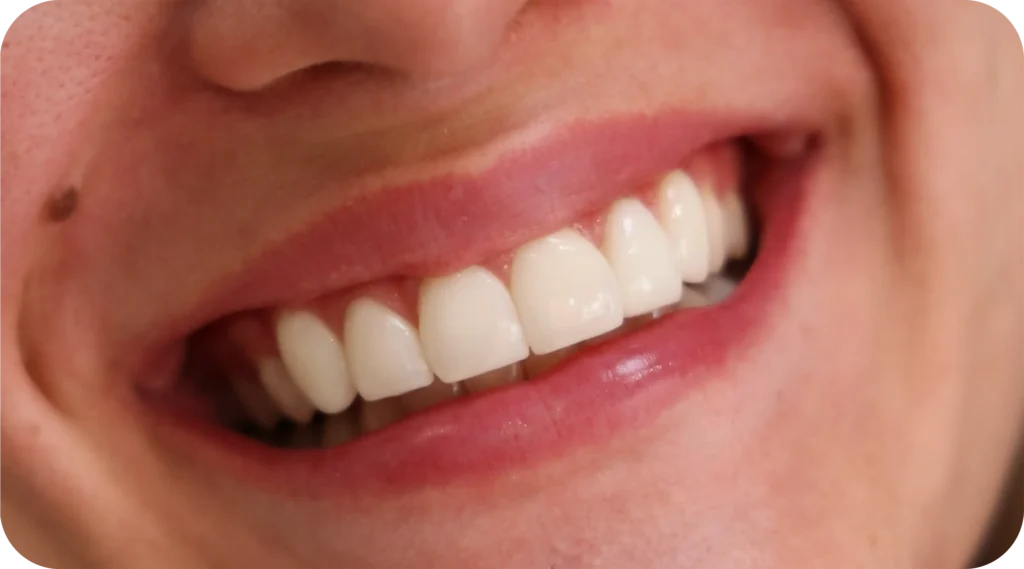
Edge bonding is a targeted fix. The dentist adds a small amount of resin exactly where it is needed, such as a chipped corner, a short or uneven edge, or a small gap between two front teeth. The resin is shaped, hardened with a curing light and polished so it blends with the rest of the tooth. Everything else stays untouched.
Other clinics call this dental bonding or cosmetic bonding, and some use the same bonding name for both treatments. At HMC we call it edge bonding, because most cases are about rebuilding or evening out the edges of the front teeth.
| Composite veneers | Edge bonding | |
|---|---|---|
| Coverage | The whole visible front surface of each tooth | Part of the tooth: an edge, a corner, a gap |
| Typical number of teeth | Usually the full smile line, up to 20 | One to a few |
| What it changes | Shape, size, colour and symmetry of the whole smile | Chips, small gaps, short or uneven edges |
| Material | Tooth-coloured resin | The same resin |
| Enamel removal | None in around 99% of cases | None |
| Made in a lab? | No, sculpted freehand in the chair | No, shaped in the chair |
| Time at HMC | Up to 8 teeth per sitting; 20 teeth in about 2 days | A single session |
| Can it be whitened later? | No | No |
| Repairable? | Yes, by adding fresh resin | Yes, by adding fresh resin |
Are composite veneers right for you?
Edge bonding is usually enough if:
- you have chipped a front tooth
- you have a small gap between two teeth
- one or two teeth are slightly shorter or more uneven than the rest
- you like your smile overall and only want to fix a detail
Neither may be the right fit if:
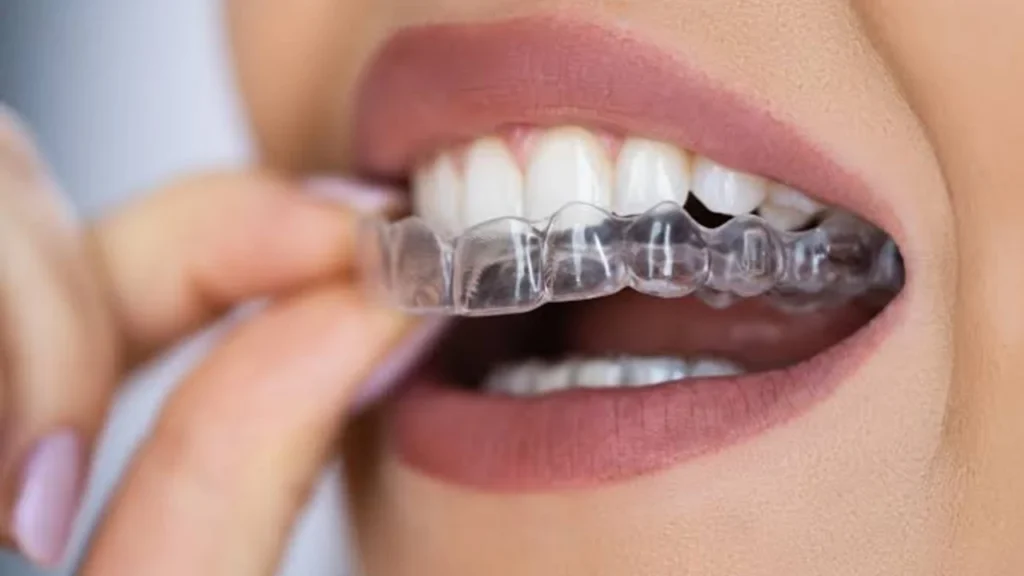
- your teeth are noticeably crooked, where invisible aligners can move them into place instead of disguising them
- you have decay or a broken back tooth, which needs restorative work rather than cosmetic work
- you want the longest-lasting, most stain-resistant result, which is where e.max porcelain veneers come in
You do not have to work this out alone. Your consultation, free and online, is where a dentist looks at your photos and tells you which approach fits your teeth. If they are not the right choice for you, we will tell you, and suggest the treatment that is.
How composite veneers are done at HMC
Our composite veneers are made freehand by doctors who specialise in aesthetic composite work. With this treatment, the dentist’s artistic eye shapes the result far more than any brand of resin does.
- Consultation and planning. You talk through the shape and shade you want, and the dentist confirms whether this is the right treatment for your teeth.
- Preparation. The tooth surface is cleaned and prepared so the resin can bond. In around 99% of cases, no enamel is removed. Very rarely, a small adjustment to a tooth’s shape is needed for the overall smile design. If so, it is explained to you first, done only if you agree, and never at the expense of the tooth’s health.
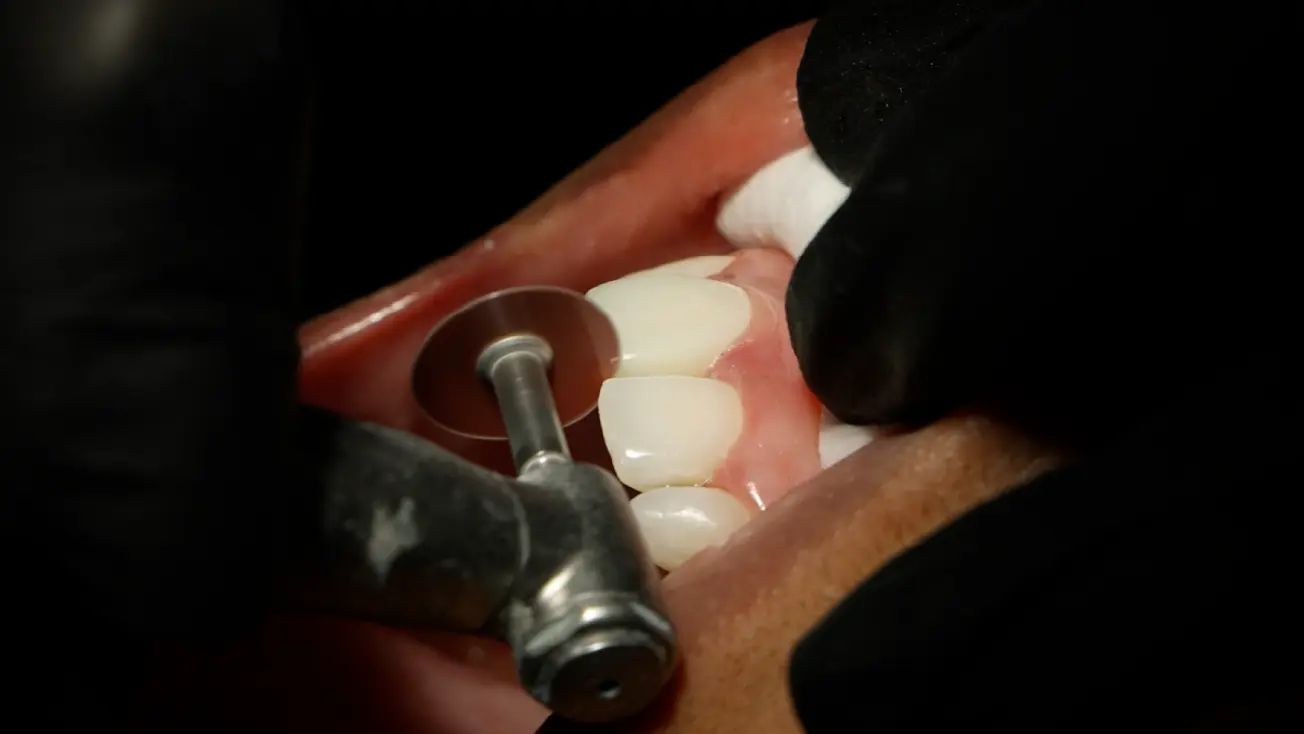
- Sculpting. The resin is applied in layers and shaped by hand, with each layer hardened under a curing light.
- Finishing. The teeth are refined and polished until the resin blends naturally.
How long do composite veneers take?
Timing depends on how many teeth you are treating, and on you as a patient:
- Up to 8 teeth can be done in one sitting.
- A full set of 20 teeth is usually completed over 2 days, sometimes split into four sessions, morning and afternoon on each day.
- For most patients, the whole trip is 1 to 2 days.
An edge bonding fix fits into a single session. Your consultation is included before treatment starts, and you can have it online before you book flights. That makes them one of the easiest smile treatments to fit into a short trip to Tirana. Porcelain veneers, by comparison, are made in a dental lab and need a longer stay.
Should you whiten your teeth before composite veneers?
Resin does not respond to whitening. The shade chosen on the day is the shade it stays. If you whiten your natural teeth later, the resin will not follow, and you can end up with a mismatch.
So if you would like a brighter smile, the order matters: whiten first, then have your veneers matched to your new shade. Teeth whitening is a separate, optional treatment. Plenty of patients are happy with their natural shade and skip it.
How long do composite veneers last?
This is an affordable aesthetic treatment, and resin is not the hardest material in dentistry. With good care, you can expect your veneers to look great for a couple of years. How long they last depends heavily on your habits:
- Staining: coffee, tea, red wine and smoking discolour resin faster than natural enamel.
- Chipping: biting nails, pens, ice or hard foods with your front teeth puts stress on the edges.
- Polish: resin slowly loses its shine over time.
The upside is that resin is repairable. A chip can usually be fixed by adding fresh material, rather than redoing the whole tooth.
To keep them looking their best, brush twice a day, keep up regular professional cleanings, rinse with water after dark drinks, and do not use your front teeth as tools.
Composite veneers or porcelain veneers?
They are fast, affordable and, because enamel is not removed in most cases, they keep your options open. Porcelain e.max veneers are made in a dental lab, hold their colour, resist stains and last considerably longer, but they take more time and involve preparing the tooth.
Think of it this way: resin is a great way to transform your smile now, at a lower cost. If you want a long-term result you rarely have to think about, porcelain veneers or a full Hollywood Smile are the step up.
Composite veneers vs composite fillings
Fillings use a similar family of materials, but they do a completely different job. A composite filling restores a tooth damaged by decay or a fracture, such as a cavity or a broken molar. Veneers and edge bonding are aesthetic treatments, done on healthy teeth to change how your smile looks.
See real results


In our Smile Stories, you can read each patient’s experience in their own words, the doctor’s clinical notes, and see the before-and-after photos. For more, watch our patient video testimonials.
Not sure which one you need? Send us a few photos for a free online consultation. A dentist will tell you which treatment suits your teeth, how many sessions you will need and how many days to plan your trip for.
Frequently asked questions about composite veneers
Are composite veneers the same as composite bonding?
Usually, yes. In the UK, “composite bonding” is the everyday name for composite veneers, the resin layer that covers the front of each tooth. Some clinics also use “bonding” for small repairs, which we call edge bonding.
What is edge bonding?
Edge bonding adds resin to part of a tooth, usually the edge of a front tooth, to fix a chip, a short edge or a small gap. It is a smaller treatment than full veneers.
Do composite veneers damage your teeth?
In around 99% of cases no enamel is removed, because the resin is added on top of the tooth. In rare cases a small adjustment is needed for the overall smile design. This is always explained first and only done with your agreement.
How many composite veneers can be done in one day?
Up to 8 teeth in one sitting. A full set of 20 composite veneers is usually completed over 2 days, sometimes in four sessions across mornings and afternoons.
Can composite veneers be whitened?
No. Resin does not change colour with whitening. If you want whiter teeth, whiten before treatment so the resin can be matched to your new shade.
How long do composite veneers last?
With good care, a couple of years. Staining habits, grinding and biting hard objects shorten that. Because resin is repairable, small chips can usually be fixed without redoing the whole treatment.
Can I get composite veneers abroad in one short trip?
Yes. They are made directly in the chair with no lab stage, so most patients complete treatment in Tirana in 1 to 2 days, with the consultation done online beforehand.
Is the consultation free?
Yes. The online consultation is always free.