
Albania vs Turkey dental work is now the comparison most people make before booking treatment abroad. Turkey is the name everyone knows. Albania is the destination more and more patients from the UK, Ireland, Italy and Spain are choosing instead, with prices that match or beat Turkey and a much shorter list of horror stories.
This guide puts the two side by side: what implants and full-arch treatments cost, what “Turkey teeth” actually means, what the UK government and the British Dental Association say, how long the trip takes, and the questions that protect you whichever country you pick.
Quick answer: Albania is usually as cheap as Turkey or cheaper for implants and All-on-4, it is closer to the UK, and it does not carry Turkey’s record of healthy teeth being filed down for crowns. Turkey has excellent clinics too, so in both countries the clinic you choose matters more than the country. Ask for a written plan, named implant brands and a written warranty before you travel.
Albania vs Turkey dental work at a glance
| Albania (HMC, Tirana) | Turkey | |
|---|---|---|
| Single implant with crown | From €520 | About €350–€700 in published clinic price guides |
| All-on-4, per arch | From €3,040 | €3,250–€8,450 in published Turkish price guides |
| All-on-6, per arch | From €3,840 | €3,900–€10,400 in published Turkish price guides |
| Direct flight from London | About 3 hours | About 3h50 to Istanbul, 4h30 to Antalya |
| UK government travel advice | No medical tourism warning | Medical tourism warning in the FCDO travel advice |
| “Turkey teeth” reputation | No | Yes, widely reported in UK media since 2022 |
| Trips for implants | Two trips of 4–5 days | Usually two trips |
Price: is Albania cheaper than Turkey?
For implants, usually yes. At HMC, a single dental implant with its crown starts from €520, All-on-4 starts from €3,040 per arch and All-on-6 from €3,840 per arch. Published price guides from Turkish hospitals put All-on-4 in Turkey at €3,250–€8,450 per jaw and All-on-6 at €3,900–€10,400.
The bigger difference is what the price covers. Those same guides warn about Turkish full-arch offers where the headline price only covers the temporary bridge, and the permanent teeth are sold separately around month four. At HMC, the All-on-4 and All-on-6 starting prices include the implants and 12 ceramic crowns as your final teeth, with temporary teeth free while you heal.
For crowns and veneers, the two countries are close on price, so the question is not where it is cheaper. It is what is being done to your teeth, which brings us to “Turkey teeth”.
What “Turkey teeth” actually means
“Turkey teeth” is the UK nickname for a full set of very white, very square crowns, often fitted on healthy teeth. Patients ask for veneers, which need little or no reshaping of the tooth. Some come home with crowns instead, which means filing each tooth down to a small peg so the crown can sit over it.
In 2022 the BBC documentary Turkey Teeth: Bargain Smiles or Big Mistake? brought this into the open. In a BBC survey of 1,000 UK dentists, 597 said they had treated patients with complications after dental work in Turkey. The presenter, a UK dentist, sent photos of her own healthy teeth to clinics in Turkey, and one clinic suggested crowning all 28 of them in zirconia.
The British Dental Association’s own survey that year found that 95% of UK dentists had examined patients treated abroad, and 86% of them had treated complications. Crowns were the treatment most likely to need follow-up work, followed by implants. Repairs are not cheap either: half of dentists said fixing the damage cost patients more than £1,000, and one in five said it cost more than £5,000.
Filing a tooth down cannot be undone. A tooth that has been prepared for a crown will need a crown for the rest of its life, and when the nerve is damaged it can also need root canal treatment. That is why the difference between a veneer and a crown matters more than any price difference. Our guide to veneers vs crowns explains it in detail.
A patient who came to us after Turkey teeth
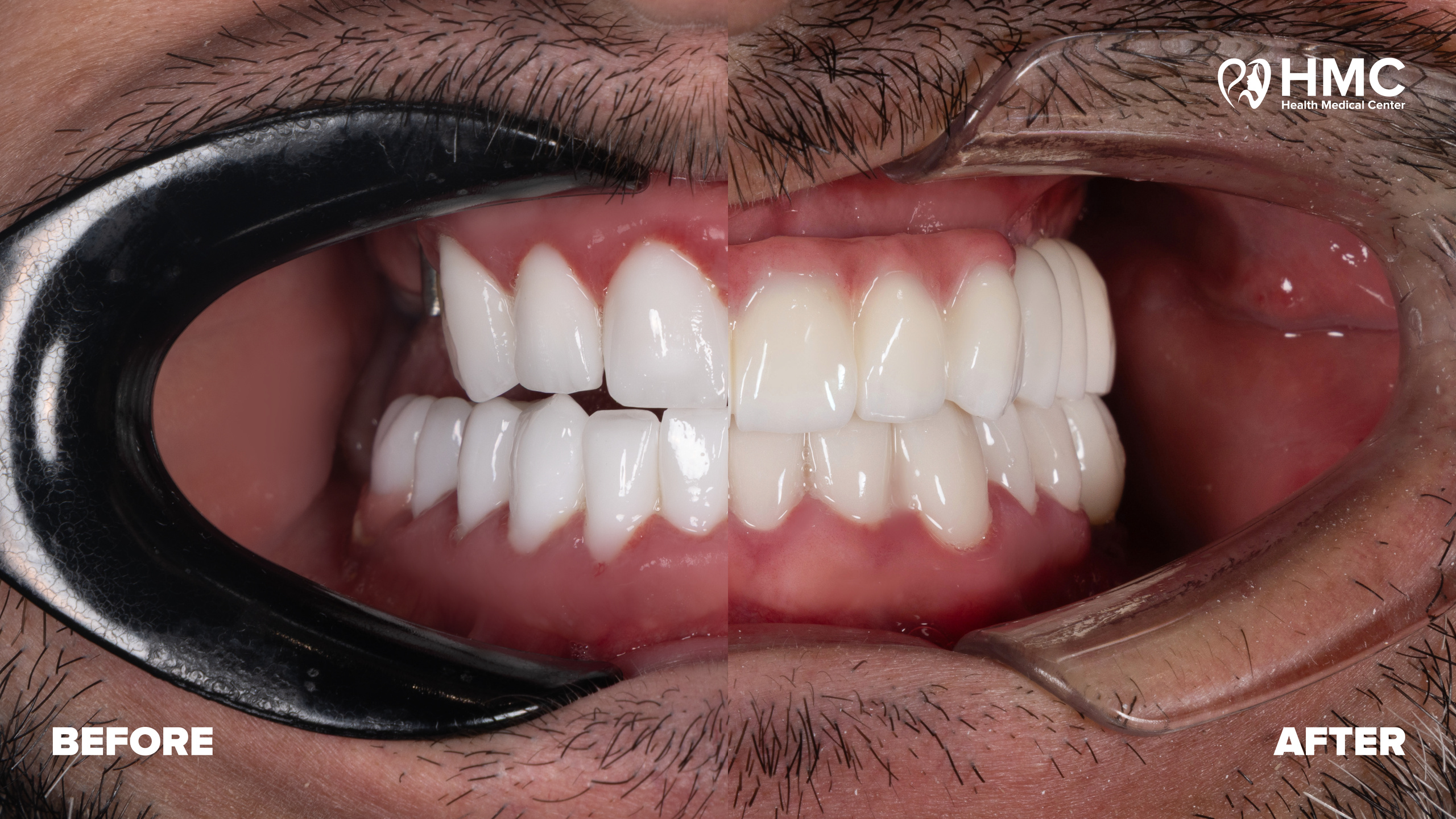
The photo on the left shows the work one of our patients had done in Turkey. The bad work cost him his upper front teeth: they could not be saved, and implants were needed to replace them.
At HMC we placed implants where his front teeth had been lost and gave him new crowns. The photo on the right is the result.
This is the real cost behind the “cheap” smile. Once a tooth is lost, fixing the damage is no longer a matter of new crowns: it means implants, more surgery and more time.
What the UK government says about Turkey
The UK Foreign, Commonwealth & Development Office (FCDO) has a medical tourism section in its travel advice for Turkey. It warns that the standard of medical facilities varies widely, and that some British nationals have had complications and needed further treatment or surgery after procedures in Turkey.
The FCDO advises patients to discuss their plans with their UK dentist or doctor first, and to do their own research instead of relying only on the companies selling the treatment. That advice is right for any country, including Albania.
Is Albania risk-free?
No country is. Albania has very good clinics and clinics you should avoid, just like Turkey, the UK or anywhere else. The difference is that Albania has not had a “Turkey teeth” wave in the UK press, and the UK government’s travel advice for Albania has no medical tourism warning. We wrote an honest guide on whether dental work in Albania is safe, including how to check a clinic before you book.
Travel: Albania is closer
From London, Tirana is about three hours away on direct flights with British Airways, easyJet, Ryanair and Wizz Air. British Airways puts the average London to Istanbul flight at 3 hours 50 minutes and Antalya at about 4 hours 30 minutes. From Dublin, Ryanair flies direct to Tirana in about three and a half hours.
From the USA, Istanbul has direct flights, while Tirana needs one connection, often through London, Rome, Vienna or Istanbul itself. UK citizens can stay in Albania for up to 90 days without a visa, and US citizens for up to a year. Our dental trip to Tirana guide covers flights, entry rules and what to pack.
Implants take the same time in both countries, because healing does not depend on the country. At HMC, implant treatment is usually two trips of 4–5 days, with 4–5 months of healing in between. Be careful with any offer that promises your final implant teeth in a single short trip. See how long dental tourism actually takes for a realistic plan.
How HMC answers the worries behind “Turkey teeth”
Most “Turkey teeth” stories have the same causes: no proper diagnosis, a plan that changes in the chair, unknown materials and nobody to call afterwards. This is how we handle each of those at HMC.
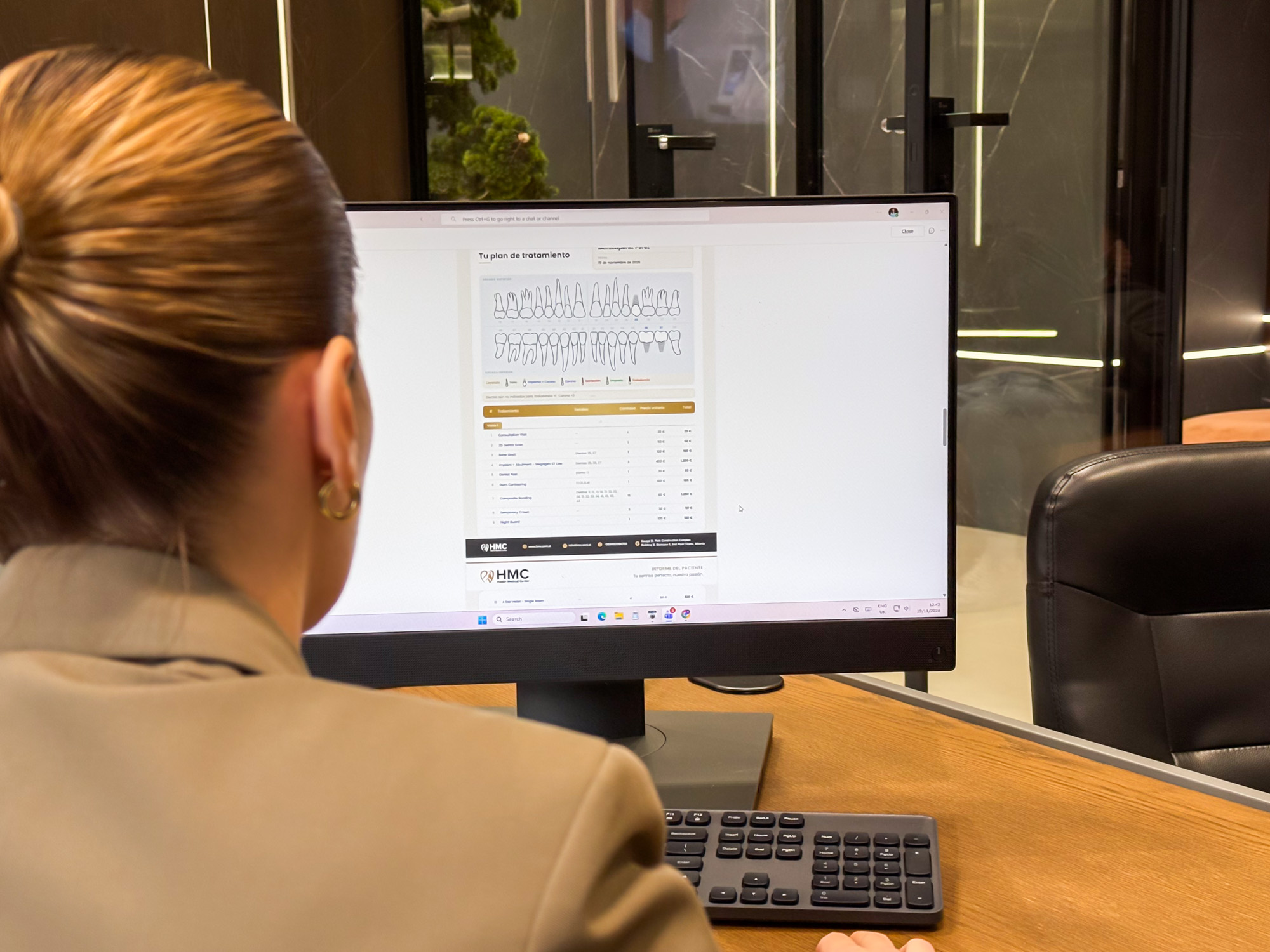
- A plan in writing before you fly. Our free online consultation gives you a written plan and quote, so you know which treatment you are getting on which teeth.
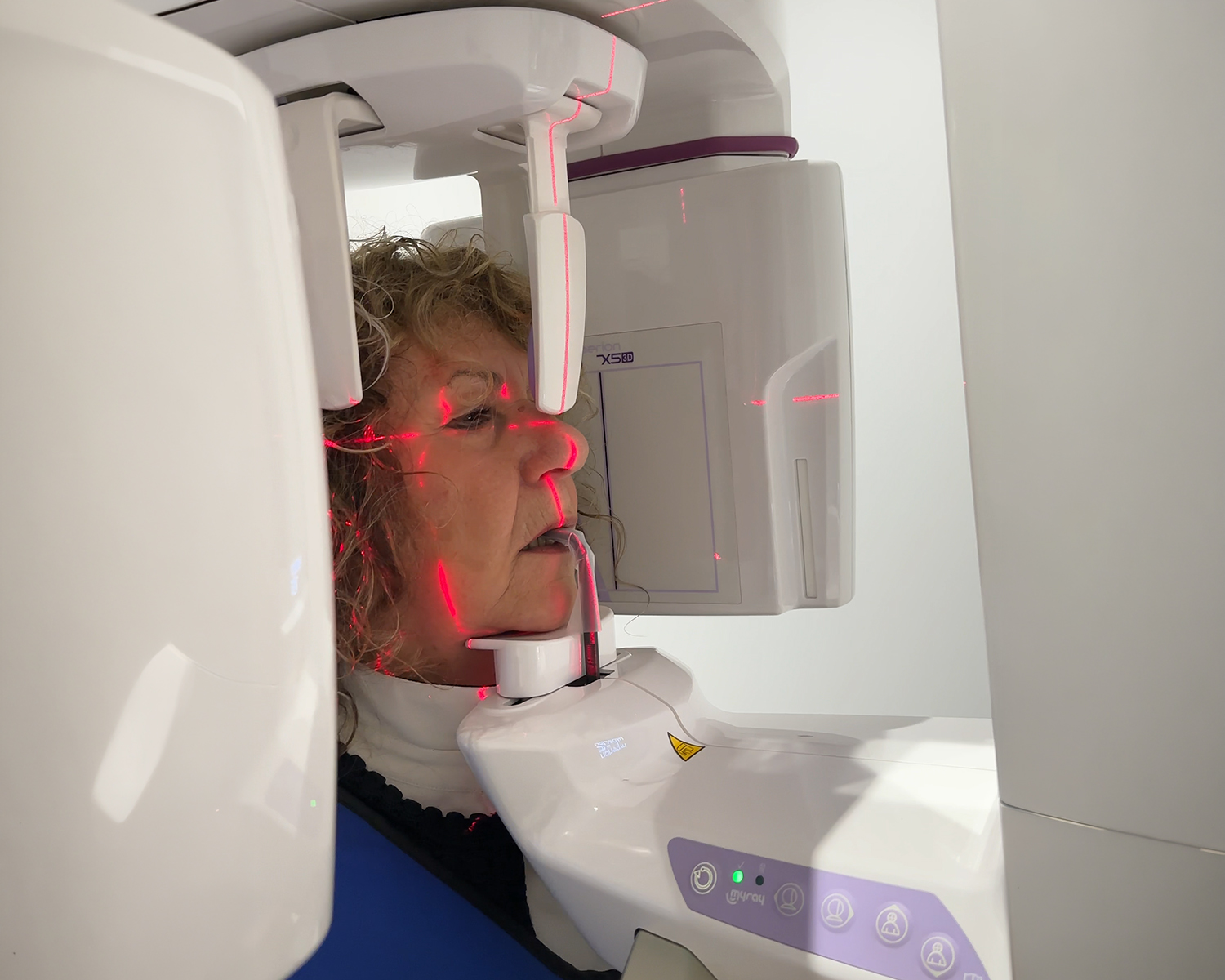
- Diagnosis on a 3D CT scan. We have our own 3D CT scanner on site and plan every implant case on it.
- Veneers that stay veneers. Our composite veneers need no enamel removal in around 99% of cases, and your written plan tells you whether you are getting veneers or crowns before you travel.
- Implants you can name. We place MegaGen implants and give you an implant passport with the details of every implant, so any dentist at home can identify them.
- A separate surgery room and conscious sedation. Implant surgery happens in a dedicated surgery room, and conscious sedation is given by an anaesthesiologist.
- A 5-year warranty, given in writing.
- Proof you can check. More than 5,000 international patients from 48 countries, over 1,000 Google reviews and hundreds of patient video testimonials.
Questions to ask any clinic, in Albania or Turkey
- Is this a veneer or a crown, on which teeth, and how much of each tooth will be removed?
- Can I see my diagnosis and a written treatment plan with the full price before I travel?
- Which implant brand will you use, and will I get its details in writing?
- Does the price include my final teeth, or only temporary ones?
- Who is my dentist, and will the same team treat me on both trips?
- What warranty do I get in writing, and what happens if something goes wrong at home?
- Can I see real patients’ results and reviews, not only stock photos?
A good clinic answers all seven without hesitation, in either country.
Albania or Turkey: which should you choose?
If you want the lowest implant price, a short flight from the UK or Ireland and a clinic that does not sell crowns as veneers, Albania is the stronger choice. Turkey still has excellent clinics, and the same checks work there too. But you will be choosing in a market where UK dentists and the UK government have spent years warning patients about what goes wrong.
Before you decide, look at real results. In our Smile Stories you can read each patient’s experience in their own words, the doctor’s clinical notes and the before-and-after photos.
Want to compare a real quote? Send us a few photos or your X-rays for a free online consultation. A dentist will tell you what you need, what it costs and how many days to plan for, in writing.
Frequently asked questions about Albania vs Turkey
Is Albania cheaper than Turkey for dental implants?
Usually, yes. At HMC a single implant with crown starts from €520 and All-on-4 from €3,040 per arch. Published Turkish price guides put All-on-4 in Turkey at €3,250–€8,450 per jaw. Always check whether a quote includes your final teeth or only temporary ones.
What are “Turkey teeth”?
It is the UK nickname for full sets of very white crowns, often fitted on healthy teeth that were filed down. Many patients asked for veneers and only learned at home that they had received crowns.
Is dental work in Albania safe?
It is as safe as the clinic you choose. Look for a written treatment plan, a 3D scan for implants, named implant brands, a written warranty and real patient reviews. Albania has no UK government medical tourism warning.
How long do I need to stay in Albania for implants?
At HMC, implant treatment is usually two trips of 4–5 days each, with 4–5 months of healing in between.
Is Albania closer than Turkey from the UK?
Yes. Direct flights from London to Tirana take about three hours, compared with about 3h50 to Istanbul and 4h30 to Antalya.
Do I need a visa for Albania?
UK citizens can stay up to 90 days in any 180 without a visa, Irish citizens can travel with a passport or passport card, and US citizens can stay up to a year without a visa. Check official travel advice before you book.
How do I make sure I get veneers and not crowns?
Ask for the treatment plan in writing before you travel, with the treatment named tooth by tooth. Ask how much enamel will be removed. At HMC, composite veneers need no enamel removal in around 99% of cases.
Does HMC give a warranty?
Yes, HMC gives a 5-year warranty, and every implant patient receives an implant passport with the details of each implant placed.
Sources
- GOV.UK — Turkey travel advice: health and medical tourism
- British Dental Association — Dental tourism: patients need to know the risks
- NationalWorld — What are Turkey teeth? BBC survey of 1,000 UK dentists
- GDPUK — BBC dental tourism documentary highlights hidden dangers
- British Airways — Flights to Turkey: flight times